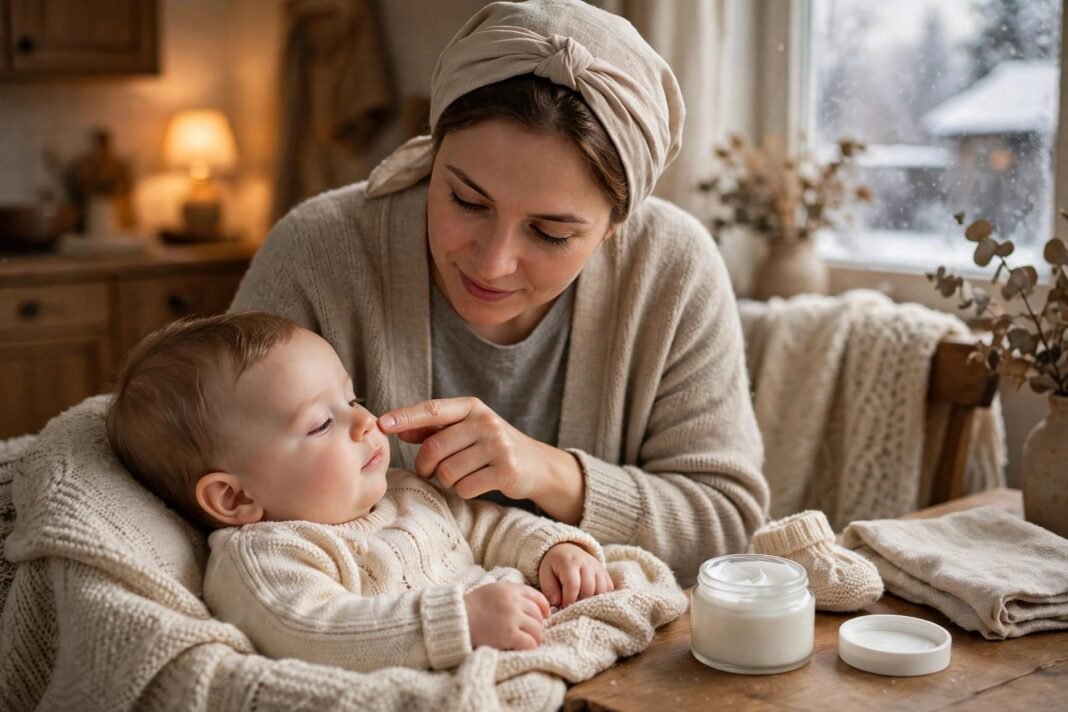
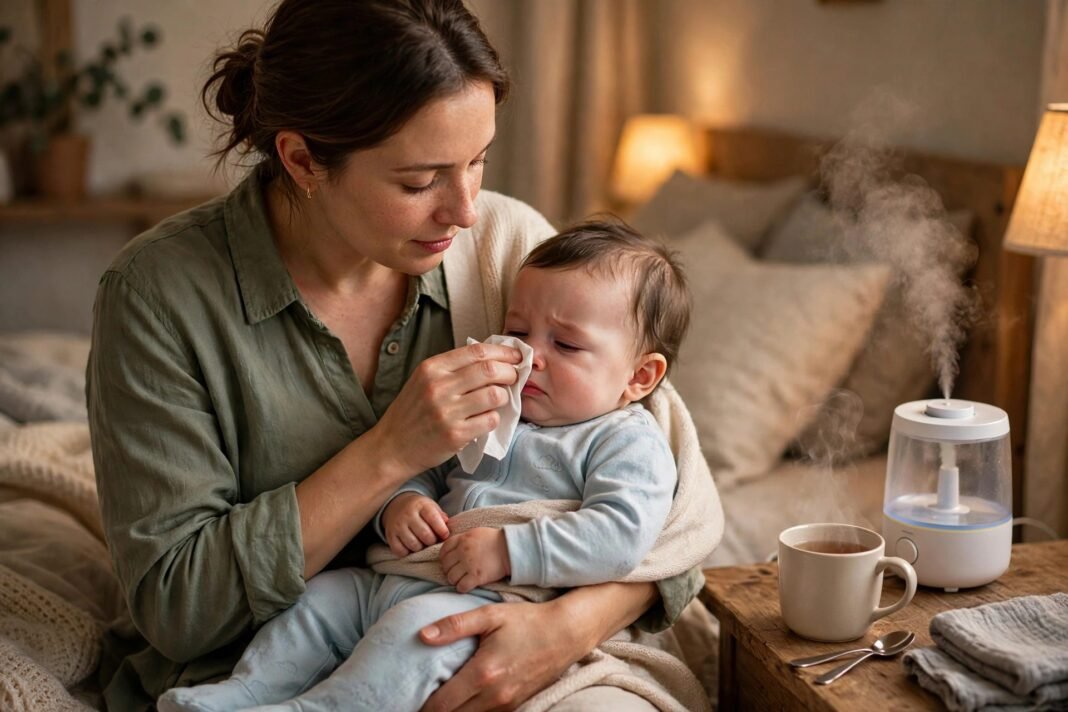
It is 2am, and your baby is snuffling and restless. The nose is blocked, the cough is new, and you wonder what to do. Winter colds in babies are common, and they worry every new mum.
The good news is that most colds are mild and pass on their own. In fact, children can catch as many as 8 to 12 colds a year, because their immune systems are still learning. So a cold is a normal part of growing up, even when it feels hard to watch.
This guide explains what a cold looks like in a baby, what helps at home, what to avoid, and the warning signs that mean calling a doctor. You will know what to do, and when to get help.
Why Winter Colds in Babies Happen So Often
Colds are caused by viruses, and hundreds of different cold viruses exist. A young child has met very few of them, so each new virus can cause a cold. That is why babies and toddlers catch colds far more often than adults.
Winter makes colds more likely, because families spend more time indoors in close contact. Coughs and sneezes spread tiny droplets through the air, and little hands touch everything. As a result, one family cold can pass quickly from person to person.
Your baby’s immune system is still developing, so it is learning with every cold. In fact, each cold teaches the body how to fight the next one. This does not make the sniffles easier, but it means a cold is usually a sign of a normal, healthy childhood.
What a Cold Looks Like in a Baby
Winter colds in babies usually start with a blocked or runny nose, sneezing and a mild cough. Your baby may also have a slight temperature, feed less well, and sleep in shorter stretches. These signs often appear within a few days of catching the virus.
Symptoms are usually worst in the first two or three days, then they ease bit by bit. Colds tend to last longer in young children, typically around 10 to 14 days. A cough can linger for two or three weeks after the rest of the cold has gone.
A blocked nose bothers babies more than adults, because babies breathe through their nose while they feed. So your baby may pull away from the breast or bottle, then cry from hunger. This is frustrating, but it usually passes as the nose clears.
Winter Colds in Babies: Clearing a Blocked Nose
A blocked nose is the hardest part of a cold for most babies. Saline nose drops can help, because salt water loosens dried mucus. Your pharmacist can advise you about drops or sprays made for babies.
Use the drops before a feed, so your baby can breathe and suck at the same time. For a young baby, a rubber suction bulb can gently clear the loosened mucus. This works best when your baby is under six months old.
Moist air helps too. A humidifier in your baby’s room can moisten the air and ease the nasal passages. If you use one, clean it often, as the maker’s instructions say. A steamy bathroom can also help, so sit with your baby in the warm mist for a few minutes.
Feeds, Fluids and Rest
Keep feeding your baby as normal during a cold. Breastfeeding is still recommended when a baby has a cold, and formula feeds should continue too. If feeding is hard, try smaller feeds more often.
Fluids matter, because they keep mucus thin and easier to clear. Older babies and toddlers can have extra water as well as their usual milk. Watch for wet nappies, because fewer wet nappies than usual can mean your baby needs more fluids.
Rest helps your baby recover, so keep the days calm and quiet. Your baby may sleep more than usual, or wake more often at night. Both are normal during a cold. Above all, follow your baby’s lead, and do not worry about a strict routine for a few days.
Helping Your Baby’s Cough
A cough sounds alarming, but it is the body’s way of clearing mucus from the airways during winter colds in babies. Most coughs with a cold are harmless, and they fade as the cold passes. So the goal is comfort, not stopping the cough.
For children over one year old, a little honey may help ease a night-time cough. However, never give honey to a baby under 12 months old, because honey can contain bacteria that cause a serious illness called infant botulism. This rule applies to honey in food, drinks and on a dummy too.
For children aged two and older, a mentholated rub on the chest and neck may help them sleep. Do not put rub near the nostrils, because it can irritate the nose and make breathing harder. If your baby is under two, skip the rub and use saline drops and moist air instead.
What Not to Do When Your Baby Has a Cold
It is tempting to reach for medicine when your baby is miserable. However, most cough and cold medicines are not suitable for young children. Health guidance says over-the-counter cough and cold medicines should not be given to children under four years old, because the risks outweigh any small benefit.
Do not give your baby adult medicines, and never give aspirin to a child under 16. Antibiotics do not help colds either, because colds are caused by viruses, not bacteria. In fact, antibiotics can cause side effects when they are not needed.
If your baby seems in pain or has a fever, ask your doctor or pharmacist before giving any medicine, especially for a baby under two years old. They will tell you what is safe for your baby’s age and size. Never guess a dose, and never use a medicine meant for an older child.
Fever: What to Know and When to Worry
A mild fever is common with winter colds in babies, and it shows the body is fighting the virus. Most fevers with a cold are not dangerous. However, a fever in a very young baby always needs medical advice.
Call your doctor urgently if your baby is under three months old and has a temperature of 38°C or above. The same applies if your baby is between three and six months old with a temperature of 39°C or above. Do not wait and see with a young baby.
A fever that lasts more than five days also needs a check, as does a fever that goes away and then comes back. If your baby has a fever and seems very uncomfortable, your doctor or pharmacist can advise you about medicine. This article gives no medicine amounts, because the right choice depends on your baby’s age and weight.
When Winter Colds in Babies Need a Doctor
Most colds pass without any medical help. However, some signs mean your baby needs a doctor straight away. Trust your instincts, because if something feels wrong, it is worth getting advice.
Seek urgent help if your baby has trouble breathing, breathes very fast, or makes grunting noises. The same applies if your baby’s lips look blue, if your baby stops feeding, or if your baby is unusually sleepy or hard to wake. These signs need same-day medical care.
Also call your doctor if symptoms get worse after a few days instead of better, or if a cough lasts more than three weeks. Colds can sometimes lead to chest or ear infections, and throat and chest infections are common in older children in the colder months too. So watch your baby closely, and ask for help early.
Stopping Colds from Spreading at Home
Winter colds in babies spread easily in a family home, but a few habits can slow them down. Wash your hands often, especially before you pick up your baby or handle food. This simple step stops more colds than any other.
Cough and sneeze into tissues, throw them away at once, and wash your hands after. Clean surfaces and toys often, and do not share cups, towels or toys with someone who has a cold. Simple steps can help the whole family avoid getting sick in the colder months.
Keep your baby away from people with a bad cold when you can, especially in the first months. If an older child in the family has a cold, ask them to wash their hands before touching the baby. Small habits like these make a real difference.
Winter Colds in Babies: What to Remember
Winter colds in babies are common, mild and part of growing up. Most pass within two weeks, with comfort care at home. Saline drops, fluids, rest and moist air are the tools that help most.
Remember what to avoid: no cough and cold medicines for young children, no honey before 12 months, and no adult medicines. Above all, know the warning signs, and call your doctor if you are worried. A quick call is always better than a long worry.
What helped your baby most during a winter cold? Share your story in the comments, because your words may help another new mum through a long night.
This article is for general information only. It is not medical advice. If you are worried about your baby’s health, please talk to your doctor, health visitor or pharmacist.