Zardari Approves 12 Bills on Education, Science, Tourism
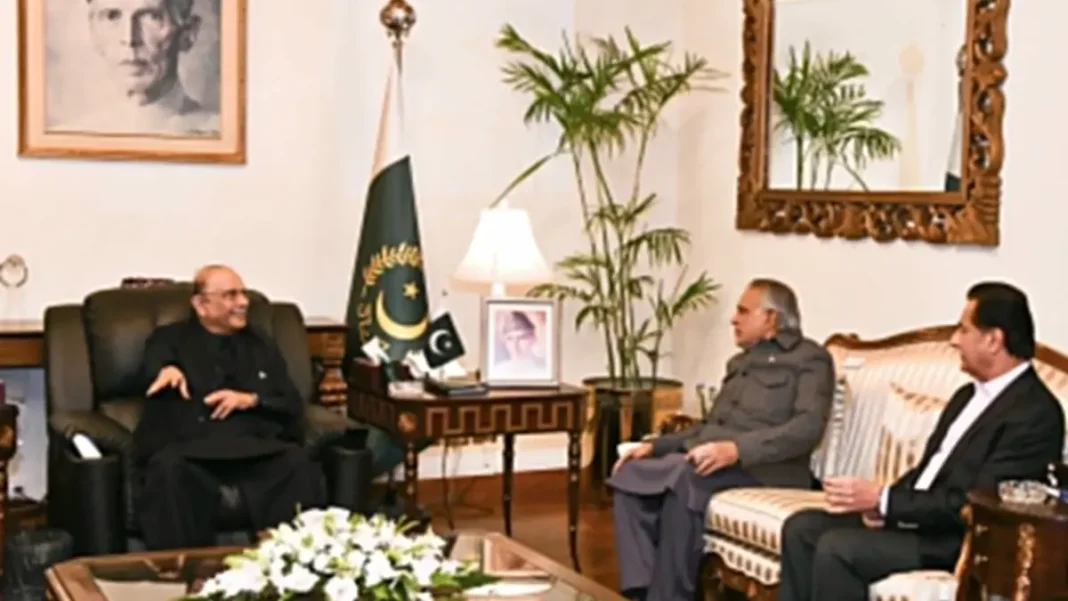
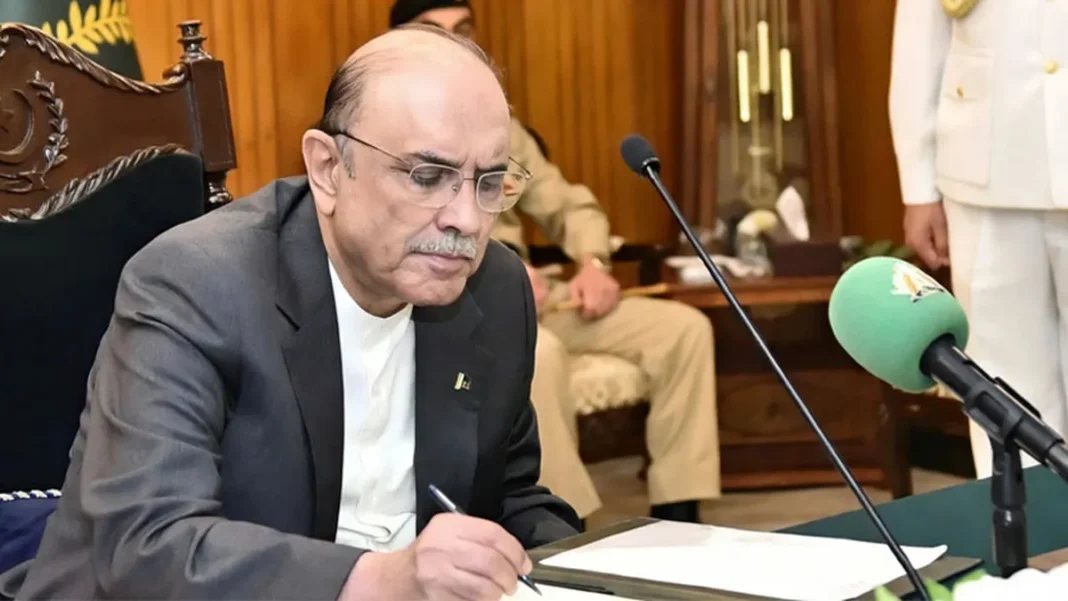
President Asif Ali Zardari approves 12 bills covering higher education, scientific research, culture, religious affairs and tourism, the President’s House announced on Saturday.
The bills amend laws governing educational institutions, research bodies, archival records and tourist guides. The President gave his assent after both houses of Parliament passed the legislation.
Twelve bills in a single day is unusual, but the package is made up of amendments to existing laws rather than new standalone legislation. Each bill updates the law that governs a specific institution or sector.
Zardari approves 12 bills: the list at a glance
The approved legislation covers several areas. Four bills deal with research and study centres, three with school and university education, two with culture, archives and religious affairs, and three more with engineering institutions and tourism.
The research bills are the Pakistan Study Centres (Amendment) Bill 2026, the Area Study Centres (Amendment) Bill 2026, the Centres of Excellence (Amendment) Bill 2026 and the Pakistan Council for Science and Technology (Amendment) Bill 2026.
The education bills are the Higher Education Commission (Amendment) Bill 2026, the Federal Board of Intermediate and Secondary Education (Amendment) Bill 2026 and the National College of Arts Institute (Amendment) Bill 2026.
The culture and archives bills are the Archival Material (Preservation and Export Control) (Amendment) Bill 2026 and the National Rahmatul-lil-Alameen Wa Khatamun Nabiyyin Authority (Amendment) Bill 2026.
The remaining bills are the National Textile University (Amendment) Bill 2026, the NFC Institute of Engineering and Technology, Multan (Amendment) Bill 2026, and the Pakistan Tourist Guides (Amendment) Bill 2026.
Education and research
The Higher Education Commission is the regulator for universities in Pakistan, and the amendment bill updates the law that sets out its powers and structure. The Federal Board of Intermediate and Secondary Education conducts exams for schools and colleges in Islamabad and abroad, and its amendment bill updates its governing law in the same way.
The National College of Arts Institute, the National Textile University and the NFC Institute of Engineering and Technology in Multan are all degree-awarding institutions, and each now has an updated governing law.
The study centres bills cover a network of research institutions. Pakistan Study Centres and Area Study Centres are based in universities and study Pakistan and its neighbours, while Centres of Excellence focus on specific fields of research. The Pakistan Council for Science and Technology advises the government on science policy.
The amendments come at a time when education is high on the public agenda. Khyber Pakhtunkhwa has introduced a mandatory reading hour in government schools, and Punjab is moving to standardise school holidays. Pakistan also plans to set up 10 national catapults for research, a move aimed at turning university research into products and businesses.
Culture, religion and tourism
The Archival Material (Preservation and Export Control) (Amendment) Bill deals with the preservation of historical records and the rules on taking them out of the country. Archives hold the paper record of the state, and the bill updates how that record is protected and controlled.
The National Rahmatul-lil-Alameen Wa Khatamun Nabiyyin Authority was set up to promote research and awareness about the life and teachings of the Holy Prophet (peace be upon him). Its amendment bill updates the law that governs the authority.
The Pakistan Tourist Guides (Amendment) Bill updates the law for licensed tourist guides, the people who show visitors around Pakistan’s historical sites, mountains and cities. Tourism has been growing as a policy priority. Lahore has been named eco-tourism capital for 2027, and Pakistan Railways has started pilgrim trains to Nankana Sahib, carrying 1,700 devotees.
What assent means
A bill passed by Parliament becomes law only when the President gives assent. The President can also send a bill back with a message asking Parliament to reconsider it, but assent is the normal course once both houses have passed the legislation.
The 12 bills were passed by the National Assembly and the Senate before they reached the Presidency. The government has also invited the PTI to join a parliamentary committee on electoral reforms, a sign that legislation is moving through Parliament in the current session.
Once assent is given, the bills become Acts and the amendments take effect as set out in each law. Ministries and the institutions concerned must then update their rules and working to match the amended laws.
The President’s House announced the approvals in a statement on Saturday, and Radio Pakistan carried the full list of the 12 bills. The statement listed all 12 bills and the sectors they cover, but it gave no detail on what each amendment changes. The full text of each amended law will show the exact changes when it is published.
Frequently asked questions
How many bills did President Zardari approve?
Twelve amendment bills, all passed by Parliament and announced by the President’s House on Saturday, November 21.
Which sectors do the 12 bills cover?
Higher education, educational institutions, scientific research, culture and archives, religious affairs and tourism.
What does the Higher Education Commission amendment change?
The bill amends the law governing the Higher Education Commission, the regulator for universities in Pakistan. The President’s House statement did not give the detail of the changes.
What is the Pakistan Tourist Guides amendment about?
It amends the law governing licensed tourist guides in Pakistan, updating the rules for the people who guide visitors around historical sites, mountains and cities.
When do the amendments take effect?
The bills become law once the President gives assent, which has now happened. The amended laws take effect as set out in each Act, and the institutions concerned must update their rules to match.