Zardari Dar Ayaz Sadiq Meeting on New Provinces Row
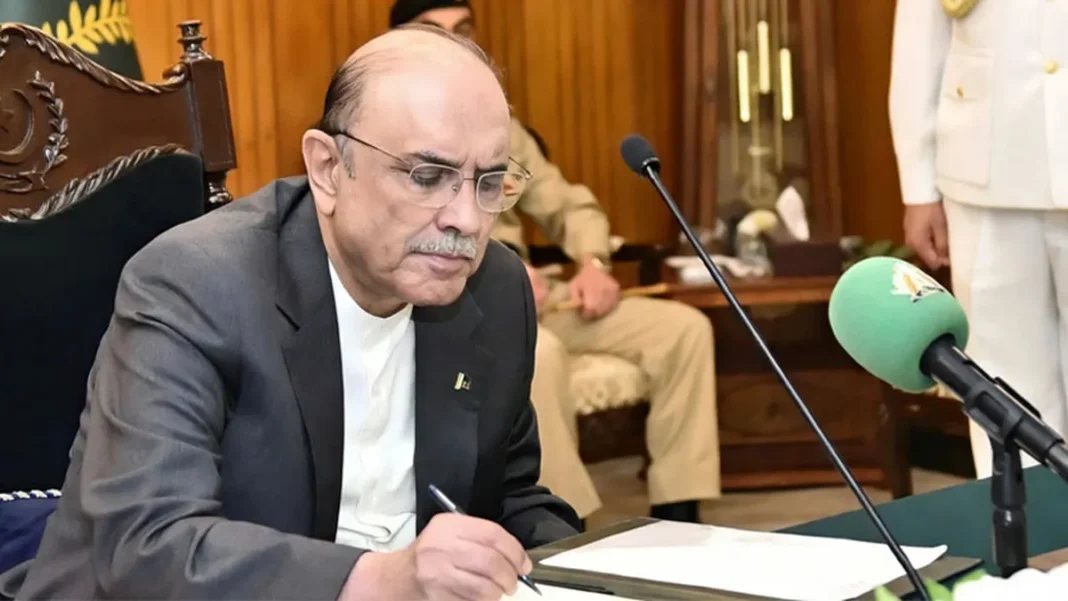
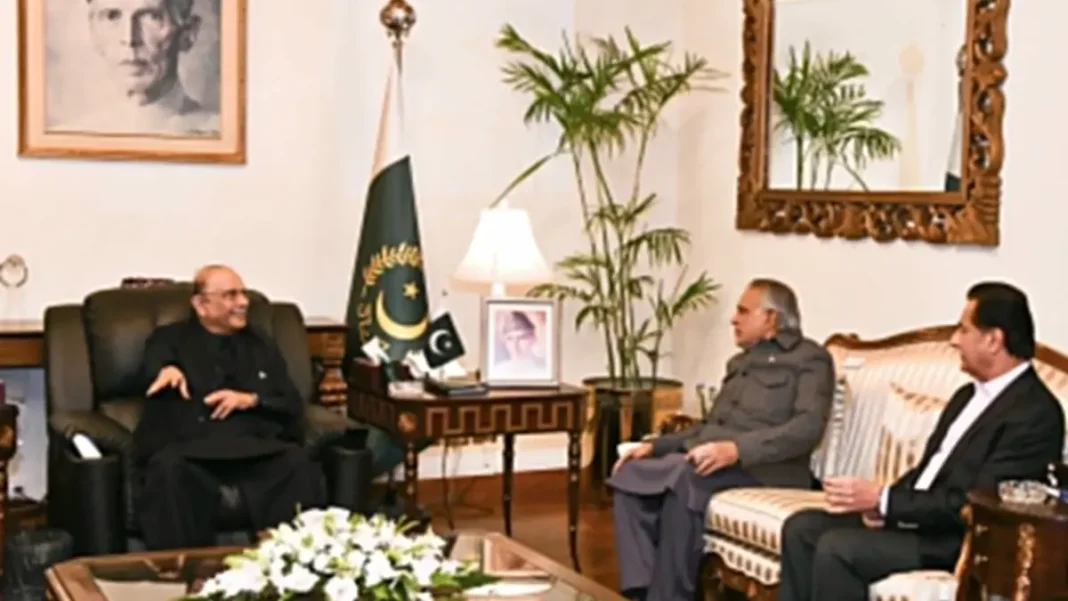
The Zardari Dar Ayaz Sadiq meeting took place at Aiwan-e-Sadr in Islamabad on Saturday, where the president discussed the overall political situation in the country with Deputy Prime Minister and Foreign Minister Ishaq Dar and National Assembly Speaker Sardar Ayaz Sadiq.
The meeting at Aiwan-e-Sadr in Islamabad took place amid the continuing debate over new provinces and a possible referendum on the question. Former prime minister Raja Pervez Ashraf and Senator Sherry Rehman were also present.
Beyond the description of the meeting as a discussion of the “overall political situation”, no readout of decisions was published.
Zardari Dar Ayaz Sadiq meeting: the backdrop
The meeting comes against the backdrop of a debate over new provinces and proposed constitutional amendments that has run for months.
Interior Minister Mohsin Naqvi said on July 31 that the existing political system needed a reset, with the creation of new provinces. The statement drew support from some quarters and strong opposition from others.
The strongest reaction came from the Sindh Assembly, which passed a resolution against any division of the province in August. The PPP, the second largest party in the ruling coalition, dominates the Sindh Assembly.
PPP Chairman Bilawal Bhutto-Zardari urged an end to the debate in October. On November 17, he strongly opposed the proposal of a referendum on new provinces during a meet-the-press event in Karachi, warning that any forced division of Sindh could trigger a “bloodbath”. The remark drew sharp criticism from government ministers and political leaders.
The president subsequently held a meeting with the interior minister and the prime minister, and the three agreed to resolve outstanding issues through dialogue. Saturday’s meeting at Aiwan-e-Sadr is the latest in that round of consultations.
PML-N reaches out to parliamentary parties
The PML-N leadership has decided to reach out to all parliamentary parties, including the PPP and the MQM-P, to discuss the country’s evolving political situation and the proposals for creating new administrative units or provinces.
Well-placed PML-N sources told The Express Tribune that the party would form a political coordination committee to engage parliamentary parties and develop a joint strategy on key national issues through consultations.
The party’s central leadership is examining several constitutional matters, including the proposed creation of new provinces and administrative units, and the possibility of another constitutional amendment.
Any change of this kind faces a high constitutional bar. Article 239 requires a constitutional amendment backed by two-thirds of both houses of Parliament, as well as the consent of two-thirds of the affected provincial assembly. That is why the debate has moved from television studios to meeting rooms at Aiwan-e-Sadr.
The government has also invited the PTI to join a parliamentary committee on electoral reforms, another sign that the ruling coalition is trying to build broader agreement on constitutional questions. President Zardari gave assent to 12 amendment bills on Saturday as well, and Deputy Prime Minister Dar has been pressing Pakistan’s case for a more democratic UN Security Council.
What happens next
No date has been set for the PML-N’s outreach to parliamentary parties, and no draft amendment on new provinces has been made public. The political coordination committee, once formed, will be the forum where the parties test whether any proposal can win the two-thirds support it needs.
For now, the meetings signal that the leadership wants the debate settled through dialogue rather than through public confrontation.
Frequently asked questions
Who attended the meeting at Aiwan-e-Sadr?
President Asif Ali Zardari, Deputy Prime Minister and Foreign Minister Ishaq Dar, National Assembly Speaker Sardar Ayaz Sadiq, former prime minister Raja Pervez Ashraf and Senator Sherry Rehman.
What was discussed?
The overall political situation, against the backdrop of the debate over new provinces and a proposed referendum.
Why is the new provinces debate sensitive?
The Sindh Assembly passed a resolution against any division of the province in August, and PPP Chairman Bilawal Bhutto-Zardari has warned that a forced division of Sindh could trigger a “bloodbath”.
What would creating a new province require?
A constitutional amendment under Article 239, backed by two-thirds of both houses of Parliament and the consent of two-thirds of the affected provincial assembly.
What is the PML-N planning?
Its leadership has decided to reach out to all parliamentary parties and form a political coordination committee to develop a joint strategy on key national issues.