Dar: Pakistan India Talks Depend on New Delhi
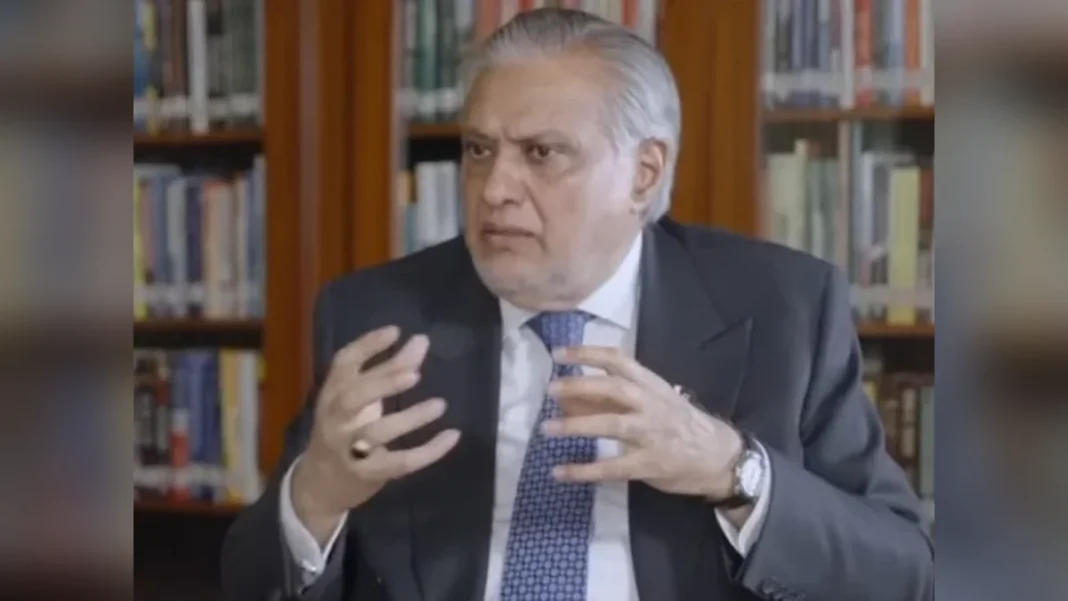
Pakistan India talks depend on New Delhi, Deputy Prime Minister and Foreign Minister Ishaq Dar said in an interview with Euro News on Saturday.
Dar said restarting bilateral dialogue was a decision for India to make. He spoke as Pakistan presses its case on Kashmir, the Indus Waters Treaty and the May 2025 conflict, and as Islamabad points to its own role in bringing the United States and Iran to the table.
Why Pakistan India talks stalled
Dar pointed to India’s August 5, 2019 changes in Jammu and Kashmir, which he said contravened United Nations Security Council resolutions. He then raised the May 2025 conflict between the two nuclear-armed neighbours after the Pahalgam incident.
He said Prime Minister Shehbaz Sharif had immediately offered an international investigation into the incident, which New Delhi declined. The offer and the refusal frame Pakistan’s argument that it sought an independent account of the attack while India chose not to take it up.
The interview kept the focus on New Delhi’s choices. Dar did not set new conditions of his own for talks, and instead placed the decision to restart dialogue with India.
The Indus Waters Treaty dispute
Dar also strongly objected to India’s announcement placing the 1960 Indus Waters Treaty in abeyance, arguing that international agreements cannot be unilaterally suspended. He cited a Court of Arbitration ruling affirming the treaty’s validity.
Pakistan has already taken its case on the treaty to the United Nations, calling India’s move outlaw behaviour, and the warning that placing the treaty in abeyance would carry consequences was first raised in October. The Foreign Office has also pushed back in public: it rejected India’s recent remarks about Pakistan’s mineral wealth as it defended the country’s position.
Stressing that the water supply underpins the agriculture, livelihoods and food security of Pakistan’s 260 million people, Dar said: “No treaty can be held in abeyance… Pakistan simply cannot afford to just accept any variation in the treaty.”
He added that “weaponising water is not desirable” and urged respect for international treaties. “I think international treaties need to be respected, no matter how big or small country. So, I think we should learn these basic principles which will bring back the international order to prove that justice is there for everybody,” he said.
The treaty, signed in 1960, divides the rivers of the Indus system between the two countries. Pakistan’s case is that the agreement has no clause allowing one side to suspend it, and that the Court of Arbitration has upheld that reading.
Pakistan’s role in US-Iran talks
Dar voiced hope for an imminent deal between Washington and Tehran, stressing that the global community cannot sustain prolonged conflict in the Middle East.
“I’m a born optimist. I think I would certainly expect that sooner or later, I hope it’s sooner, that we will achieve that objective. Because, you see, the world cannot afford. See the energy supply chain disruptions. See the price hikes. See the people suffering. And even in our country, people are suffering,” he said.
Despite later violations of the June 18 accord, Dar said Islamabad had not given up on the peace process and continues to press both Washington and Tehran to honour their signed commitments.
He gave a detailed account of Pakistan’s mediation. Recounting the outbreak of hostilities on February 28, Dar said Pakistan was the first nation to condemn the Israeli strike. He then contacted Iranian Foreign Minister Abbas Araghchi to urge restraint and advise against targeting Gulf and Middle Eastern states, though Iran later launched strikes on US bases in the region.
Pakistan’s mediation role has been building for months, and Dar has used it to argue for a foreign policy that avoids bloc politics. He made the same case this week, saying Pakistan would not join rival camps.
The effort culminated on April 10 and 11, when Islamabad hosted the first direct face-to-face negotiations between Washington and Tehran in 47 years. Dar said dialogue and diplomacy remain the only viable path to resolving extreme global conflicts, rejecting unilateralism and bloc politics. He noted that Pakistan has championed peaceful dispute resolution and respect for state sovereignty throughout its 2025 to 2026 tenure on the UN Security Council. The interview was reported by The Express Tribune.
Frequently asked questions
What did Dar say about talks with India?
He said restarting bilateral dialogue “depends on New Delhi”, pointing to India’s August 5, 2019 changes in Jammu and Kashmir and the May 2025 conflict after the Pahalgam incident.
What did Pakistan offer after the Pahalgam incident?
Prime Minister Shehbaz Sharif immediately offered an international investigation into the incident. Dar said New Delhi declined the offer.
What is the dispute over the Indus Waters Treaty?
India announced it was placing the 1960 treaty in abeyance. Pakistan says international agreements cannot be unilaterally suspended, and points to a Court of Arbitration ruling affirming the treaty’s validity.
Why does the treaty matter to Pakistan?
Dar said the water supply underpins the agriculture, livelihoods and food security of Pakistan’s 260 million people, and that “weaponising water is not desirable”.
What role did Pakistan play in US-Iran talks?
Islamabad hosted the first direct face-to-face negotiations between Washington and Tehran in 47 years on April 10 and 11, after Pakistan condemned the February 28 Israeli strike and urged restraint on both sides.