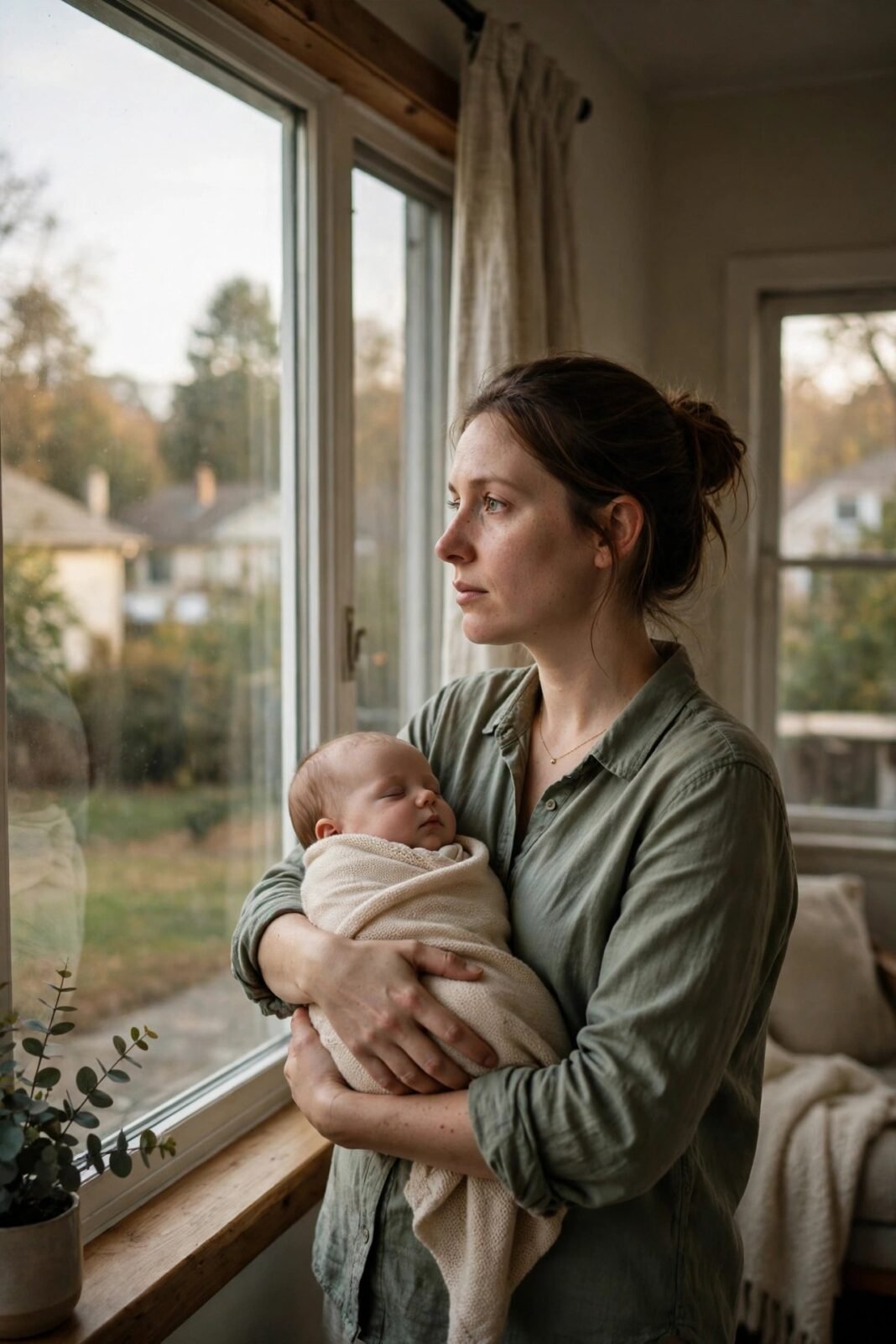
The visitors leave, and the house goes quiet. Everyone held the baby, took photos, and asked about feeds and sleep. Nobody asked how she was doing. This is the loneliness of new mothers, and it can feel heaviest in a full house.
She is never truly alone, yet she feels alone all the time. The baby needs her every hour. Meanwhile, the life she had before — friends, work, easy conversations — feels far away. In fact, that gap is where the loneliness grows.
The Visit That Was All About the Baby
It starts with the best of intentions. Friends and family come to meet the baby, and the baby is the star. They ask how much she weighs, whether she sleeps, and if she looks like her father. As a result, the mother becomes the background of her own story.
She may smile and pass the baby around. She may answer the same questions again and again. But inside, she is waiting for one person to ask, “How are you?” That question rarely comes. And when it does, she may say “fine” anyway, because the honest answer feels too heavy to say out loud.
Why the Loneliness of New Mothers Happens
Becoming a mother changes every part of a woman’s day. Her time is no longer her own, and her body is still recovering. Friendships shift too, because she cannot meet friends the way she used to. So the world she knew shrinks, just when she needs it most.
Time alone with a baby is not the same as real rest. A 2025 study of first-time mothers found that time free from caregiving became scarce, and that both personal time and social time lifted their mood. In other words, she needs time for herself and time with others, and she gets little of either.
More than 8 in 10 mothers under 30 say they feel lonely at some time. The feeling is common, but it is rarely talked about. As a result, each mother thinks she is the only one who feels this way. Friendships often change after a big life step, and our article on why women lose friends after marriage looks at how that quiet drift happens.
What Loneliness Does to a New Mother
The loneliness of new mothers is not just a sad feeling. It can drain her energy and darken her mood. She may cry for no clear reason. She may feel irritable with the people she loves. Over time, the loneliness can make everything harder, from sleep to patience to joy.
Researchers describe three sides to this loneliness. There is the social side — fewer people around. There is the emotional side — feeling unseen. And there is a deeper side — feeling disconnected from the person she used to be. Above all, she may feel overlooked as an individual, not just as a mother. That worn-down feeling is close to emotional exhaustion, and our guide to emotional exhaustion in women explains how hidden burdens build up behind a smile.
Why She Stops Reaching Out
She may want to call a friend, and then decide not to. She may think she has nothing to say except baby talk. Or she may worry that she is a burden. So the phone stays silent, and the gap grows wider.
Shame plays a part too. She may think a good mother should feel grateful, not lonely. She may compare herself with mothers who seem to manage it all. In fact, many of them feel the same loneliness. They are simply quiet about it, just like she is. Loneliness can live inside a marriage too, and our article on married but lonely women looks at feeling unloved in your own home.
How to Ease the Loneliness of New Mothers
Small steps count more than big plans. Firstly, tell one person how you feel. A short message — “I feel lonely today” — can open a door. Secondly, join a group for new mothers, in person or online. Being with women who understand can lift a heavy weight.
Ask for company, not just help. A friend who sits with you while the baby sleeps is worth more than a perfect house. For example, invite someone for tea and say you just want to talk. Most people are glad to be asked.
Protect a little time for yourself each day. A short walk, a hot shower, or ten minutes with a book can remind you that you are still you. In fact, that small time is not selfish. It is what keeps you well.
When Loneliness Needs More Support
Loneliness that does not lift, or that comes with constant sadness, anxiety, or trouble sleeping, deserves support. Talk to your doctor, nurse, or midwife about how you feel. You do not need to wait until things feel unbearable. Asking early is a strong step, not a weak one.
You can also find free, confidential support wherever you live through Find a Helpline, a global directory of helplines in more than 150 countries. Befrienders Worldwide also lists emotional support centres around the world. Postpartum Support International offers free online support groups for new mothers at postpartum.net.
The loneliness of new mothers is real, but it does not have to be permanent. You are a mother now, but you are still a person, and you deserve to be asked about too.
This article is general information, not medical advice. Please speak to a healthcare professional if you are worried about your health.
When did someone last ask how you are — and really mean it? You are not alone in this feeling, and you do not have to carry it quietly.