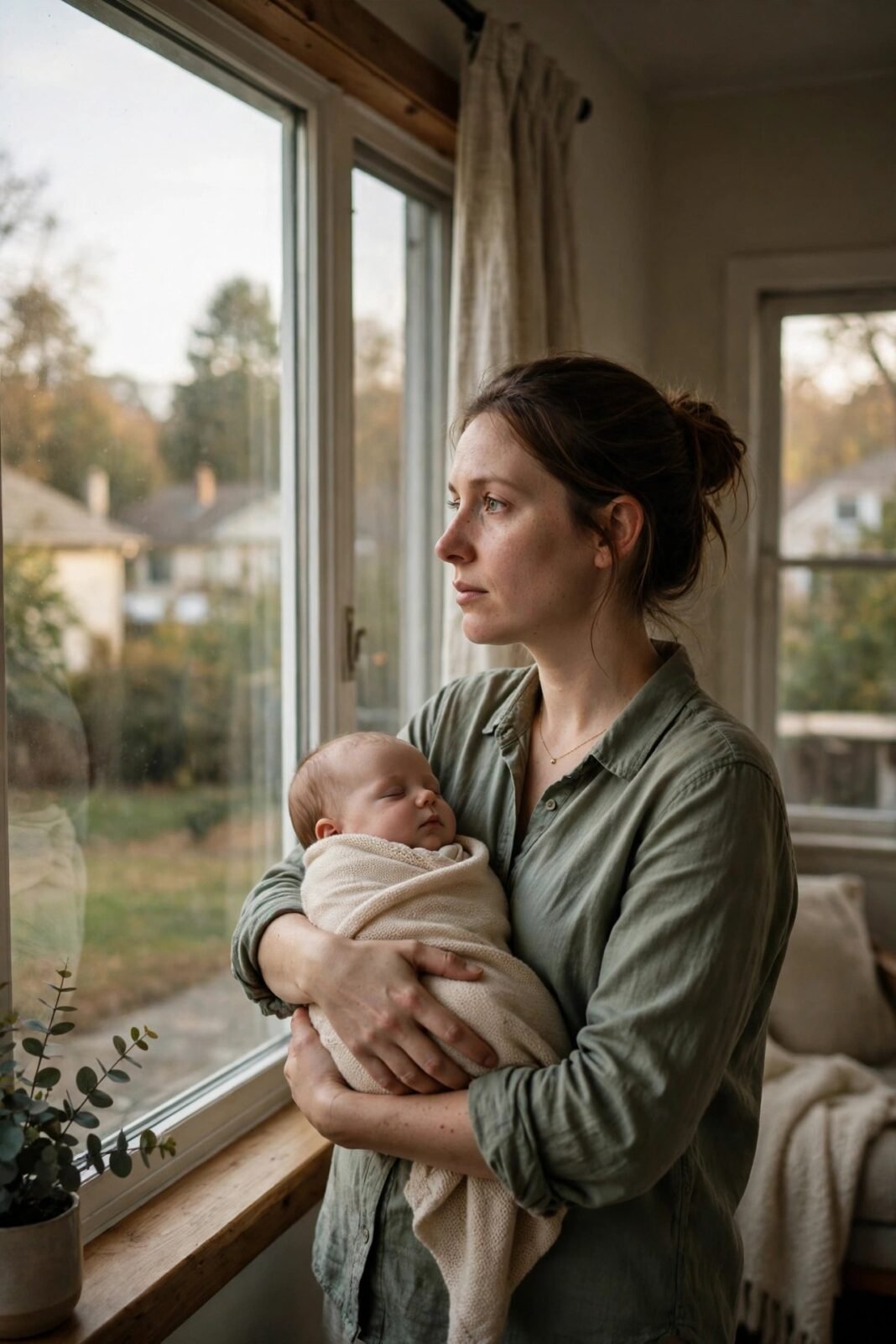
You stand in front of the mirror, weeks after the baby arrived, and the woman looking back feels like a stranger. Your clothes fit differently. Your skin, your shape, your energy — everything has changed. And yet everyone around you talks as if your body should already be back to normal. This is postpartum body image, and it is one of the quietest struggles new mothers face.
You are not vain for noticing the change. In fact, as many as three in four new mothers report concerns about their body image after giving birth. So if you feel this way, you are far from alone. But most women never say it out loud, because they feel they should only feel grateful.
The Mirror Does Not Feel Like Yours
Think about the first time you tried on your old jeans. Maybe they did not fit. Maybe they fit, but your body felt different inside them. Your belly is softer, your breasts are heavier, and your hips may feel wider. Stretch marks may trace lines you never had before.
Meanwhile, the world moves on quickly. Friends ask when you will “get your body back”. Social media shows mothers who look unchanged weeks after birth. And so the gap between your body and that image grows wider every day.
It is not just about weight. In fact, research found that body dissatisfaction often grows in the months after birth, even when women lose weight. So the struggle is not really about a number on a scale. It is about feeling at home in your own skin again.
Why Postpartum Body Image Hurts So Much
Your body has done something enormous. It grew a person, gave birth, and now feeds and soothes a baby around the clock. But instead of rest, it gets judged — by others, and worst of all, by you.
Part of the pain comes from the “bounce-back” story. This is the idea that a body should return to its old shape quickly after birth. However, that story ignores how much a body changes in pregnancy. As a result, many women feel they have failed, when in fact their bodies are still recovering.
Comments from other people add weight too. A remark about your size, even a kind one, can stay in your head for days. For example, “you look great for a new mum” sounds like praise. But it still tells you that your body is being watched and judged.
Sleep loss makes everything harder. When you are exhausted, small worries grow bigger. And when your whole day revolves around the baby, there is little time left to care for yourself.
The Pressure to Bounce Back
The pressure does not come from one place. It comes from magazines, from family gatherings, and from well-meaning advice. It also comes from inside — from the voice that says you should look like yourself again.
Social media makes it worse. Photos of mothers with flat stomachs weeks after birth are everywhere. But those photos hide the truth: lighting, angles, and editing. In fact, researchers found that unrealistic media images and appearance-focused comments can deepen body dissatisfaction after birth.
On the other hand, supportive partners and strong social networks help women feel more positive about their bodies. So the people around you matter more than any photo online. Our guide on the pressure to have a perfect body looks at how beauty standards wear women down long before motherhood begins.
What Postpartum Body Image Does to Your Mind
When you dislike your body, the feeling spreads. You may avoid photos with your baby. Invitations may go unanswered, and mirrors may get avoided — or checked far too often.
Over time, this can wear down your confidence. It can also strain your closest relationships, because you hide how you feel. And because body image struggles are linked to low mood, the sadness can deepen if nobody notices.
Some women cope by eating very little or exercising hard while still recovering. But that path leads to exhaustion, not peace. Your body needs food and rest to heal, not punishment.
If the sadness feels heavy or does not lift, it is worth talking to a doctor or midwife. That is not a failure. In fact, asking for help is one of the strongest things a new mother can do. If guilt follows you everywhere, our guide on why mothers feel guilty about everything may help you see where that pressure comes from.
How to Make Peace With Your Body
You cannot force yourself to love your body overnight. But you can start with small, kind steps. Firstly, change what you look at. Unfollow accounts that make you feel bad about your body. Instead, follow real mothers who talk honestly about recovery.
Secondly, dress for the body you have now. Clothes that fit and feel good change how you carry yourself. So buy a few pieces that suit you today, instead of waiting for an old size.
Thirdly, move your body gently, for how it feels — not for how it looks. A short walk with the baby, a slow stretch, or a few minutes of fresh air can lift your mood. But check with your doctor or midwife before starting any exercise after birth.
Finally, talk about it. Tell your partner, a friend, or another new mother how you feel. Guilt shrinks when it is spoken. And you may find that the woman next to you feels exactly the same. That tired, stretched feeling has a name, and our article on emotional exhaustion in women explains how hidden burdens build up behind a smile.
When to Ask for More Support
Sometimes postpartum body image worries grow into something bigger. If you often feel sad, anxious, or unable to enjoy your baby, please talk to a doctor, midwife, or mental health professional. You can also find free, confidential support wherever you live through Find a Helpline, a global directory of helplines. Befrienders Worldwide also lists emotional support centres around the world.
You grew a whole person. Your body is not broken — it is changed. And changed is not the same as ruined. So be as kind to yourself as you are to your baby. You deserve the same patience. What is one kind thing you could say to your body today?
This article is general information, not medical advice. Please speak to a healthcare professional if you are worried about your health.