Bangladesh Garment Wage Rise: Workers Win 36% Pay Deal
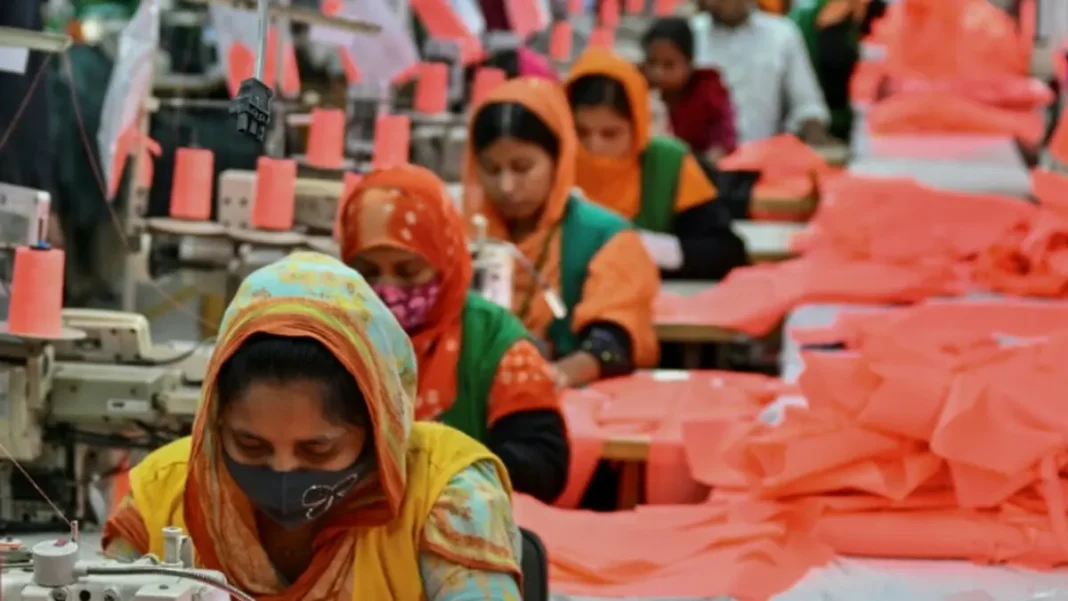
The Bangladesh garment wage rise will lift minimum monthly pay for garment workers by 36 per cent, after a deal ended weeks of protests that cost the industry hundreds of millions of dollars. The wage board voted early on Wednesday to set the new floor at 17,000 taka a month, up from 12,500 taka, and the new rate takes effect in January.
Workers had demanded 30,000 taka a month, about $240, saying their pay had failed to keep pace with the rising cost of food, housing, transport and health care. The board settled on a figure well below that demand, yet labour leaders accepted it as a step forward after lengthy talks with factory owners.
“Although we are not completely satisfied, the outcome is not entirely bad either,” Babul Akhter, the labour representative on the wage board, told reporters. He noted that workers used to wait five years between wage revisions, but this time the revision came after three years.
How the Bangladesh garment wage rise was agreed
Judge Syed Azad Subhani, who chairs the government-appointed wage board, said a majority of the board backed the 17,000 taka figure after a vote early on Wednesday, according to Dawn. Workers’ representatives then urged people to return to factories.
The deal followed weeks of demonstrations across industrial zones, some of which turned violent. Workers clashed with police as recently as Tuesday, and it was not immediately clear how they would react to the settlement.
The Bangladesh Garment Manufacturers and Exporters Association (BGMEA) said on Sunday that the protests had cost the industry an estimated $428 million. Orders worth $254 million had shifted to other countries, the association said, and the disruption came just before the busy Christmas season.
An industry that carries the economy
The garment industry earns Bangladesh around $38 billion a year and supplies more than 150 countries. It generates four-fifths of the country’s export earnings and employs more than four million people. The United States is its biggest single market, while the European Union is its largest trading bloc.
Bangladesh is the world’s second-biggest garment exporter behind China. The sector grew from almost nothing after independence in 1971, when the country ranked among the world’s poorest, into the engine of its economy. The central bank calls garments the country’s “export engine”.
Yet that success rests on a vast, relatively low-paid workforce. Disputes over pay, working conditions and labour rights have run for years. The 2013 Rana Plaza factory collapse, which killed more than 1,100 people and injured thousands, exposed dangerous buildings and weak labour protections. It forced global brands and unions to agree on inspections and safety standards.
What the deal means for Pakistan’s textile trade
Pakistani exporters will watch closely where the $254 million in shifted orders lands. Pakistan competes with Bangladesh for many of the same buyers in Europe and North America, and a higher wage floor in Dhaka could make Pakistani factories more attractive on price.
Pakistan’s textile exports rose in the first four months of the current fiscal year, and German importers have been looking to Pakistan for more orders, which puts the industry in a position to pick up work that leaves Bangladesh. Any shift will still depend on energy costs, delivery times and quality, not on wages alone.
Feature Pakistan reported on the fourth day of the garment protests, when workers were still pressing the 30,000 taka demand. The settlement closes that round of unrest, though the gap between demand and the agreed figure leaves room for fresh tension.
Bangladesh also carries heavy external debts, and its foreign borrowing has climbed past $113 billion, which makes steady export earnings matter even more. A calm factory floor helps keep those earnings flowing.
Frequently asked questions
How much will Bangladesh garment workers earn now?
The minimum monthly wage rises to 17,000 taka from 12,500 taka, a rise of 36 per cent. The new rate takes effect in January.
What did workers demand?
Workers demanded a minimum monthly wage of 30,000 taka, about $240, up from 12,500 taka. They said pay had failed to keep pace with the cost of food, housing, transport and health care.
How much did the protests cost the industry?
The BGMEA put the cost at an estimated $428 million, with orders worth $254 million shifting to other countries. The disruption came ahead of the Christmas season.
How big is Bangladesh’s garment industry?
It earns around $38 billion a year, supplies more than 150 countries and employs more than four million people across about 4,000 factories.
Why does the wage deal matter for Pakistan?
Pakistan competes with Bangladesh for the same buyers. Orders worth $254 million have already shifted elsewhere, and Pakistani exporters hope some of that work comes their way.