PKK Fighters Quit 14 Bases in Northern Iraq in Peace Boost
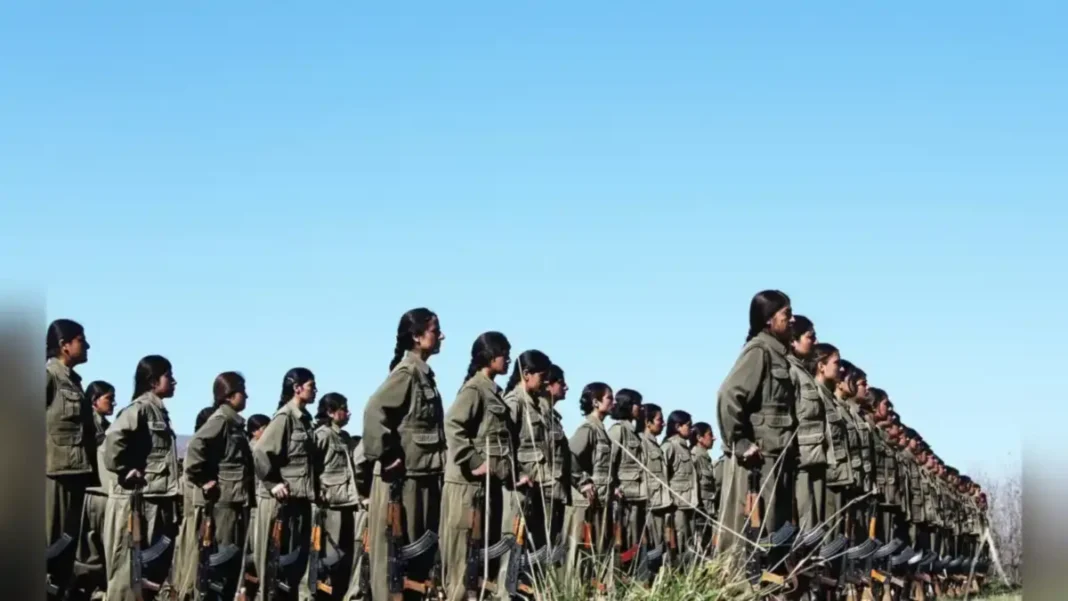
Fighters of the Kurdistan Workers’ Party (PKK) have withdrawn from 14 more bases in northern Iraq, in a major boost to the emerging peace deal with Turkiye. Dawn reported on Tuesday that the PKK fighters in northern Iraq withdrawal took place in the Hakurk region, citing Turkish state media and intelligence services.
The evacuations took place on November 18 in Hakurk, a mountainous area at the junction of Iraq, Turkiye and Iran, which has long been one of the fighters’ main rear bases. The defence ministry said the “caves and shelters had been rendered unusable”, the Anadolu state news agency said, quoting security sources, shorthand for Turkiye’s MIT intelligence services.
Withdrawal from rebel bases is a key part of the emerging peace process between the PKK and Ankara, aimed at ending decades of violence that has left at least 50,000 dead.
PKK fighters in northern Iraq withdrawal builds on earlier steps
Last month, the PKK said it had withdrawn from four key bases in northern Iraq, in a move confirmed by Turkish intelligence. It came two months after Turkiye voted through a bill offering limited amnesty for PKK militants, in a major step in the peace process that began two years ago.
Turkish officials quoted by Anadolu said the progress showed the process was moving in the right direction. “Every positive development … brings us one step closer to the objective of reintegrating those returning to the country under conditions laid out in the law,” they said. “Concrete, verifiable developments” on the ground showed the process was moving in the right direction, they said, noting that “many critical milestones” had been passed.
What must happen before the deal takes effect
Ankara has repeatedly said the disarmament and dissolution of the PKK must be formally confirmed by Turkiye’s National Security Council (MGK) and then published in the government’s official journal before the August law can come into effect.
The MGK was widely expected to hold its next meeting on Friday, although there has been no official confirmation of the date. The process is being overseen by the Coordination Board, under which there are four sub-committees to oversee the practical aspects of the PKK’s decision to dissolve itself.
Why the deal matters
The withdrawal matters because bases in northern Iraq have been the PKK’s rear area for decades, and giving them up is the clearest practical test of whether the group intends to disarm. Each verified evacuation removes a staging ground and gives Ankara something concrete to show a public that has lived with the conflict for generations.
The deal also sits inside a wider pattern of settlements taking shape across the region. Armenia has dropped its claim to Karabakh in a draft constitution, while 14 countries have backed the International Court of Justice ruling on the Rohingya. Turkiye’s own diplomacy remains active on other fronts, as its foreign minister warned about the world economy and an Iran peace deal, and the UN chief has called for an AI risk framework within a year.
What happens next
The next marker is the National Security Council meeting, widely expected on Friday, where the disarmament and dissolution of the PKK would need formal confirmation. Until the council confirms it and the decision is published in the official journal, the August amnesty law cannot come into effect, and the returnees cannot be reintegrated under its terms.
Frequently asked questions
How many bases did the PKK leave in northern Iraq?
PKK fighters withdrew from 14 more bases in the Hakurk region of northern Iraq, evacuated on November 18.
Where is Hakurk?
Hakurk is a mountainous area at the junction of Iraq, Turkiye and Iran, which has long been one of the PKK fighters’ main rear bases.
What did the PKK do last month?
Last month, the PKK said it had withdrawn from four key bases in northern Iraq, in a move confirmed by Turkish intelligence.
What must happen before the amnesty law takes effect?
The disarmament and dissolution of the PKK must be formally confirmed by Turkiye’s National Security Council and then published in the government’s official journal.
How many people have died in the conflict?
Decades of violence between the PKK and Ankara have left at least 50,000 dead.