Pakistan China LPG Plant, Petrol Imports Fast-Tracked
Pakistan and China have agreed to fast-track a Pakistan China LPG plant and petrol import projects, as Islamabad looks to Chinese investment to ease pressure on its energy supplies. The two sides will set up a Joint Commercial Team to turn the talks into practical projects.
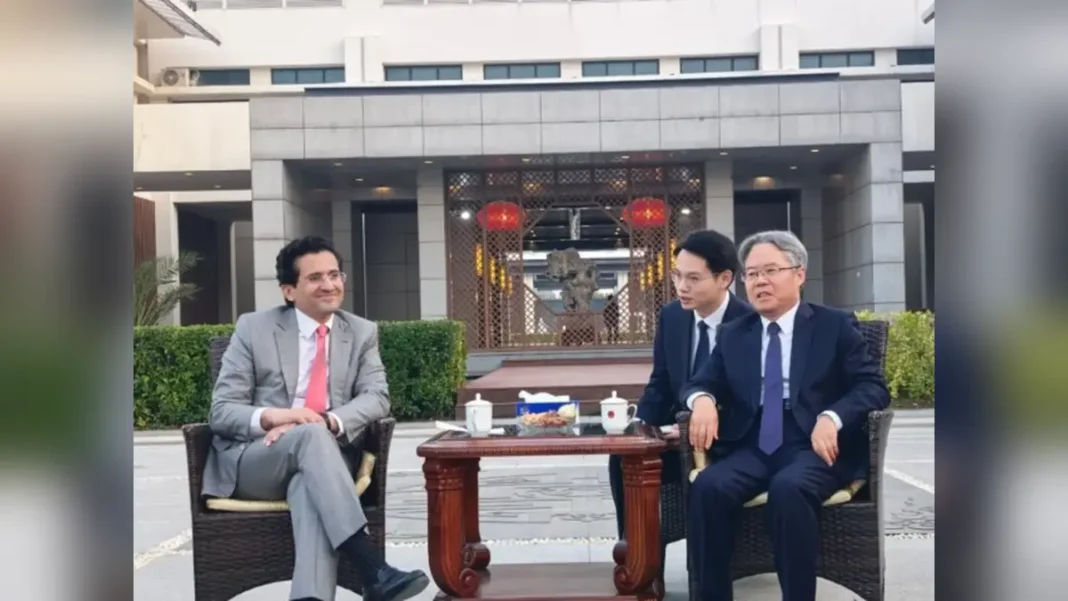
Energy Minister Ali Pervaiz Malik and Chinese Ambassador Jiang Zaidong reached the understanding in Islamabad on Wednesday, the Ministry of Energy said. The Express Tribune reported the meeting on Wednesday. The team will develop a roadmap to speed up project work and investment.
Malik said the priority was to turn dialogue into practical projects. The meeting also covered upstream oil and gas exploration, offshore development and mineral resources.
Pakistan China LPG plant talks held in Islamabad
The ministry said both sides agreed to fast-track the projects and establish the Joint Commercial Team, which will assess investment opportunities, engage prospective companies and develop a roadmap.
In a post on X, the ministry said the meeting aimed to advance Chinese investment in Pakistan’s energy sector. A Petroleum Division statement on Tuesday said Pakistan State Oil would serve as a potential commercial partner for Chinese companies exploring downstream investment.
The engagement is part of a wider push to attract Chinese investment in petroleum and energy infrastructure, including exploration, refinery modernisation, storage and offshore development.
PSO named as likely partner for Chinese firms
PSO’s role as a potential commercial partner gives the talks a practical shape. The state oil company would work with Chinese firms on downstream projects, while the Joint Commercial Team maps out which investments move first.
Pakistan and China are already working together on energy infrastructure. The two countries are developing a fuel storage terminal, and Chinese firms have shown interest in storage, LPG terminals and refinery upgrades.
In July, Malik met a delegation led by Hou Jianxin, chairman of China’s Shandong Xinxu Group, which expressed interest in a long-term partnership covering oil and gas production, refinery upgrades, offshore exploration and equipment manufacturing, including a facility in Pakistan to serve domestic and export markets.
Talks covered oil, gas and minerals
In September, Malik met energy infrastructure company VTTI and technology firm Honeywell UOP to explore investment in petroleum storage, LPG terminals and refinery modernisation.
VTTI expressed interest in bonded warehousing, re-export facilities and expanded LPG storage. Honeywell UOP discussed advanced refining technologies for Pakistan.
Pakistan is also modernising its own refining sector. A $5.7 billion plan will upgrade five major refineries and nearly double domestic petrol output, which would cut the country’s reliance on imported fuel over time.
Winter gas pressure shapes the push
The talks come as Pakistan faces uncertainty over imported gas supplies. LNG shipments from Qatar have been disrupted by the conflict in the Middle East and instability around the Strait of Hormuz.
With domestic gas output short of winter demand, the government has turned to the spot market for extra cargoes, at far higher prices than its long-term deals with Qatar. Pakistan planned 10 spot LNG cargoes between November 2026 and February 2027, alongside 12 shipments under existing agreements, with the winter bill projected to exceed $1.2 billion.
The squeeze has also prompted the government to consider letting power producers use idle LNG terminal capacity to arrange their own imports.
Gas pressure is already reaching households. LPG prices have surged in Khyber-Pakhtunkhwa as winter demand rises, while SNGPL has cracked down on consumers using gas compressors.
For motorists, there was some relief this week. Petrol fell to Rs314 a litre from November 26, with diesel at Rs348, after the government cut prices for the fortnight.
The Joint Commercial Team will now decide how fast the projects can move from talks to construction. For Pakistan, the test is whether this round of meetings produces working plants and pipelines, not just more statements.
Frequently asked questions
What did Pakistan and China agree on energy?
The two sides agreed to fast-track an LPG plant and petrol import projects, and to set up a Joint Commercial Team to develop a roadmap.
Who will work with Chinese companies on the projects?
Pakistan State Oil would serve as a potential commercial partner for Chinese companies exploring investment in downstream energy infrastructure.
Why is Pakistan seeking Chinese energy investment?
Pakistan faces winter gas shortages, costly LNG imports and ageing refineries. Chinese investment is sought for LPG plants, storage, refinery upgrades and offshore exploration.
What will the Joint Commercial Team do?
It will assess investment opportunities, engage prospective companies and develop a roadmap to accelerate project implementation and investment.
How much will winter LNG imports cost Pakistan?
Pakistan planned to import 10 spot LNG cargoes between November 2026 and February 2027, alongside 12 shipments under existing agreements, with the winter import bill projected to exceed $1.2 billion.