The kettle clicks off, and the kitchen feels cold and quiet. Outside the window, the street is dark, wet and empty. On mornings like this, even a short walk feels like too much. However, your body still needs movement, perhaps now more than ever. That is why gentle winter exercises for seniors matter so much. They bring activity indoors, right into your warm and familiar home.
You do not need a gym, special clothes or expensive equipment. Instead, you need a sturdy chair, a clear corner and a little patience with yourself. In fact, the best winter movement is often the simplest kind. It fits into your day, and it never asks more than your body can give.
Why Winter Exercises for Seniors Matter in the Cold Months
Cold weather quietly changes daily habits for older adults. For example, icy paths and early darkness make outdoor walks feel risky. As a result, many people sit for longer stretches without noticing. Meanwhile, stiff joints and tight muscles slowly build up. In addition, less movement can lower your mood and disturb your sleep.
Movement, however, works almost like oil for the body. It keeps joints looser and muscles awake. Moreover, gentle activity supports balance, and balance protects you from falls. Regular light movement also helps circulation and steady energy through the day. So the goal is not hard workouts at all. The goal is simply to keep your body gently in motion, even on the coldest day. If you want a wider guide to moving safely at any time of year, our guide to safe exercises for seniors is a helpful place to begin.
Gentle Chair Movements You Can Do at Home
A firm chair with no wheels is your best winter friend. Firstly, sit tall with both feet flat on the floor. Then lift one foot slowly and set it down again. After that, change sides and follow the same calm rhythm. Also, you can roll your shoulders in slow circles to loosen your neck. In addition, gentle ankle circles help wake up stiff feet and toes.
Seated marching is another kind and simple option. You lift one knee a little, then the other, like a slow walk in place. Meanwhile, your arms can swing softly at your sides. If a movement feels too hard, simply make it smaller. Above all, stop at once if anything hurts or feels sharp. Pain is a signal, not a challenge, so please listen to it.
Standing Winter Exercises for Seniors With Support Nearby
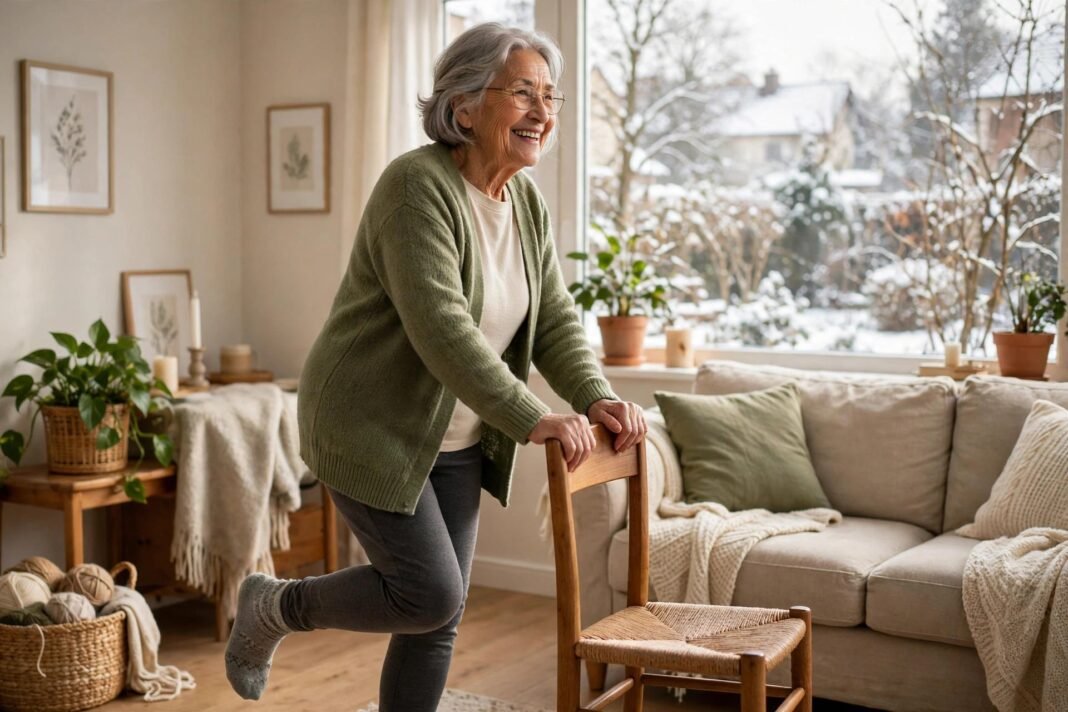
When you feel steady, standing movements add gentle strength. However, always stand beside a table, a counter or a sturdy chair. For example, hold the chair back and rise slowly onto your toes. Then lower your heels down with the same slow care. Also, you can shift your weight slowly from one foot to the other. In fact, this small sway quietly trains your balance over time.
Walking on the spot is another safe choice indoors. You can walk slowly around your room or along a hallway. Moreover, a few trips to the kitchen and back still count as movement. If you use a walking aid, keep it close and move at your own pace. Never rush, and never feel embarrassed about going slowly. Walking carries real rewards for your body, and you can read more about the many benefits of walking in our guide.
Simple Safety Rules Before You Begin
A few small checks make indoor movement much safer. Firstly, clear the floor of loose rugs, cords and clutter. Then wear firm, flat shoes or socks with a good grip. In addition, keep a glass of water nearby, because heated rooms can dry you out. Also, warm the room a little before you start, since cold muscles feel stiffer.
Start slowly, especially during your first days. However, slow never means careless or lazy. It simply means kind. If you feel dizzy, breathless or unwell, sit down and rest at once. Finally, tell a family member about your new routine, so someone knows your plan. And always keep one hand near solid furniture whenever you stand to move.
Making Movement a Warm Part of Your Winter Day
Small habits often beat big plans in winter. For instance, you can move a little after breakfast, when the house feels warm. Then you might stretch gently while the kettle boils at tea time. In addition, moving with music makes the time feel shorter and lighter. A favourite song can turn plain movement into a small daily pleasure.
Company helps too, whenever it is available. A spouse, a friend or a grandchild can join you for a few gentle movements. As a result, exercise starts to feel like time together, not a chore. If you live alone, a phone call with a friend while you move can lift your spirits. Indeed, winter feels shorter when movement and laughter share the same room.
This article is general information, not medical advice. Please speak to a healthcare professional if you are worried about your health.
Also, speak to your doctor before starting new movement if you have a heart condition, joint problems or recent surgery. Rest days are part of staying active, not a failure, so take them without guilt.
Winter will pass, as it always does. Meanwhile, these small indoor movements can keep your body awake and your spirits steady. You do not need to do everything, and you do not need to be perfect. Instead, choose one gentle movement today and enjoy how it feels. Which small winter movement will you try first in your own home?