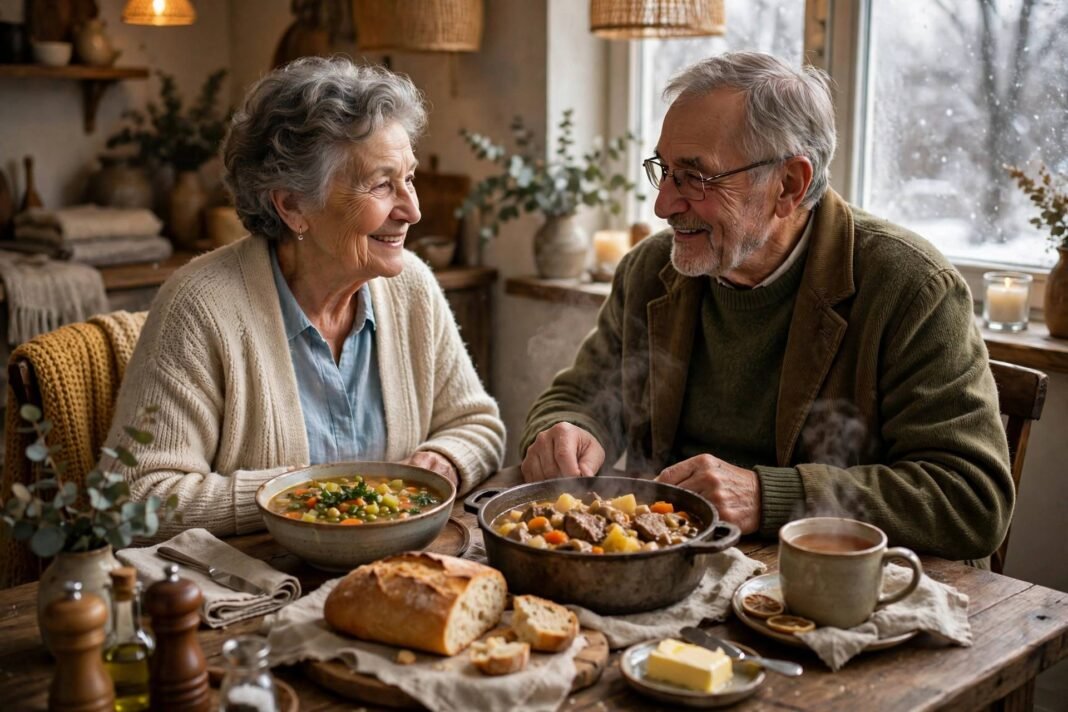
The kitchen window has steamed up, and a pot of soup bubbles gently on the stove. Outside, the street is dark already, and the wind feels sharp against the glass. Inside, however, the smell of warm food makes everything feel calm and safe. On days like these, the right winter foods for elderly people can lift the mood as much as they feed the body. Warm, soft and nourishing meals are one of winter’s simplest pleasures.
What Older Bodies Need More of in Winter
As we age, our bodies quietly change the way they handle food. Appetites often grow smaller, so every bite needs to work a little harder. In addition, chewing can become tiring when teeth or gums are sore. Digestion may also slow down, which means heavy, greasy meals can feel uncomfortable. For these reasons, winter meals for older adults should be soft, warm and full of goodness.
Protein matters more with age, because it helps muscles stay strong. Strong muscles, in turn, protect balance and independence. Meanwhile, colourful vegetables bring vitamins that support eyes, skin and energy. Fibre also helps digestion stay regular and keeps blood sugar steadier after meals. Finally, older bodies often feel thirst less clearly, so warm fluids through the day really help.
Warmth itself is part of the nourishment. A hot meal brings comfort on a cold day and can make eating feel worthwhile again. Many older people also eat less when they feel cold or lonely. So a warm, shared meal can lift both appetite and spirits. Simple food, eaten slowly and in good company, often does the most good.
Winter Foods for Elderly Plates: Soups, Stews and Soft Meals
A good soup is almost made for older appetites. It is warm, soft and easy to swallow, and it carries flavour in every spoonful. For example, a simple lentil soup gives protein, fibre and comfort in one bowl. Vegetable soups with carrots, potatoes and leeks are gentle and filling too. Best of all, soup can cook slowly while you rest.
Stews offer the same comfort in a heartier form. Tender chicken, soft fish or beans become meltingly soft after slow cooking. As a result, they are kind to sore teeth and weak jaws. Mashed root vegetables, such as carrots, squash and sweet potatoes, add natural sweetness. Soft scrambled eggs, omelettes and porridge also make easy, nourishing meals at any hour.
Breakfast deserves the same warm thinking. Hot porridge with soft fruit is gentle, filling and easy to make. Moreover, it releases energy slowly, which helps the morning feel steady. A bowl of warm oatmeal works in the same kind way. Add a spoon of honey or some mashed banana if sweetness is welcome.
Batch cooking makes winter eating easier on tired days. Cook a large pot of stew, then freeze small portions for later. Consequently, a nourishing meal is always only minutes away. Label each portion clearly, and use the oldest ones first. This simple habit saves money, energy and worry.
Protein and Colour: Winter Foods for Elderly Strength
Try to include a protein food at every meal. Eggs, fish, chicken, beans, lentils and yoghurt are all simple choices. In fact, a small portion eaten often works better than one large serving. Ground seeds can also add quiet strength to soups and porridge, and the health benefits of seeds make them worth a regular place in the kitchen. Cheese, milk and yoghurt, meanwhile, support bones as well as muscles.
Colour on the plate is another easy guide. Orange vegetables like carrots and squash are rich in goodness for eyes and skin. Dark green leaves, such as spinach and cabbage, cook down softly into stews. These colourful foods also support the body’s natural defences, and you can read more about how to boost immunity naturally through everyday habits. A little fruit each day, stewed or fresh, rounds the plate off nicely.
Season gently, and let herbs and spices do the heavy lifting. Garlic, ginger, cumin and cinnamon add warmth without extra salt. Too much salt is best avoided, especially where blood pressure is a concern. Fresh herbs also make soft food smell inviting again. When food smells good, appetite usually follows.
Small snacks can bridge the gap between meals. A piece of soft cheese, a boiled egg or a small yoghurt all help. Similarly, a handful of soft stewed fruit adds sweetness and fibre. Keep snacks simple, soft and easy to reach. That way, eating little and often never feels like hard work.
Warm Drinks to Sip Through the Day
Warm drinks bring comfort between meals as well. Herbal teas, warm milk and even a mug of thin soup all add gentle fluid. In addition, holding a warm cup soothes cold hands on a frosty afternoon. Try to sip steadily rather than drinking a lot at once. However, very sweet drinks are best kept small, so blood sugar stays calmer. A warm drink before bed can also help the whole body relax.
Some older people wake in the night feeling cold. A warm drink in the evening can settle the body before sleep. Ginger tea, for instance, feels warming and is gentle on the stomach. Warm water with a slice of lemon is another simple option. Keep a flask by the bed if getting up feels difficult.
This article is general information, not medical advice. Please speak to a healthcare professional if you are worried about your health.
Winter eating does not need to be fancy or expensive. Instead, think warm, soft and colourful, with a little protein at every meal. Cook slowly, season kindly, and enjoy food while it is hot. Above all, let meals stay a pleasure, not a chore. What is the one winter dish that always makes you feel warm, safe and well fed?