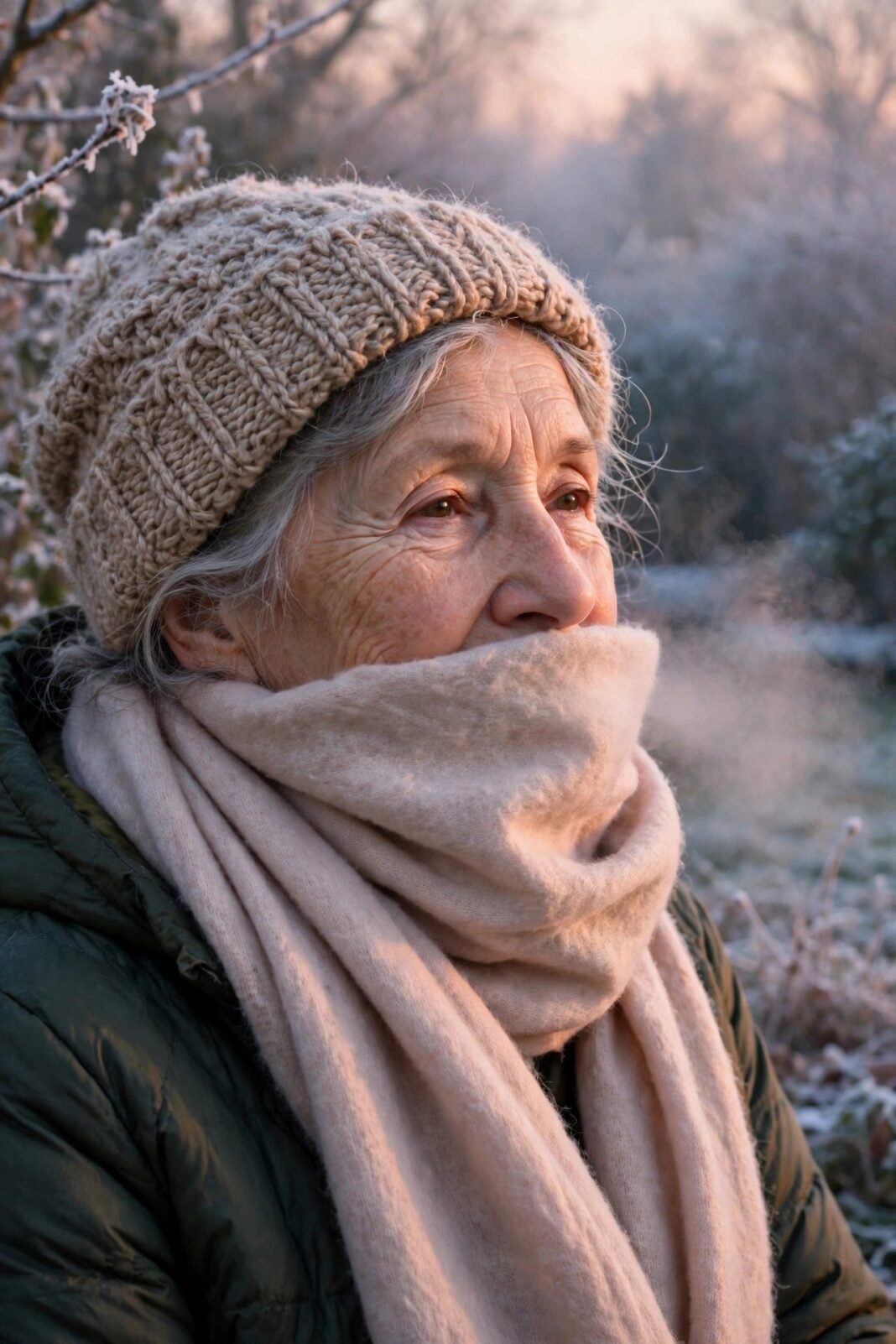
The kettle clicks off in a quiet kitchen, and your mother waves away the cup of tea you pour for her. She insists she is not thirsty, and honestly, she means it. Outside, the evening is cold and dark. Inside, the heater hums, and the air feels warm and dry. Yet winter dehydration symptoms elderly people develop rarely begin with a feeling of thirst. Instead, they grow slowly, hidden inside an ordinary winter day.
Many families only notice the problem when a loved one seems muddled or unsteady. However, the body usually sends quieter warnings long before that moment arrives. This guide explains why it happens, which signs to watch for, and which gentle habits help. Above all, it shows how small daily sips can protect the people you love.
Why Winter Dehydration Symptoms Elderly Adults Face Start So Quietly
Firstly, the sense of thirst fades as the body grows older. An older person can need water badly and still feel no urge to drink. In addition, ageing kidneys hold on to less water than younger kidneys do. As a result, the body loses fluid quietly through the day, even during rest.
Winter then adds its own hidden traps. Cold weather dulls the thirst signal even further, so people naturally drink less. Meanwhile, indoor heating dries the air in every room of the house. That dry air pulls moisture from the skin, the lips, and every breath. Furthermore, heavy jumpers and warm blankets can cause gentle sweating that nobody notices.
Daily life can quietly make things worse as well. Some older adults limit drinks because they worry about night-time trips to the bathroom. Others simply forget, especially when memory is not as sharp as before. In addition, stiff hands or shaky steps can make fetching a drink feel like hard work. Our general guide to winter dehydration signs explains how this slow fluid loss affects people of every age.
Some daily medicines also increase fluid loss, including water tablets prescribed for blood pressure. If you feel unsure, a pharmacist can explain which medicines matter most. However, never stop a prescribed medicine on your own. Instead, simply ask whether extra drinks during the day would help.
The Quiet Signs Families Often Miss
The earliest sign is often a dry mouth and dry, cracked lips. Food may start to taste dull, and swallowing dry food may feel harder. In addition, urine usually turns darker yellow and develops a stronger smell. Meanwhile, trips to the bathroom become less frequent than usual.
Other signs hide inside ordinary tiredness. For example, an older person may feel dizzy when standing up from a chair. Headaches may appear more often, and energy may fade earlier in the day. Moreover, new confusion is a sign families should never brush aside. A loved one who suddenly seems muddled, forgetful, or unlike herself may need fluids and prompt attention.
The skin can quietly tell the same story. Dry, itchy skin and chapped lips often appear during heated winter weeks. In addition, constipation may grow worse when the body lacks fluid. Muscle cramps in the legs at night can also appear more often. None of these signs proves dehydration on its own, of course. Together, however, they form a pattern that families can learn to spot early.
Some signs, however, need help on the same day. Seek medical help promptly if your loved one faints or passes very little urine. Unusual sleepiness and a racing heartbeat also deserve urgent care. In short, trust your instincts, because you know your loved one’s normal better than anyone.
This article is general information, not medical advice. Please speak to a healthcare professional if you are worried about your health.
Daily Habits That Prevent Winter Dehydration Symptoms Elderly Loved Ones Face
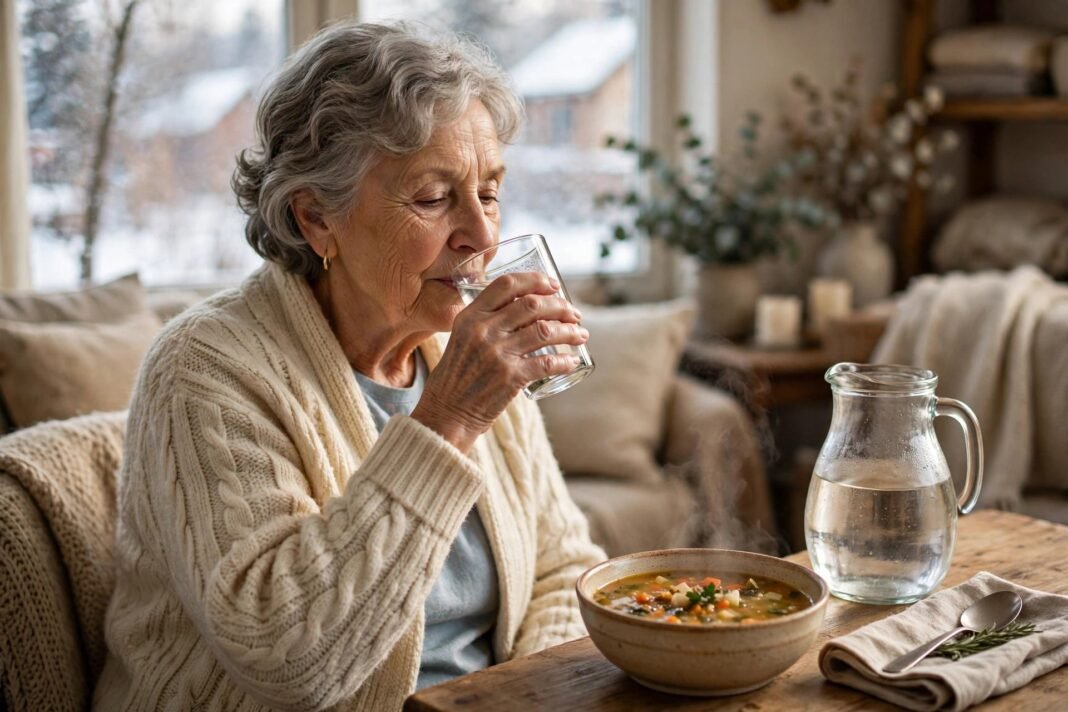
The kindest trick is to drink by routine, not by thirst. For example, offer a drink with every meal and every snack. A glass beside a favourite chair also works as a gentle visual reminder. Similarly, a small bottle by the bed helps during the night and early morning.
Warm drinks count fully, and winter makes them welcome. Tea, warm water with lemon, soups, and broths all add fluid in a comforting way. In addition, water-rich foods like oranges, yoghurt, and cooked vegetables quietly help. Staying hydrated also supports the body through cold season, as our guide on how to avoid getting sick during autumn cold and flu explains.
Small comforts make the routine easier to keep. A favourite mug, a straw, or a light bottle can help weaker hands. Also, keep drinks within easy reach, because a distant kitchen discourages sipping. A bowl of water near a heater can soften very dry room air. As a result, drinking becomes part of the day’s rhythm rather than a chore.
Families can help without nagging or fuss. A short phone call can include one kind question about drinks today. Also, a filled jug on the table shows clearly how much has been drunk. Finally, check urine colour together now and then, because pale yellow usually means fluid levels are steadier.
A Steadier and Brighter Winter Ahead
The good news is that this quiet problem responds beautifully to small habits. A few extra sips each day can lift energy, clear the head, and steady the steps. Consequently, winter at home can feel calmer and safer for everyone. Your gentle, daily care truly makes the difference.
So this week, watch the kettle, the jug, and the favourite chair by the window. Notice the small signs early, and answer them with a warm drink and a smile. Which gentle drinking habit will you start with the older person you love?