When was the last time you felt thirsty? In summer, the answer is easy. You sweat, you feel dry, and you reach for water without thinking. In winter, though, that signal goes quiet, and winter dehydration can follow.
Cold air, heated rooms and heavy clothes can still pull water from your body. But because you feel less thirsty, you may drink far less than you need. That is how winter dehydration sneaks up on people.
This article explains why winter dehydration happens, what signs to watch for, and the simple habits that keep you hydrated.
Why Winter Dehydration Catches So Many People Out
Most people link dehydration with heat. They picture a hot day, a long walk, and an empty water bottle. Yet dehydration simply means your body loses more fluid than it takes in. It can happen in any season, and winter has its own quiet causes.
Cold air holds little moisture. So every breath you take outside carries a small amount of water out of your body. You can even see it on a frosty morning, in the small cloud that leaves your mouth. Indoors, heating dries the air further, and dry air pulls moisture from your skin and airways.
Winter activity adds to the loss too. Shovelling snow, hiking in cold air, or playing winter sports can all make you sweat. Heavy clothes trap that heat, so you lose fluid without noticing. If you are active outdoors in winter, drink before you start and keep water nearby.
Winter Dehydration Starts With a Quieter Thirst Signal
Thirst is your body’s main reminder to drink. But cold weather turns that reminder down. In one study, researchers found that cold exposure reduced thirst by up to about 40 percent. The people in the study were already low on fluids, yet their thirst still faded.
The result is easy to miss. You feel fine, so you drink less. Meanwhile, your body keeps losing water through breathing, skin and trips to the bathroom. Over days and weeks, that gap adds up.
Older adults feel this most. Their sense of thirst is weaker already, and cold weather dulls it further. That is why they need reminders to drink, even in winter.
Heated Indoor Air Pulls Moisture From You
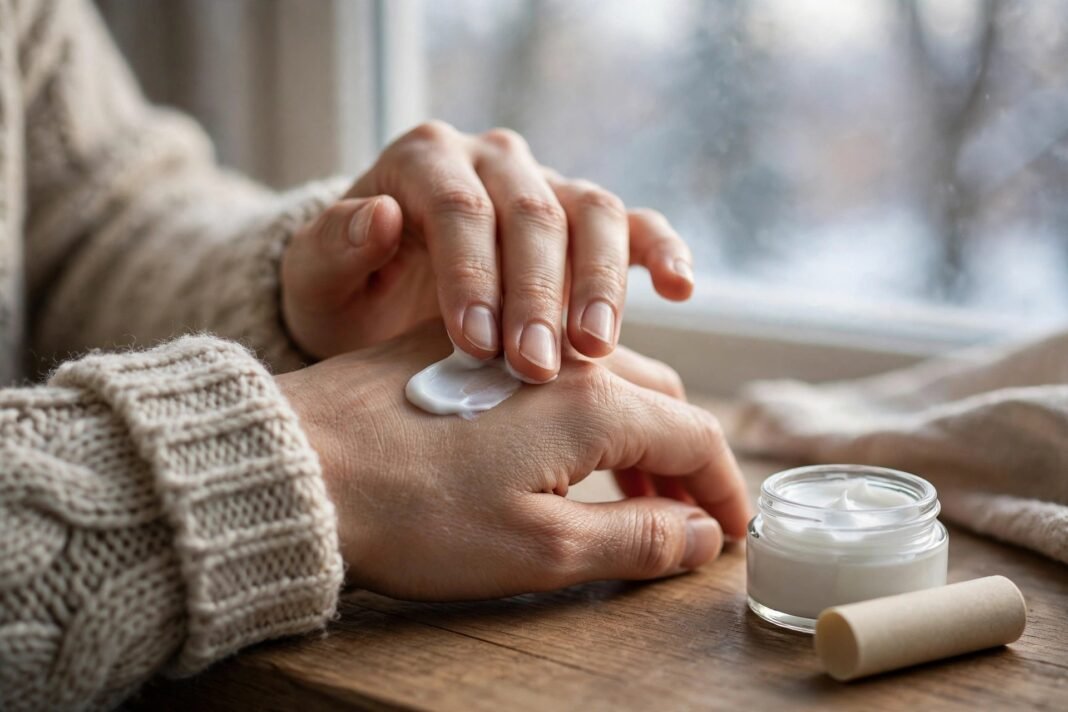
Step inside from the cold, and the air feels warm and kind. Yet heated indoor air is often very dry. It draws moisture from your skin, lips and the inside of your nose and throat.
That is why winter often brings chapped lips, a scratchy throat and dry skin. A humidifier can help, and a comfortable range for indoor humidity is 30 to 50 percent. Below that range, dry air starts to bother your skin and airways.
If you feel cold all the time, low fluid is rarely the only reason. Our guide to why some people always feel cold looks at the other common causes.
The Signs of Winter Dehydration to Watch For
The signs of dehydration are easy to blame on winter itself. Tiredness, headaches and dry lips all feel like normal cold-weather complaints. So it helps to know the pattern to look for.
The signs of dehydration in adults include feeling thirsty, dark yellow and strong-smelling urine, and urinating less often than usual. A dry mouth, lips and tongue, tiredness, and feeling dizzy or lightheaded are also common signs. If your urine is dark, that is a simple sign to drink more. Pale urine is a good sign that you are on track.
Severe signs need medical care straight away. Confusion, fainting, very little urine, or a fast heartbeat are not things to wait out. If you or someone near you shows these signs, seek medical help right away.
Who Needs to Be Extra Careful in Winter
Anyone can get dehydrated, but some people face a higher risk. Older adults are one group, because the sense of thirst weakens with age. Their bodies also hold less water to begin with.
Babies and young children are at higher risk too. They cannot always say they are thirsty, and they cannot get a drink on their own. People with a cold or flu also need care. Fever, sweating and a poor appetite all add to fluid loss. Staying well through cold and flu season helps too, since illness is one of the fastest routes to dehydration.
If you take medicines that make you urinate more, talk to your doctor about your fluid needs. The same goes for anyone with diabetes or kidney problems, since these conditions can raise the risk of dehydration.
If you care for an older relative, offer drinks through the day. A cup of tea with a visit, or a glass of water beside their chair, can make a real difference. Do not wait for them to ask, since they may not feel thirsty at all.
Warm Drinks Count: An Easy Way to Stay Hydrated
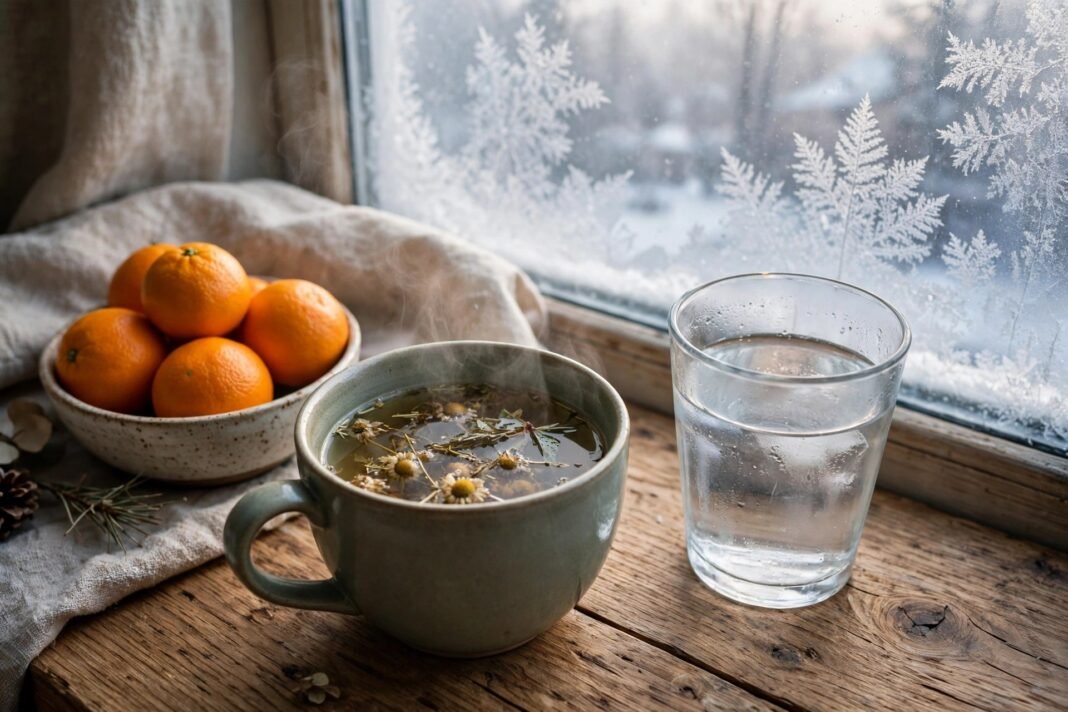
A cold glass of water is the last thing most people want on a freezing day. So it helps to know that warm drinks count too. Herbal tea, warm water with lemon, and clear soups all add fluid.
Try keeping a flask or a mug nearby while you work. Sipping through the day is easier than trying to catch up in one go. And a warm drink can feel comforting when the weather is cold.
Mornings are a good place to start. Your body loses water overnight through breathing, and heated bedrooms make it worse. A glass of water or a warm drink when you wake up replaces some of that loss. It is a small habit, and it sets the tone for the rest of the day.
Eat Your Water: Foods That Help With Winter Dehydration
Not all your fluid has to come from a glass. Fruits and vegetables hold a lot of water, and they count toward your daily fluid. Soups, stews and porridge help too, and they suit cold weather well.
Think of foods like oranges, apples, cucumbers and leafy greens. A bowl of soup at lunch adds both warmth and fluid. In this way, your meals can quietly top up your hydration through the day.
Winter cooking makes this easy. Soups and stews are filling, warming and full of fluid. A vegetable soup brings water, fibre and vitamins in one bowl. Porridge with milk is another good start to a cold day.
Simple Daily Habits That Beat Winter Dehydration
The best fix for winter dehydration is a set of small habits. Keep a bottle or a glass of water where you can see it. Drink a glass when you wake up, and one with each meal. These small steps add up without much effort.
Set a gentle reminder if you forget to drink. Take a bottle when you go out, even for a short walk. And check in with older relatives, since they may not feel thirsty even when they need fluids.
Winter brings other quiet changes too. Shorter days mean less sunlight, so vitamin D levels can drop as autumn turns to winter. A short daily walk outside helps on both fronts, since daylight and movement both support your health.
Keep track in a simple way. Notice the colour of your urine through the day. Pale yellow means you are on track. Dark yellow means you should drink more. In fact, this simple check works better than counting glasses.
What About Tea, Coffee and Fizzy Drinks?
Tea and coffee do add fluid to your day. Yet drinks with a lot of caffeine or sugar are not the best way to hydrate. They can be dehydrating, so water should still be your main drink. Sodas and energy drinks fall into the same group.
Alcohol is the one to be most careful with. It increases urination, so it can leave you drier than before. If you drink alcohol, have a glass of water beside it. Plain water, herbal tea and milk are kinder everyday choices.
Water is still the simplest choice. It has no sugar, no caffeine and no calories. If plain water feels dull, add a slice of lemon or orange for flavour.
Winter Dehydration Is Easy to Fix Once You Notice It
Winter dehydration is common, but it is also one of the easiest winter problems to fix. Drink through the day, eat water-rich foods, and add moisture to dry indoor air. Your body will thank you for it.
Start today with one small change. Keep water nearby, or swap one fizzy drink for a warm herbal tea. Which habit will you try first?
This article is for general information only. It is not medical advice, and it does not replace the advice of a healthcare professional. If you have a health condition or take medication, please talk to your doctor first.