Peshawar School Meal Programme Launched for 10,000 Pupils
The Peshawar school meal programme has been formally launched to provide nutritious food to 10,000 pupils of government primary schools in the city. The signing ceremony was held at the Government JICA Model Primary School in Hayatabad.
Advisor to the Khyber-Pakhtunkhwa Governor on Education and Social Welfare, Dr Aamir Abdullah, attended as chief guest. In his presence, Secretary Elementary and Secondary Education Mahmood Aslam Wazir and Allah Wali Foundation Chairman Shahid Lone signed a memorandum of understanding.
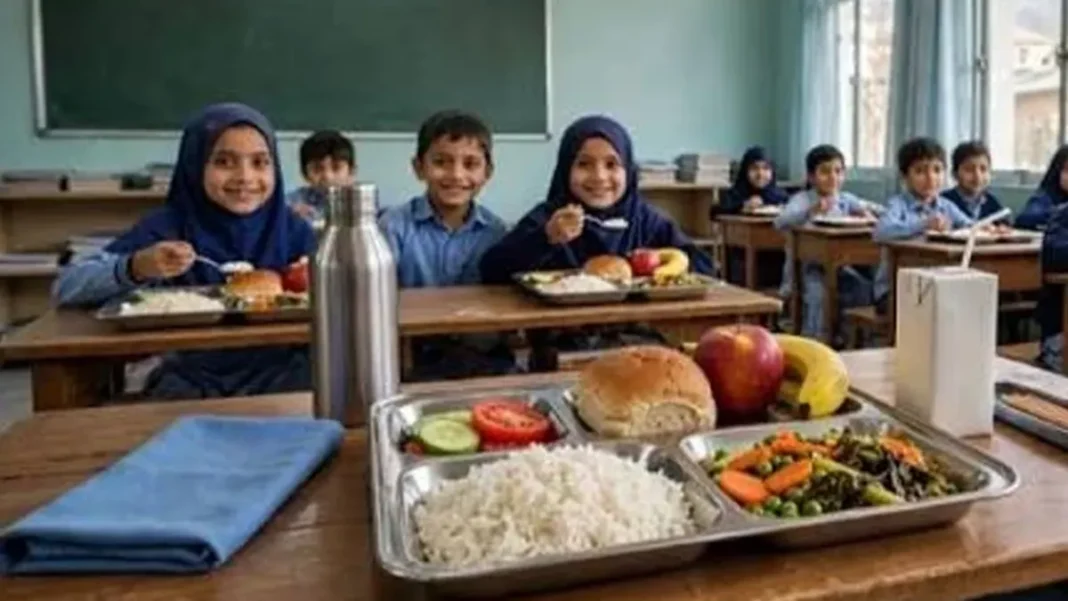
Special Secretary Qaiser Alam, Director Elementary and Secondary Education Jafar Mansoor Abbasi, Foundation Director Amir Khan, the school principal, teachers and pupils were also present. After the signing, Dr Abdullah cut the ribbon to open the programme and handed out meals to the children himself.
Peshawar school meal programme aims to lift learning
Addressing the gathering, Dr Abdullah said he had first learnt about the positive impact of school feeding programmes on children’s health and learning nearly 15 years ago while working in governance and development. Starting such a programme in schools had been his long-standing wish, and it was fulfilled through the support of Allah Wali Foundation.
He stressed that proper nutrition, good health and physical growth are fundamental to a child’s educational capacity, better learning and future success. He said providing meals in schools will not only meet children’s dietary needs but also strengthen enrolment, attendance and continuity of education.
Why school meals matter
A child who eats well learns better. Hunger in the classroom makes it harder to concentrate, and it pushes some families to keep children at home or send them to work instead of school. Research on students’ health and learning backs the idea. Students who look after their physical health concentrate better, manage exam stress and retain more of what they study. Good health gives children the energy to attend classes, finish assignments and handle their workload. A daily meal at school supports exactly those habits, starting with the youngest children. A daily meal gives parents one more reason to send their children to school and keep them there.
Health and school performance are closely linked, and physical health supports academic success. The Peshawar programme treats food as part of education, not as an extra. It starts with the youngest pupils, in government primary schools, where the need is greatest and the habit of attending school is formed.
The programme also fits a wider push to improve public schooling in Pakistan. Azad Jammu and Kashmir’s 100-day action plan includes five Daanish Schools among its education projects. The debate over private and public schooling continues, with parents weighing cost against quality. Young Pakistanis themselves say education and opportunity shape their hopes for the future.
What happens next
The programme begins with 10,000 pupils in government primary schools in Peshawar. The organisers have not yet said whether it will expand to other districts or how the meals will be funded over the long term.
For now, the focus is on serving the first schools well. If attendance and learning improve, the case for a wider rollout will be hard to ignore.
Frequently asked questions
How many pupils will the programme cover?
The programme will provide nutritious food to 10,000 pupils of government primary schools in Peshawar.
Which schools are included?
Government primary schools in Peshawar are covered. The launch ceremony was held at the Government JICA Model Primary School in Hayatabad.
Who signed the agreement?
Secretary Elementary and Secondary Education Mahmood Aslam Wazir and Allah Wali Foundation Chairman Shahid Lone signed the memorandum of understanding.
Who is behind the programme?
The programme is run with the support of Allah Wali Foundation. Dr Aamir Abdullah, Advisor to the Khyber-Pakhtunkhwa Governor on Education and Social Welfare, attended the launch as chief guest.
What did the advisor say about the programme?
Dr Abdullah said school feeding improves children’s health and learning, and that starting such a programme had been his long-standing wish. He said meals will strengthen enrolment, attendance and continuity of education.