World Bank Downgrades $150m Punjab Education Project
The World Bank has slightly downgraded its $150 million Punjab education project, citing missing technical help and baseline data, even as enrolment and other targets moved ahead.
Dawn reported that in its public disclosure, the Washington-based lender downgraded the overall implementation progress from “satisfactory” to “moderately satisfactory”. It kept unchanged the progress towards the project’s development objectives at “moderately satisfactory”. The overall risk rating was also kept unchanged at moderate.
What the bank changed in the Punjab education project
The downgrade is narrow. The bank said the project has continued to make progress against its targets, including achievement of the financial targets for the previous fiscal year. Progress has been recorded across the performance-based conditions, it added.
Enrolment in public-private partnership schools has increased substantially from the project baseline, with the year-four target achieved ahead of schedule. In addition, 1,092 more schools now provide early childhood care and education that meets quality standards.
The problem sits on the delivery side. Classroom construction has yet to begin, although preparatory activities have progressed. “The formal restructuring of the project to reflect the government’s revised construction plan remains an important next step,” the bank said, adding that the technical assistance supporting several reform deliverables has not yet been mobilised.
Baseline data for the project also remains unavailable and will be addressed during restructuring. “Continued progress on these arrangements, alongside the commencement of classroom construction, will be important to sustain implementation and achieve the project’s intended results,” the bank warned.
The GRADES project
The World Bank’s executive directors approved the $150 million loan in June 2024, with a closing deadline of June 2029. The loan aims to increase participation rates of girls and boys in pre-primary and primary grades and to enhance reading proficiency in primary grades in Punjab.
The project, called Getting Results: Access and Delivery of Quality Education Services in Punjab, or GRADES, was designed to improve learning outcomes, recover from learning losses during the Covid-19 pandemic, strengthen school management and expand school participation.
It should contribute to higher completion rates and more years of schooling, with improved learning for both girls and boys. The project is expected to directly benefit about five million children, 7,000 headteachers, 165,000 teachers and more than 3,000 teacher mentors in public schools and Punjab Education Foundation schools.
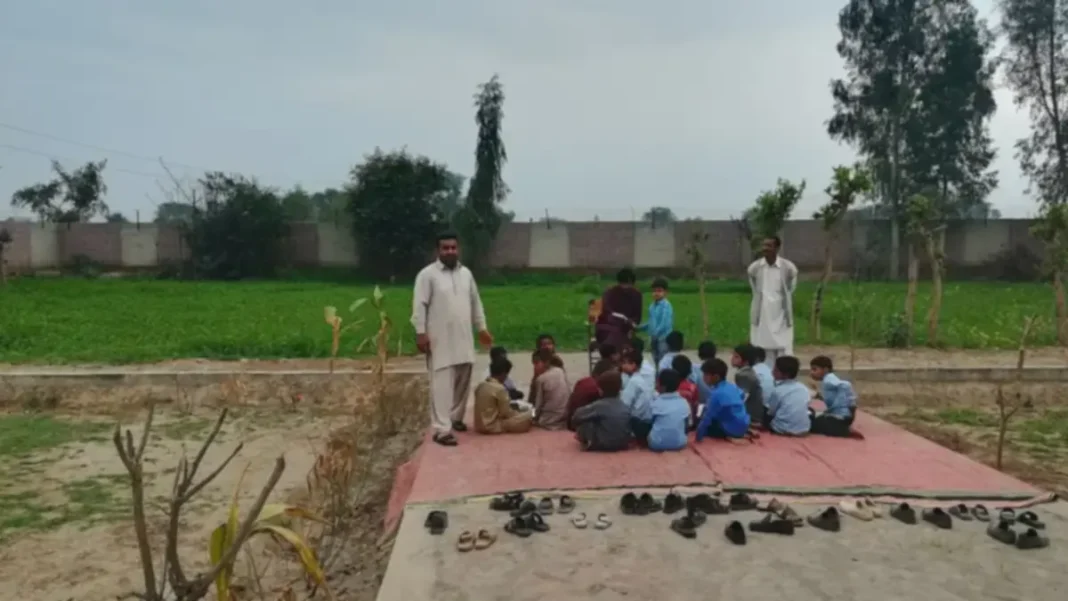
Project documents reported that, as of June 2024, more than seven million children in Punjab were out of school. The GRADES project was expected to help the Government of Punjab substantially reduce this number.
Why it matters for Punjab
The downgrade is a warning rather than a failure. The bank has kept its rating at moderately satisfactory, which means the project is still moving, but the missing technical help and the delayed classroom construction are now holding it back.
The stakes are high. With more than seven million children out of school in the province, Punjab needs the project to work. The enrolment gains in public-private partnership schools show demand is there. The test is whether the government can now mobilise the technical assistance, fix the baseline data and start building classrooms.
Education remains a shared priority across the province’s public services. World Children’s Day this year put the focus on children’s rights, including their right to learn, and the Punjab government has expanded welfare support through the Himmat Card for persons with disabilities. Punjab has also put 35 electric buses on the road in Rawalpindi as part of its wider service delivery push, while a national cybersecurity agreement between NCERT and the Higher Education Commission aims to strengthen universities.
The restructuring now becomes the key step. Once the revised construction plan is reflected in the project, the bank expects the missing pieces, technical assistance and baseline data, to fall into place.
Frequently asked questions
Why did the World Bank downgrade the project?
The bank cited the non-mobilisation of technical assistance and the unavailability of baseline data, despite substantial progress against other targets.
How much is the loan worth?
The World Bank approved a $150 million loan in June 2024. The project is scheduled to close in June 2029.
What has the project achieved?
Enrolment in public-private partnership schools has risen substantially, with the year-four target achieved ahead of schedule. Another 1,092 schools now provide early childhood care and education that meets quality standards.
When does the project end?
The closing deadline is June 2029. The bank says formal restructuring to reflect the government’s revised construction plan remains an important next step.
How many children will it benefit?
The project is expected to directly benefit about five million children, along with 7,000 headteachers, 165,000 teachers and more than 3,000 teacher mentors.