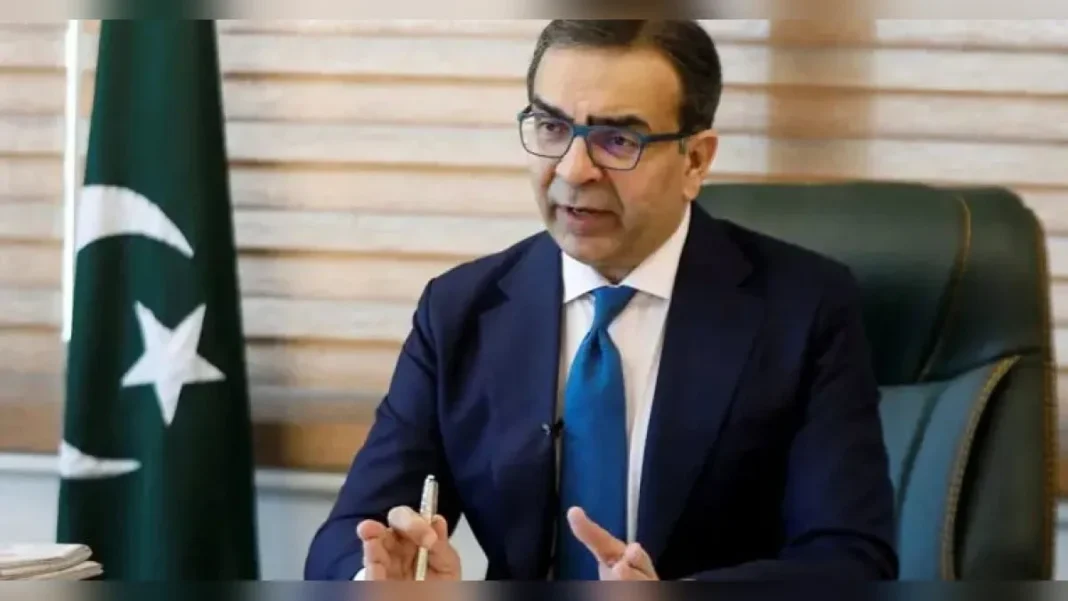
Privatisation Drive Must Raise Efficiency, Ali Tells KATI
Pakistan’s privatisation drive must improve the efficiency of state-owned enterprises, not merely transfer them to private hands, Privatisation Adviser Muhammad Ali told the Korangi Association of Trade and Industry (KATI) in Karachi on Friday.
Ali said the privatisation of PIA and First Women Bank showed that major economic goals can be achieved when all stakeholders work together. He said the aim is to improve the efficiency of public sector entities, cut financial losses, use national resources well and ease the burden on the national exchequer through a transparent, merit-based process.
The process must also protect the productive capacity of institutions, the legitimate rights of employees and the services provided to the public, he said.
KATI President Umer Rehan said privatisation should not mean merely transferring ownership to the private sector. He said it should improve institutional efficiency, cut financial losses, preserve the true value of national assets and strengthen the economy.
Ali said uncertainty about the business environment remained the biggest obstacle to attracting investment. He said bidders for the power distribution companies must be given clear information in advance about future investment plans and multi-year tariff arrangements, and that reforms in energy and taxation were essential to make Pakistani industry competitive. A fair and stable taxation system could give businesses the confidence to plan for the long term, he said.
What the privatisation drive covers
Due diligence is under way for the privatisation of Fesco, Gepco and Iesco, and bidding is expected in the first quarter of 2027. Hesco and Sepsco will follow in later phases. The three companies serve Faisalabad, Gujranwala and Islamabad, and form the first batch of the nine power distributors in the programme.
The government is also targeting the issue of a request for proposals in the same quarter to outsource operations at Islamabad International Airport. The timetable has moved from an earlier end-December target for the airport request for proposals, with the latest statements placing it in the first quarter of 2027.
Karachi’s Jinnah International Airport and Lahore’s Allama Iqbal International Airport are also in the programme. A financial advisory agreement with an EY Middle East-led consortium was signed on November 19 for the two airports, while the Asian Development Bank is advising on the Islamabad airport transaction.
Motorway and other investment openings
The Hyderabad-Tando Adam and Tando Adam-Nawabshah sections of the Hyderabad-Sukkur M-6 Motorway are expected to attract combined investment of about $700 million. The projects will run under a 25-year concession model, with $156 million in viability gap funding proposed for the first section.
At the CFA Society Pakistan Investment Forum in Karachi a day earlier, Ali had also pointed to other openings for private capital, including Islamabad Technopolis, mixed-use development on four Karachi properties owned by REDAMCO, a Pakistan Railways subsidiary, CDA Capital Hospital, Karachi Industrial Park and the M-10 Motorway. He also named State Life Insurance Corporation among the insurers in the programme.
Money target and investor interest
In an interview with Arab News earlier this month, Ali said Pakistan hopes to raise up to $723 million, or about Rs150-200 billion, from state asset sales by June 2027. The drive is part of reforms under Pakistan’s $7 billion IMF programme, which aims to cut the losses of state-owned enterprises.
Turkish groups, including Calik, Cengiz and EkoTurk Enerji, are among those interested in the power distribution companies. The financial institutions in the programme include agricultural lender Zarai Taraqiati Bank Ltd and the House Building Finance Corporation. Sovereign wealth funds from Qatar and Kuwait have also shown interest in the past.
The International Finance Corporation is already working with Pakistan on housing finance, the sale of power distribution companies and finance for small businesses. A bill before Parliament would fold the Public-Private Partnership Authority into the Privatisation Commission and turn it from an advisory body into one that runs projects itself. The Asian Development Bank has approved a $250 million loan to strengthen Pakistan’s public-private partnership system. The government has picked three foreign banks to arrange a $500 million trade finance facility backed by the Multilateral Investment Guarantee Agency. Foreign direct investment reached $936 million in the first four months of the fiscal year.
Frequently asked questions
How many privatisation transactions are under way?
Seventeen, including nine power distribution companies, three airports, financial institutions and insurers.
Which power companies will be sold first?
Fesco, Gepco and Iesco, with bidding expected in the first quarter of 2027. Hesco and Sepsco follow in later phases.
Which airports are in the programme?
Islamabad, Karachi and Lahore airports. Operations at Islamabad airport will be outsourced, with a request for proposals due in early 2027.
How much investment is expected from the M-6 motorway sections?
About $700 million for the Hyderabad-Tando Adam and Tando Adam-Nawabshah sections, under a 25-year concession model.
How much does the government hope to raise?
Up to $723 million, or about Rs150-200 billion, from state asset sales by June 2027.