Iran Adviser Warns Iraq Over Trump Border Policies
Iran adviser warns Iraq against becoming a “tool of Trump”, Mohammad Mokhber said on Saturday, after Baghdad closed border crossings in a crackdown on oil smuggling.
Mokhber, an adviser to Iran’s Supreme Leader Ayatollah Mojtaba Khamenei, posted the warning on X on Saturday. He said Iraq should “remain vigilant on border issues” so that it does not become an instrument for “carrying out the policies of the criminal Trump.”
The warning came after US President Donald Trump on Friday backed Iraqi Prime Minister Ali Al-Zaidi’s drive to assert state control over Iranian-backed militias and the redirecting of oil in the Kurdish region.
Last week Al-Zaidi ordered federal authorities to take control of border posts run by the semi-autonomous Iraqi Kurdistan administration, including a crossing to Iran. Baghdad has also closed some border crossings as part of the crackdown on oil smuggling.
Why the Iran adviser warns Iraq over its borders
Mokhber framed the warning as a matter of neighbourhood and history. “Sharing a common destiny with our neighbours is a fundamental principle” of Tehran’s foreign policy, he wrote. “In the darkest days, Iran stood by the people of Iraq with all its might and proved its friendship,” he said, adding that “this unbreakable bond requires Baghdad to remain vigilant on border issues.”
The post was aimed at the border policy Baghdad has pursued in recent days. Iraq has moved to bring crossings run by the Kurdistan administration under federal control, and to stop oil smuggling that Washington says benefits Iran and armed groups. Trump praised those steps on Friday, and Tehran read the moves as part of a US effort to blockade Iran’s land borders.
Mokhber is a senior figure in Tehran. He served as Iran’s interim president after the death of Ibrahim Raisi in 2024, and now advises the supreme leader.
An Iraqi delegation in Tehran
The warning came as an Iraqi security delegation held talks in Tehran. Iraqi National Security Adviser Qasim al-Aboudi arrived in the Iranian capital on Saturday as Al-Zaidi’s envoy, for talks on counterterrorism, smuggling, border security and wider security cooperation between the two countries, Iraq’s ambassador to Iran said.
The visit shows that, for all the public warnings, the two governments are still talking. Baghdad needs Tehran’s cooperation on border security, and Tehran needs Baghdad to keep trade routes open. The delegation’s talks covered the same border posts and smuggling networks that Mokhber’s post addressed.
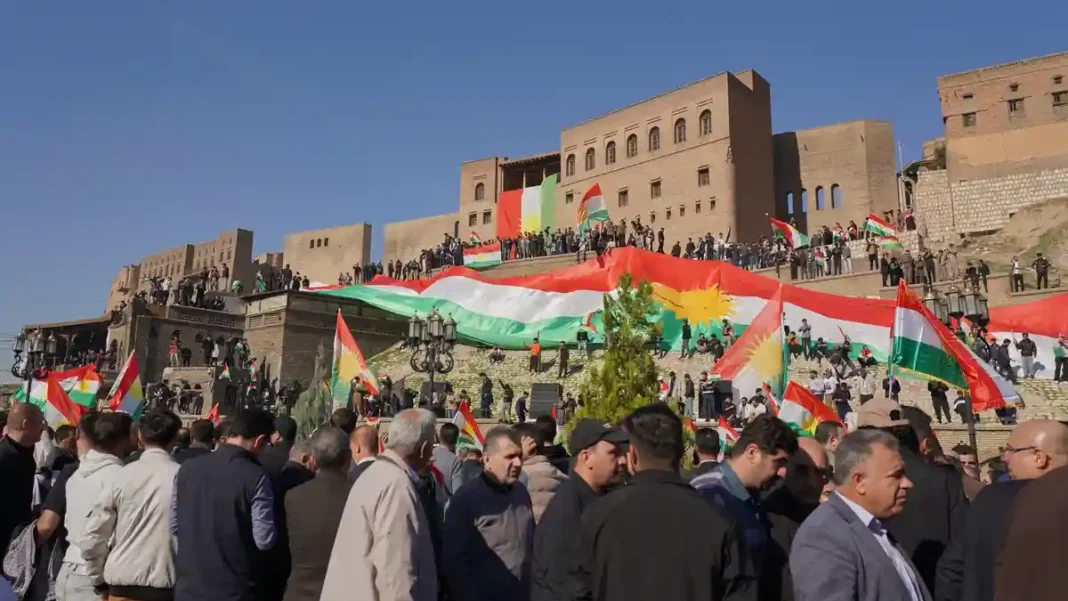
Rallies took place in Iraq’s Kurdish region last week amid tensions with Baghdad over control of border crossings and oil resources. The Kurdistan administration has run its own border posts for years, and Al-Zaidi’s order to bring them under federal control is one of the sharpest moves yet in a long dispute over who controls the region’s oil and crossings.
Why it matters for Pakistan and the region
The dispute sits close to Pakistan’s interests. Pakistan shares a long border with Iran and has its own stake in how the region’s borders are policed, and in keeping trade routes open. Any campaign that closes Iran’s land borders affects commerce across the region, including routes that matter to Pakistani traders.
The warning also comes days after Pakistan joined Saudi Arabia and Turkiye in the Makkah defence pact, which declared the Houthis a threat to Saudi Arabia. It follows a drone attack on Kuwait, attributed to Iran, that killed two Italian technicians and injured a Kuwaiti and a Pakistani national, an attack Prime Minister Shehbaz Sharif condemned and ordered the best medical care for the injured Pakistani.
The region’s rivalries are moving fast. The Dawn of Yemen offensive against Houthi positions, the fighting around the Red Sea, and now the pressure on Iraq’s borders are all part of the same contest over who sets the rules in the Middle East.
For now, the exchange between Tehran and Baghdad is one of words and delegations. But the border posts at the centre of the dispute control oil flows worth large sums, and the outcome will shape how much pressure Washington can bring on Tehran through Baghdad.
Frequently asked questions
Who warned Iraq not to become a “tool of Trump”?
Mohammad Mokhber, an adviser to Iran’s Supreme Leader Ayatollah Mojtaba Khamenei and a former interim president of Iran.
What did Mokhber say?
He said Iraq should “remain vigilant on border issues” so it does not become an instrument for “carrying out the policies of the criminal Trump”.
Why did he issue the warning?
After Baghdad closed some border crossings in a crackdown on oil smuggling, and after Trump praised Iraqi Prime Minister Ali Al-Zaidi’s drive to assert state control over militias and oil in the Kurdish region.
Is Iraq talking to Iran?
Yes. Iraqi National Security Adviser Qasim al-Aboudi arrived in Tehran on Saturday as Al-Zaidi’s envoy for talks on counterterrorism, smuggling and border security.
Why does this matter for Pakistan?
Pakistan shares a long border with Iran and has a stake in regional trade routes and border security, and it joined the Makkah defence pact with Saudi Arabia and Turkiye days earlier.