Work on $22 Billion China Investment Projects Remains Slow
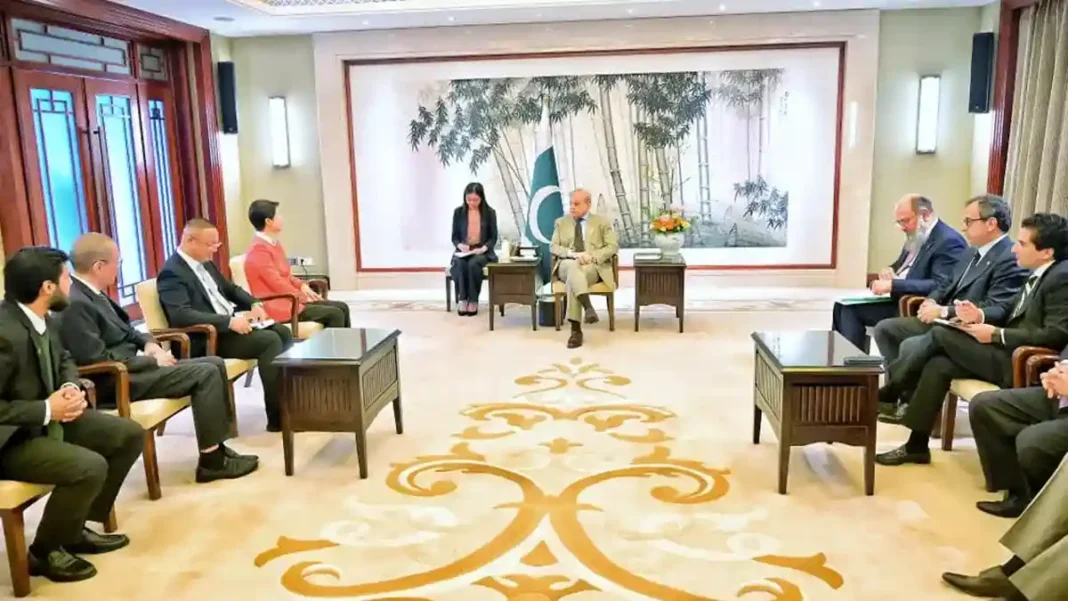
A cabinet committee has expressed concern over the slow pace of work on China investment projects worth $22 billion, and called for regular meetings of the Special Investment Facilitation Council (SIFC) executive committee to monitor progress.
The Cabinet Committee on Chinese Investment Projects (CCoCIP) took up the matter in a recent meeting. It was informed that Chinese investors and companies had signed 566 memoranda of understanding (MoUs) and investment agreements worth $21.9 billion during the last two years.
Of these, 424 investment agreements worth $19.275 billion accounted for 88 percent of the total value. The remaining 142 agreements were related to trade and other arrangements.
SIFC executive committee has not met since August 2025
The cabinet committee asked about the SIFC’s classification of projects as “execution”, “active” and “in pipeline”. In that regard, the committee chairman observed that the meeting of the SIFC executive committee had not been convened since August 2025.
The SIFC was set up to speed up investment decisions by bringing the civil and military leadership together with provincial governments in one forum. Its executive committee is meant to track projects and clear bottlenecks, and a gap of more than a year between its meetings leaves no regular forum to check which projects are moving and which are stuck.
The committee said the executive committee should meet regularly so progress could be properly monitored.
Project labels do not reflect the real position
The CCoCIP observed that the terms used by the SIFC to classify projects according to the progress made in their implementation were blurred and needed to be revisited, so that the actual status of each project could be reflected with greater clarity and accuracy.
The committee noted that some projects which were still not on the ground, as physical work on them had not yet started, had been erroneously included under the “execution” category. It also observed that the use of the terms “active” and “in pipeline” did not clearly convey the exact current status or stage of implementation of the projects.
The committee asked the SIFC to review the classification method with the relevant ministries and present a new one before the next CCoCIP meeting.
The panel said the reclassification was necessary because, without proper categories, neither the current status of the projects could be ascertained nor a sound strategy devised to speed up future work.
Five business conferences held since September 2025
The meeting was told the government had been active in business-to-business (B2B) engagements in China and Pakistan to attract Chinese investment, find joint-venture partners and promote industrial collaboration and technology transfer.
Five Pakistan-China B2B investment conferences had been held since September 2025, with the SIFC and the Board of Investment (BOI) providing secretarial support and coordination with ministries, provincial governments and sector bodies.
Those engagements included multi-sectoral conferences in Beijing and Hangzhou during the prime minister’s visits, and sector-specific conferences in Pakistan covering agriculture, battery storage, home appliances, pharmaceuticals, healthcare and biotechnology.
In line with the prime minister’s directives to negotiate substantive agreements and joint ventures rather than mere MoUs, future engagements would give priority to investment proposals over trade arrangements, with lead time for viable proposals, partner identification and advance talks.
Why slow China investment projects matter
During discussions, the CCoCIP chair stressed the need to expedite work and complete projects on a fast-track basis. Timely completion, especially of export-sector projects, was essential to reduce reliance on multilateral financing such as the International Monetary Fund (IMF).
That link explains why the pace matters beyond the investment figures. Export-sector projects that start producing and earning foreign exchange would ease pressure on Pakistan’s external account. Projects that stay on paper do not deliver that relief.
Pakistan is also pressing China for wider market access, and has sought zero-tariff treatment as part of a push to lift exports to $25 billion. Investment and trade form two halves of the same effort, since new plants and joint ventures are meant to produce the goods that would then be exported.
The International Finance Corporation has held talks in Pakistan on housing finance and the sale of power distribution companies. It has also agreed a $100 million deal to back public-private partnership projects in Sindh. Pakistan’s trade gap with Gulf countries has narrowed at the same time, as exports to the region grew.
The cabinet committee will take up the SIFC’s revised classification at its next meeting. Until the executive committee meets regularly and the labels reflect work on the ground, the $22 billion pipeline will remain a promise rather than a record of delivery.
The cabinet committee expressed concern over the slow pace of work on the projects and called for regular SIFC executive committee meetings.
Frequently asked questions
How much Chinese investment is under discussion?
Chinese investors and companies signed 566 memoranda of understanding and investment agreements worth $21.9 billion during the last two years, according to the cabinet committee.
How many of the deals are investment agreements?
Of the 566 deals, 424 are investment agreements worth $19.275 billion, or 88 percent of the total value. The remaining 142 relate to trade and other arrangements.
Which body raised concern over the slow pace?
The Cabinet Committee on Chinese Investment Projects (CCoCIP) raised the concern in a recent meeting and called for regular meetings of the SIFC executive committee.
When did the SIFC executive committee last meet?
According to the committee chairman, the SIFC executive committee has not met since August 2025.
What is wrong with the project classifications?
The committee found the labels “execution”, “active” and “in pipeline” blurred. Some projects with no physical work on the ground were wrongly listed as under execution, so the labels did not show the real status of each project.