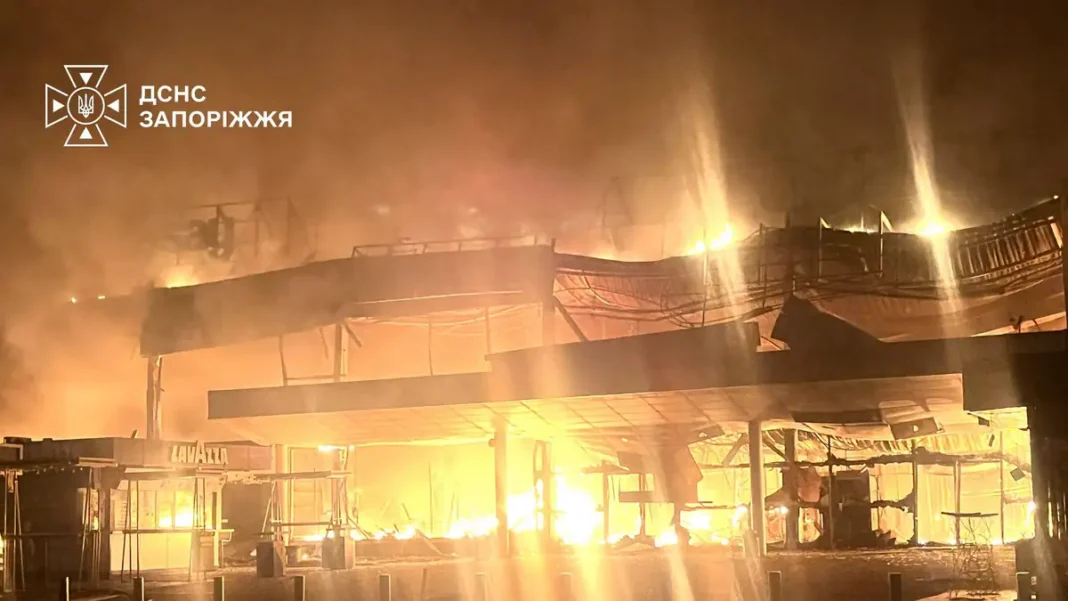
Russian forces killed 11 people, including three children, in the latest Zaporizhzhia strikes on residential buildings overnight, Ukrainian officials said on Saturday. At least 16 others were wounded in one of the deadliest attacks on the city in recent months.
The strikes hit apartment blocks in the early hours of Saturday, October 10. Regional officials said five guided glide bombs fell on residential areas, reducing parts of the buildings to rubble and setting fires that burned through the night.
Zaporizhzhia strikes: what officials reported
Mykhailo Semikin, head of the regional military administration, confirmed the death toll and said rescue teams were still searching the debris for survivors. Ivan Fedorov, co-chair of the regional defence council, said emergency services had worked through the night under the threat of further attacks.
The three children were among residents killed in their homes. Ukrainian authorities did not immediately release their ages. At least 16 people were wounded, according to the officials.
The attack followed a familiar pattern: Russian forces have increasingly used glide bombs, cheap but destructive munitions fitted with guidance kits, against Ukrainian cities far from the front line.
Zelenskyy links the attack to Trump’s diesel deal
President Volodymyr Zelenskyy reacted sharply on X, tying the bombing to Washington’s latest move toward Moscow. The strikes came a day after US President Donald Trump announced a deal for Russia to supply diesel to the United States, with more than 300,000 tonnes to be delivered immediately, 500,000 tonnes in November and a further one million tonnes “immediately thereafter”.
“Russia expressed its thanks for the lifting of sanctions on diesel exports by dropping five glide bombs on residential buildings in Zaporizhzhia,” Zelenskyy wrote.
Zelenskyy said more than 50 people had been killed across Ukraine in the past three to four days, as Russian attacks on civilian areas intensified. His office has repeatedly argued that Moscow responds to diplomatic openings with escalation rather than restraint.
The diesel arrangement has unsettled Kyiv and several European capitals, which fear it softens economic pressure on Russia at a moment when Ukraine is absorbing heavy civilian losses. The episode also complicates Pakistan’s own diplomatic balancing: Islamabad has backed ceasefire calls at the UN Security Council while managing energy ties with multiple powers.
Ukraine hits back at a Russian oil depot
Ukraine retaliated within hours, launching drone strikes against a Russian oil depot. Kyiv has made energy infrastructure a regular target of its long-range drone campaign, aiming to squeeze the fuel supplies that sustain Russia’s war effort.
The exchange underlines how the war has settled into a grinding pattern: Russian glide bombs and missiles against Ukrainian cities, Ukrainian drones against Russian refineries and depots, and civilians paying the highest price on both sides.
The Zaporizhzhia attack is the latest in a string of strikes on civilian targets this week. International attention has meanwhile been fixed on other flashpoints, from Israel’s political crisis over the Khamenei killing to the Saudi-led coalition’s renewed Yemen operation, but the war in Ukraine continues to exact a steady toll far from the headlines.
Frequently asked questions
How many people died in the Zaporizhzhia strikes?
Eleven people were killed, including three children, and at least 16 were wounded, according to Ukrainian regional officials. Rescue teams continued searching the rubble after the attack.
What weapons were used?
Ukrainian officials said Russia dropped five guided glide bombs on residential buildings. Glide bombs are conventional munitions fitted with guidance kits, allowing aircraft to release them from a safer distance.
Why did Zelenskyy mention the US diesel deal?
The strikes came a day after President Trump announced a diesel supply deal with Russia. Zelenskyy accused Moscow of answering the sanctions relief with bombs on civilians.
How did Ukraine respond?
Ukraine launched drone strikes on a Russian oil depot, continuing its campaign against the energy infrastructure that fuels Russia’s war effort.
*Sources: Tribune.*