Among the fundamental rights guaranteed by the Constitution of Pakistan 1973, Article 18 protects something every working Pakistani exercises daily: the freedom to earn a living. It guarantees the freedom of trade, business and profession — the constitutional foundation of economic liberty in the country.
Quick answer: Article 18 gives every citizen the right to enter any lawful profession or occupation and to conduct any lawful trade or business.
In this guide
- What Article 18 says
- A fundamental right, not a mere policy
- Reasonable regulation is allowed
- The public servant exception
- Why Article 18 matters in everyday life
- Article 18 and the Islamic provisions
- Frequently asked questions
- What is Article 18 of the Constitution of Pakistan?
- Can the government stop someone from doing business?
- Does Article 18 apply to government employees?
- Is Article 18 enforceable in court?
What Article 18 says
Article 18 provides that every citizen has the right to enter upon any lawful profession or occupation, and to conduct any lawful trade or business. The emphasis on “lawful” matters: the right covers honest work and legitimate enterprise, not activities forbidden by law. Within that boundary, the choice of how a citizen earns a living is a constitutionally protected freedom, not a favour granted by the state.
A fundamental right, not a mere policy
Article 18 sits in Chapter 1 of Part II of the Constitution — the chapter on fundamental rights. That placement carries legal weight. Fundamental rights are enforceable by the superior courts, and any law inconsistent with them can be struck down to the extent of the inconsistency (Article 8). A citizen whose right to practise a lawful profession is blocked by arbitrary state action can approach the High Court under Article 199 or the Supreme Court under Article 184(3) for enforcement of this right.
Reasonable regulation is allowed
The freedom under Article 18 is not absolute, and the Constitution says so plainly. The right is subject to qualifications prescribed by law — which is why professions such as medicine, law, engineering and accountancy can lawfully require degrees, licences and registration with professional bodies. These are qualifications prescribed by law, not denials of the right itself. The distinction the courts draw is between reasonable regulation of a profession and an unreasonable barrier to entering it.
The public servant exception
Article 18 contains one express exception: nothing in the article prevents the state from requiring persons in the service of Pakistan to refrain from engaging in any trade, business or profession. A civil servant, for example, can lawfully be barred from running a private business while in service. The rationale is straightforward — public servants must serve the public interest without divided loyalties or conflicts of interest. This restriction applies only to those in state service; ordinary citizens face no such bar.
Why Article 18 matters in everyday life
Though few citizens cite it by number, Article 18 works quietly behind ordinary economic life in Pakistan:
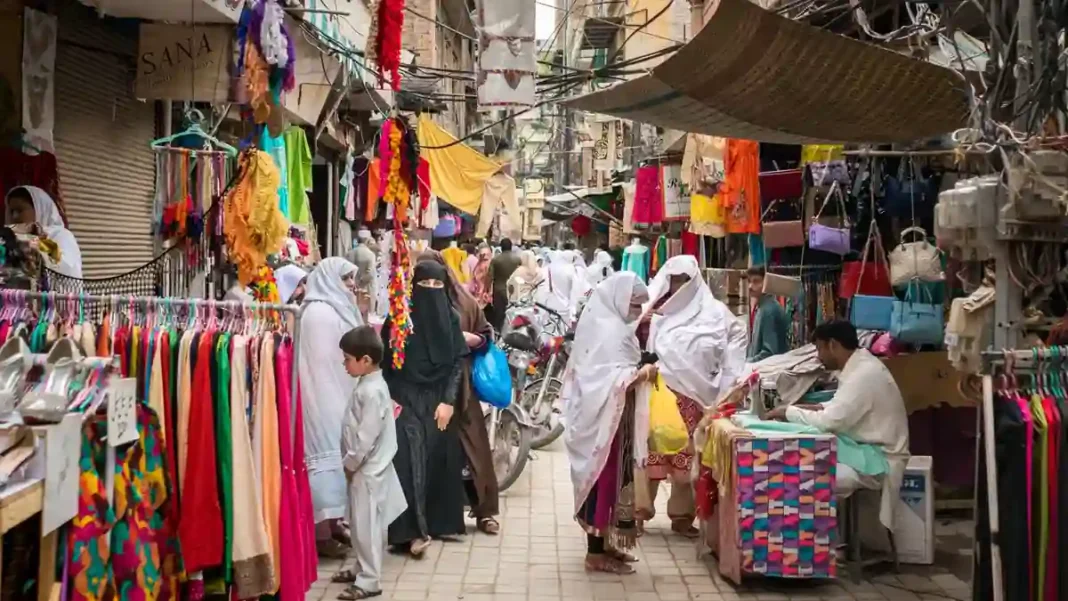
- It protects the street vendor, the shopkeeper and the freelancer against arbitrary bans on their livelihood.
- It underpins the right of professionals — doctors, lawyers, teachers, engineers — to practise their calling.
- It supports business formation and private enterprise, complementing the property rights protected by Articles 23 and 24 — visible in record-high business registrations and new digital financing facilities for small businesses.
- It gives the courts a constitutional standard to test licensing regimes, permit systems and trade restrictions: regulation must be reasonable and prescribed by law, not arbitrary — a point the World Bank has pressed in urging Pakistan to remove needless business rules.
- It covers trade across borders too, the constitutional backdrop to commercial diplomacy such as the push to fast-track the Pak-GCC free trade pact.
Article 18 and the Islamic provisions
Article 18 operates alongside the Islamic provisions of the Constitution, including Article 227, which requires laws to conform to the injunctions of Islam. In practice this means the “lawful” in Article 18 is read consistently with the wider constitutional order — trades and businesses prohibited by law, including on Islamic grounds, fall outside the protection. The two provisions do not conflict; they define the lawful boundary from different directions.
Frequently asked questions
What is Article 18 of the Constitution of Pakistan?
Article 18 is the fundamental right to freedom of trade, business and profession. Every citizen may enter any lawful profession or occupation and conduct any lawful trade or business, subject to qualifications prescribed by law.
Can the government stop someone from doing business?
Only through reasonable restrictions prescribed by law — for example, licensing requirements for regulated professions. An arbitrary or discriminatory ban on a lawful trade can be challenged in the superior courts as a violation of Article 18.
Does Article 18 apply to government employees?
With a limitation. The state may require persons in its service to refrain from trade, business or profession while in service, to avoid conflicts of interest. This exception does not apply to citizens generally.
Is Article 18 enforceable in court?
Yes. As a fundamental right, it is enforceable by the High Courts under Article 199 and the Supreme Court under Article 184(3), and laws inconsistent with it are void under Article 8.