


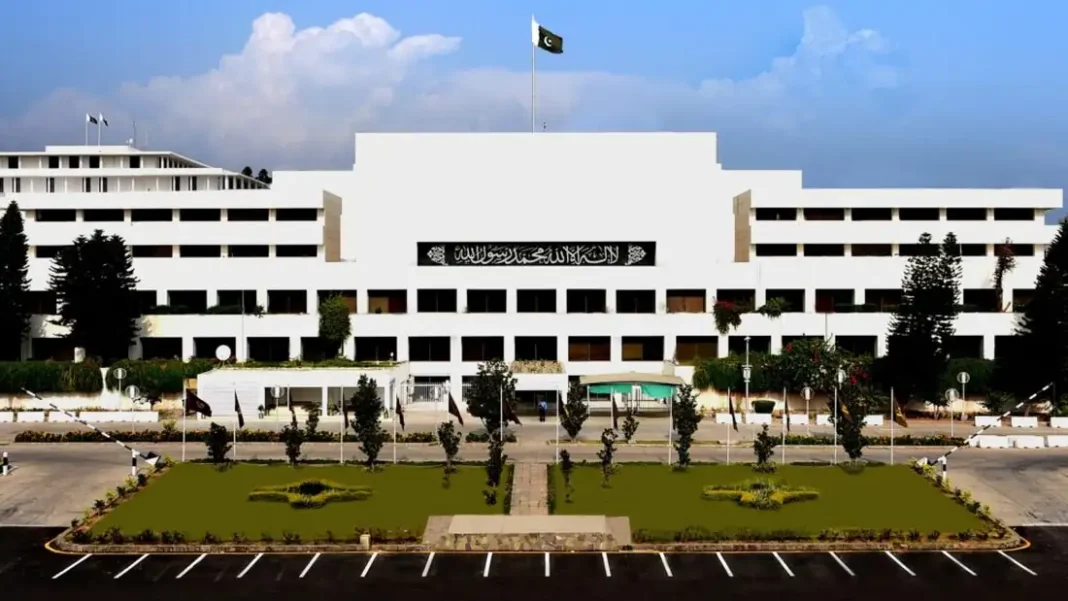
“Wazir-e-khazana” is the Urdu title for Pakistan’s finance minister — literally, the minister of the treasury (khazana). It is the term most Pakistanis actually use in conversation, and it is one of the most searched political phrases in the country. The current wazir-e-khazana is Muhammad Aurangzeb, in office since March 2024.
Quick answer: The wazir-e-khazana (Urdu: وزیر خزانہ, finance minister) of Pakistan is Senator Muhammad Aurangzeb, appointed 11 March 2024 in Shehbaz Sharif’s cabinet. A former JPMorgan banker and Habib Bank CEO, he holds the Finance and Revenue portfolios and steers IMF programme implementation, federal budgets and tax policy.
In this guide
What “wazir-e-khazana” means
Treasury, not treasure. Khazana (خزانہ) means treasury or exchequer; wazir-e-khazana is thus “minister of the treasury” — the exact Urdu equivalent of finance minister. The term appears in Urdu news bulletins, talk shows and official Urdu-language documents, and Pakistanis searching in Roman Urdu type “wazir e khazana”, “wazeer khazana” or “wazir khazana” interchangeably.
The finance ministry itself is the Wazarat-e-Khazana. Related titles you will hear: wazir-e-dakhla (interior minister), wazir-e-kharja (foreign minister) and wazir-e-azam (prime minister). Knowing the term helps decode Urdu media — and it is why this page exists alongside the English finance minister profile.
The current wazir-e-khazana
Muhammad Aurangzeb. In office since 11 March 2024, Aurangzeb is the 45th finance minister — a technocrat banker rather than a career politician. His background: CEO of JPMorgan’s Global Corporate Bank (Singapore), then president and CEO of Habib Bank, Pakistan’s largest bank by deposits. He renounced his Dutch nationality to take the job and was elected Senator in April 2024.
His tenure’s themes: IMF programme compliance, broadening the tax base, and the PM’s Access to Finance Plan 2026–2028. Full record in the current finance minister update and who he is.
Wazir-e-khazana through history
From Ghulam Muhammad to Aurangzeb. The first wazir-e-khazana was Malik Ghulam Muhammad (15 August 1947 – 19 October 1951), a chartered accountant who later became Governor-General. The most famous holders include Liaquat Ali Khan’s era colleagues, Zulfikar Ali Bhutto’s finance ministers, Shaukat Aziz (1999–2007, the banker who became prime minister), Ishaq Dar (four stints, the PML-N’s economic face), and the caretaker Shamshad Akhtar.
The portfolio’s Urdu title has stayed constant through republics, martial laws and caretakers — one of the few constants in Pakistan’s churning politics. The ministers of Pakistan guide lists every current portfolio holder.
What the wazir-e-khazana actually does
Budgets, taxes, debt, IMF. The wazir-e-khazana presents the annual federal budget, sets tax policy (with the FBR executing it), manages public debt, and negotiates with the IMF and World Bank. Since the ministry’s bifurcation, the Economic Affairs Division sits with Ahad Cheema — so Aurangzeb’s domain is Finance plus Revenue.
In practice the job is Pakistan’s hardest: revenue never meets expenditure, debt servicing eats the budget, every interest group resists taxation, and the IMF watches quarterly. That is why the average tenure is short and why a wazir-e-khazana who survives two years, as Aurangzeb has, is notable. See the finance ministry’s full role.
Who is the wazir-e-khazana of Pakistan?
Senator Muhammad Aurangzeb — finance minister since 11 March 2024, former JPMorgan banker and Habib Bank CEO.
What does wazir-e-khazana mean in English?
Finance minister — literally “minister of the treasury” (khazana = treasury/exchequer).
Who was the first wazir-e-khazana of Pakistan?
Malik Ghulam Muhammad, finance minister from 15 August 1947 to 19 October 1951, who later became Pakistan’s third Governor-General.

.)