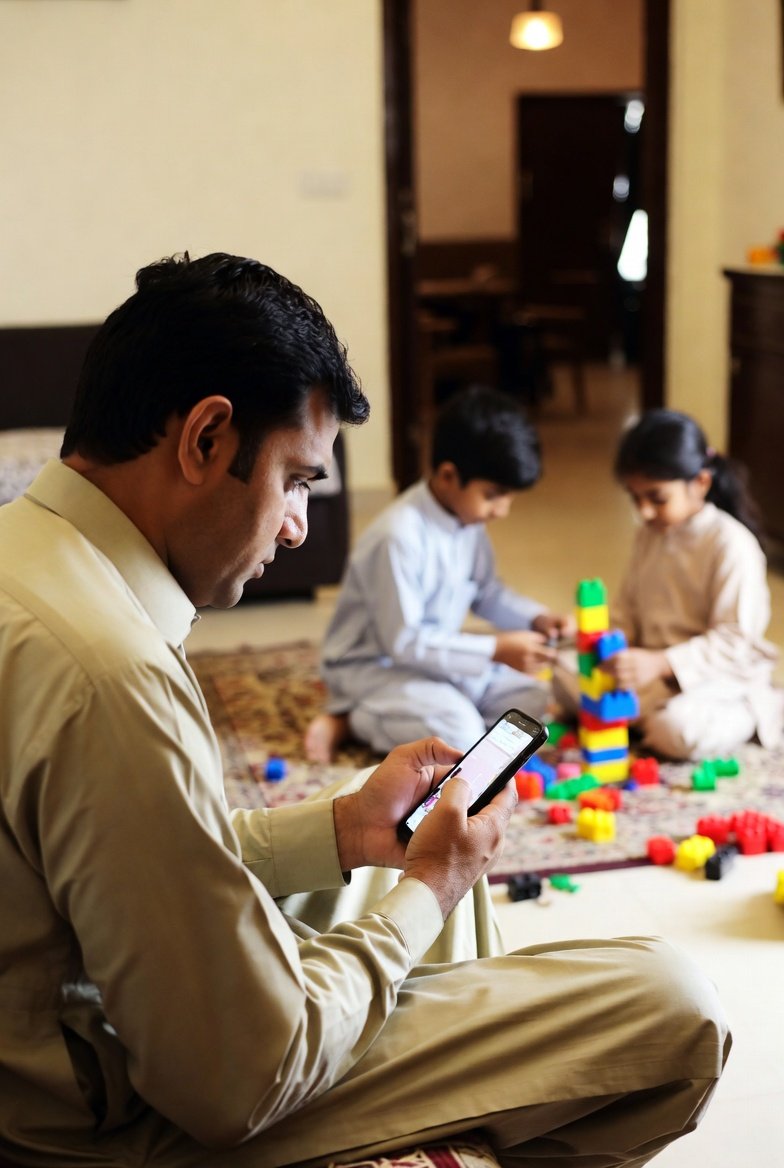
A new study highlights the negative impact of parental screen time on children. Researchers reveal that when parents stay busy on mobile phones and screens, children’s development suffers. As a result, experts now stress the need for more direct interaction between parents and children.
Researchers conducted a survey on 421 parents in Estonia. They found a clear pattern in families with high screen use. Children in such homes also adopted similar habits. Consequently, these children showed weaker vocabulary and grammar skills compared to others.
The study confirms that children learn language best through direct conversation. Parents play a key role in this process. However, when parents spend more time on screens, they reduce meaningful interaction at home. As a result, children receive fewer opportunities to learn and practice language.
Moreover, researchers note that even shared screen time does not improve language skills. Watching content together fails to replace real conversation. Therefore, children do not gain strong communication abilities through screens alone.
The research was led by Dr. Tiia Tulviste. She emphasizes the importance of family habits. She explains that parents directly influence their children’s behavior and development. Therefore, parents must understand their role and make better choices.
In addition, experts highlight safety concerns linked to excessive screen use. When parents stay busy on their phones, they pay less attention to their children. As a result, the risk of accidents and injuries increases. This issue raises serious concerns for child safety at home and outside.
Pediatric expert Dr. Jenny Radesky also shares important advice. She encourages parents to limit unnecessary mobile use. Instead, she suggests spending quality time with children. Simple changes, such as avoiding screens during meals and playtime, can make a big difference.
Furthermore, experts stress the importance of awareness. Many parents do not realize the long-term impact of their habits. Therefore, understanding these risks can help families improve their routines and support children’s growth.
In conclusion, parental screen time not only affects children’s language development but also impacts their safety and behavior. Experts urge parents to reduce screen use and increase real-life interaction. This approach supports healthy development and stronger family connections.