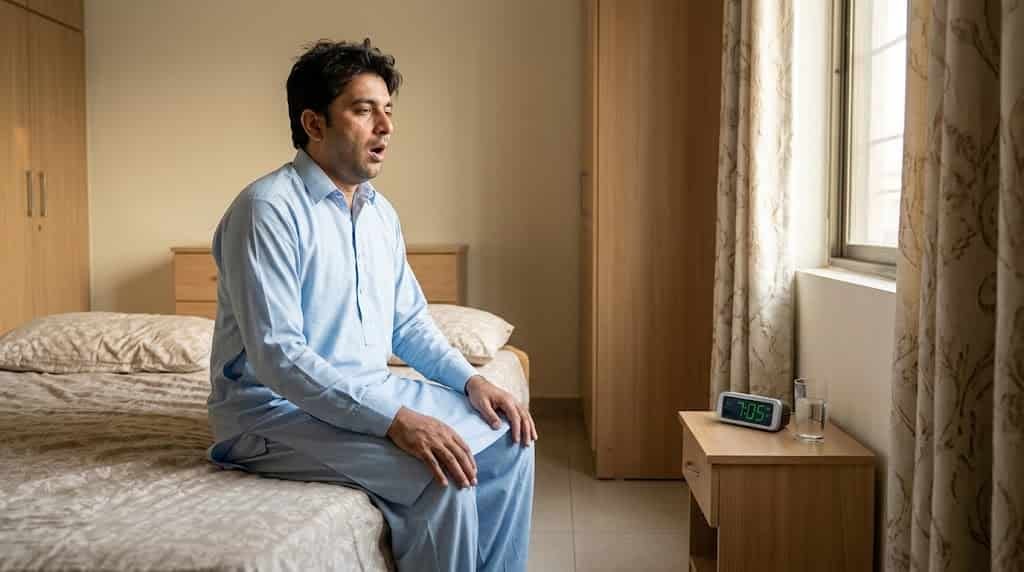
Why Do You Wake Up Tired Even After 8 Hours of Sleep? 7 Reasons You May Be Ignoring
You went to bed on time. You slept for almost eight hours. Your alarm rings in the morning, but instead of feeling refreshed, you feel as though you barely slept.
Your eyes feel heavy. Getting out of bed feels difficult, and your first thought may already involve coffee.
Sound familiar?
Many people assume that getting eight hours of sleep should automatically guarantee an energetic morning. When that does not happen, the obvious question is: why do you wake up tired even after 8 hours of sleep?
The answer is more complicated than simply counting hours.
Sleep duration matters, but sleep quality, timing and continuity matter too. Stress, irregular schedules, alcohol, caffeine, screen habits and certain sleep or health conditions can also affect how refreshed you feel.
Sometimes the problem is not that you are sleeping too little.
The problem may be that your sleep is not as restorative as you think.
Here are seven possible reasons worth understanding.
1. Eight Hours in Bed Does Not Always Mean Eight Hours of Quality Sleep
This is one of the biggest misconceptions about sleep.
You may go to bed at 11:00 PM and get out of bed at 7:00 AM, but that does not necessarily mean you received eight uninterrupted hours of restorative sleep.
You might take 30 minutes to fall asleep.
You may briefly wake several times during the night without remembering every awakening in the morning.
Noise, temperature, stress, pets, children, phone notifications or an uncomfortable sleeping environment can interrupt sleep.
The total time displayed on the clock therefore tells only part of the story.
Adults generally need at least seven hours of sleep regularly, although individual needs vary. Quality and regularity also matter.
Good sleep involves moving through different stages during the night.
These stages include lighter sleep, deeper sleep and rapid eye movement or REM sleep.
Repeated interruptions can disturb normal sleep architecture and leave you feeling less refreshed, even when you technically spent enough time in bed.
So if you wake up tired after 8 hours of sleep, start thinking about quality rather than duration alone.
Ask yourself a different question:
“Did I sleep well?”
That question can be much more useful than simply asking how long you stayed in bed.
2. Your Sleep Schedule May Be Confusing Your Body Clock
Your body loves consistency.
Humans have an internal biological timing system known as the circadian rhythm. It helps regulate when we feel awake, when we become sleepy and when various biological processes occur.
Light provides one of the strongest environmental signals for this internal clock.
Problems can arise when your schedule constantly changes.
Imagine waking at 6:30 AM from Monday to Friday.
Then Saturday arrives and you stay awake until 2:00 AM before sleeping until 11:00 AM.
Sunday follows a similar pattern.
On Monday morning, your alarm suddenly demands that you wake at 6:30 again.
You may have slept for eight hours, but your body clock may not be aligned with the schedule you are trying to follow.
Researchers sometimes describe major differences between biological and social schedules as “social jetlag.”
You do not need to board an airplane to experience something that resembles a time-zone shift.
Changing your sleep schedule dramatically between workdays and weekends can be enough to make Monday morning feel brutal.
A more consistent bedtime and wake-up time may help.
You do not need to follow an identical schedule every single day, but huge changes can make maintaining a stable sleep-wake rhythm harder.
3. You May Be Waking During Sleep Inertia
Have you ever woken from a nap and temporarily felt worse than before you slept?
Your brain feels foggy.
Your reactions seem slower.
You want to close your eyes again.
That experience is known as sleep inertia.
Sleep inertia describes the temporary period of reduced alertness and performance that can occur immediately after waking.
For many people, it disappears relatively quickly.
However, the intensity can vary depending on factors such as previous sleep loss and the stage of sleep from which you wake.
This means the first few minutes after your alarm may not accurately represent how rested you actually are.
Hitting snooze repeatedly can also make mornings feel fragmented.
You wake, fall asleep again, wake again and repeat the process.
Although those extra minutes may feel valuable, they can create a messy transition between sleep and wakefulness.
Try getting up when your alarm first rings and expose yourself to morning light.
Give yourself some time before deciding that the entire night’s sleep “didn’t work.”
4. Stress May Be Following You Into Bed
Your body can lie still while your brain remains extremely busy.
You may spend eight hours in bed but carry tomorrow’s deadlines, financial worries, family problems, relationship concerns or work stress into the night.
Stress can make falling asleep harder.
It can also contribute to disturbed or less satisfying sleep.
This becomes a frustrating cycle.
You worry, so you sleep poorly.
Then you wake tired.
Because you are tired, normal problems feel harder to manage.
That creates more stress, which may affect the following night’s sleep.
Phones can make this pattern worse.
You intend to check one message before sleeping.
Then you open Instagram.
Then TikTok.
Then YouTube.
Then the news.
Suddenly 45 minutes have disappeared and your brain has processed dozens of new pieces of information immediately before you expect it to relax.
Creating a wind-down routine can help signal that the active part of your day has ended.
That might include dimming the lights, putting away work, reducing stimulating content or reading something relaxing.
The goal is not to create a perfect social-media-worthy bedtime routine.
It is simply to give your brain a transition between “doing everything” and “trying to sleep.”
5. Your Evening Habits May Be Hurting Sleep Quality
What you do before bedtime matters.
Caffeine provides an obvious example.
Coffee can help improve alertness, which is exactly why people drink it.
But caffeine does not disappear immediately after the last sip.
Having coffee, strong tea, energy drinks or other caffeinated products later in the day can interfere with sleep in susceptible people.
And sensitivity differs considerably.
One person may drink evening coffee and apparently fall asleep without difficulty. Another may struggle after an afternoon cup.
Alcohol creates another misconception.
Some people feel sleepy after drinking alcohol and therefore assume it improves sleep.
Feeling sleepy, however, is not the same as getting high-quality sleep.
Alcohol can disrupt sleep later in the night and may worsen snoring or breathing-related sleep problems.
Heavy meals close to bedtime may also cause discomfort for some people.
Then there is nicotine, which acts as a stimulant.
Together, evening habits can influence sleep more than the number shown on your alarm clock.
If you regularly wake exhausted, examine what happens during the final few hours before bed.
The answer may be hiding there.
6. Snoring Could Be More Important Than You Think
Snoring is often treated as a joke.
Sometimes it is harmless.
But loud, persistent snoring can also accompany obstructive sleep apnea, a sleep disorder in which breathing repeatedly becomes blocked or reduced during sleep.
When breathing becomes disrupted, the brain may repeatedly shift toward lighter sleep to restore airflow.
The person may not remember these interruptions.
They may believe they slept throughout the night.
Yet they wake feeling exhausted.
Possible warning signs can include loud snoring, witnessed pauses in breathing, gasping or choking during sleep, morning headaches and excessive daytime sleepiness.
Not everyone who snores has sleep apnea.
But persistent snoring combined with significant daytime tiredness deserves attention.
This is particularly important because untreated sleep apnea can affect more than morning energy.
If someone sleeping near you frequently says that you stop breathing, choke or gasp during sleep, do not dismiss the observation.
Discuss it with a healthcare professional.
This is one reason why the question “why do I wake up tired after 8 hours?” cannot always be answered by lifestyle advice alone.
Sometimes sleep itself needs medical evaluation.
7. Your Tiredness May Not Be Coming From Sleep Alone
This point is extremely important.
Fatigue and sleepiness are related, but they are not identical.
Sleepiness means having a tendency or desire to fall asleep.
Fatigue can feel more like low energy, weakness or exhaustion.
Someone may sleep adequately and still experience fatigue for reasons unrelated to the number of hours slept.
Many factors can contribute.
Iron deficiency or anemia can cause tiredness in some people.
Thyroid problems can affect energy levels.
Certain vitamin deficiencies may contribute to fatigue.
Depression and other mental health conditions can affect sleep, motivation and energy.
Some medications can also cause drowsiness.
Other medical conditions may produce persistent fatigue as well.
This does not mean you should search your symptoms online and immediately diagnose yourself with a disease.
Quite the opposite.
Persistent unexplained tiredness deserves proper evaluation rather than guessing.
If you consistently get adequate sleep but remain exhausted for weeks, consider discussing the problem with a qualified healthcare professional.
Your Bedroom Could Be Part of the Problem
Sometimes the explanation is surprisingly ordinary.
Look around your bedroom.
Is it noisy?
Too hot?
Too bright?
Does your phone light up throughout the night?
Do people regularly enter the room?
Does traffic noise wake you?
Is your mattress uncomfortable?
A good sleeping environment should generally feel dark, quiet and comfortable.
Pakistan’s climate can make temperature particularly important.
During hot and humid nights, sleeping comfortably can become difficult without adequate ventilation or cooling.
You may technically remain asleep for hours but experience more fragmented or uncomfortable sleep.
Blackout curtains may help people dealing with excessive outside light.
Reducing unnecessary notifications can prevent the phone from becoming a midnight disturbance.
Small environmental changes will not solve every sleep problem, but they can improve conditions for better rest.
Your Phone Deserves Special Attention
Phones have become our alarm clocks, televisions, newspapers, offices and social spaces.
Unfortunately, that means many of us take the entire world to bed.
Screen use near bedtime can affect sleep through several pathways.
Light exposure at night can influence circadian signals.
But content matters too.
An exciting video, stressful work email, heated political argument or endless stream of short videos can keep the mind stimulated.
There is also the simplest problem of all.
Phones steal time.
You planned to sleep at 11:00 PM.
You actually stopped scrolling at 12:17 AM.
Then you tell yourself the next morning that you “went to bed at eleven.”
Putting your phone away before bedtime can therefore help for reasons beyond blue light.
It removes temptation.
Could You Simply Need More Than Eight Hours?
Eight hours is not a magical universal number.
Sleep needs vary between individuals and across different stages of life.
For most healthy adults, experts generally recommend at least seven hours of sleep regularly, while many people function best somewhere around seven to nine hours.
Some individuals may genuinely feel better closer to nine hours.
Others function well with less within the recommended range.
Your recent sleep history matters too.
If you slept poorly throughout the week, one eight-hour night may not instantly make you feel completely restored.
Think about your sleep pattern across several days rather than judging everything from one night.
What About Sleeping Too Much?
More sleep is not always the answer either.
Regularly spending extremely long periods in bed while still feeling exhausted may signal poor sleep quality, an irregular routine or another underlying issue.
If you need unusually long sleep every day and still struggle with energy, consider discussing it with a healthcare professional.
The goal is restorative sleep, not simply accumulating the highest possible number of hours.
How to Wake Up Feeling More Refreshed
Start with consistency.
Try to keep your wake-up time reasonably stable, including on weekends.
Then pay attention to morning light.
Opening your curtains and getting natural daylight after waking can provide a strong signal to your circadian system that the day has begun.
Physical movement can also help.
You do not need an intense workout at 6:00 AM.
A short walk, stretching or ordinary morning activity can help transition your body into wakefulness.
Hydration matters too.
You naturally go several hours without drinking while sleeping, so having water after waking can be a simple part of your morning routine.
Most importantly, evaluate your entire day.
Better mornings often begin the night before.
Try This Simple Sleep Check for One Week
If you regularly wake tired, become your own investigator.
For seven days, write down:
What time did you go to bed?
Approximately when did you fall asleep?
What time did you wake?
How many times did you remember waking during the night?
Did you consume caffeine late in the day?
Did you exercise?
Did you use your phone in bed?
Did someone mention that you snored?
How refreshed did you feel in the morning?
Patterns may become surprisingly obvious.
Perhaps the worst mornings consistently follow late-night scrolling.
Maybe weekend schedule changes make Monday difficult.
Or perhaps no lifestyle pattern explains your fatigue at all.
That information can also be useful if you eventually speak with a healthcare professional.
When Should You See a Doctor?
Everyone experiences an occasional bad morning.
One night of poor sleep is usually not a reason for alarm.
However, persistent tiredness deserves more attention.
Consider seeking medical advice if you regularly get enough opportunity to sleep but continue waking exhausted, particularly when the problem lasts for weeks or interferes with daily life.
You should also take excessive daytime sleepiness seriously if you struggle to stay awake while working, studying or driving.
Loud snoring combined with gasping, choking or witnessed breathing pauses during sleep also deserves medical evaluation.
Likewise, seek professional advice if fatigue appears alongside other concerning or unexplained symptoms.
Sleep problems are common, and many can be managed once the underlying cause becomes clear.
Stop Obsessing Over the Number Eight
Perhaps the biggest lesson is that sleep cannot be reduced to a single number.
Eight hours sounds wonderfully simple.
Sleep is not.
Two people can both sleep from 11:00 PM until 7:00 AM and have completely different experiences.
One may sleep deeply in a quiet environment.
The other may snore heavily, wake repeatedly, check their phone twice and spend an hour tossing and turning.
Both can say, “I was in bed for eight hours.”
Only one may wake refreshed.
Sleep duration matters, but so do consistency, quality, timing and continuity.
So, why do you wake up tired even after 8 hours of sleep?
There is no single answer.
Poor sleep quality may be responsible. An irregular body clock could play a role. Stress, caffeine, alcohol, screen habits or an uncomfortable sleeping environment may interfere with restorative sleep.
Sometimes you simply need slightly more sleep.
In other cases, persistent tiredness can point toward a sleep disorder or another health issue that deserves professional attention.
Instead of focusing only on how many hours you sleep, start paying attention to how you sleep.
Keep a consistent routine. Get morning light. Stay active. Review your caffeine and screen habits. Create a comfortable sleeping environment and take persistent daytime sleepiness seriously.
Your body does not care whether the clock says you achieved the perfect eight hours.
It cares whether those hours actually gave it the rest it needed.
And that may finally explain why some mornings begin with energy — while others begin with you staring at the alarm and wondering how eight hours disappeared so quickly.