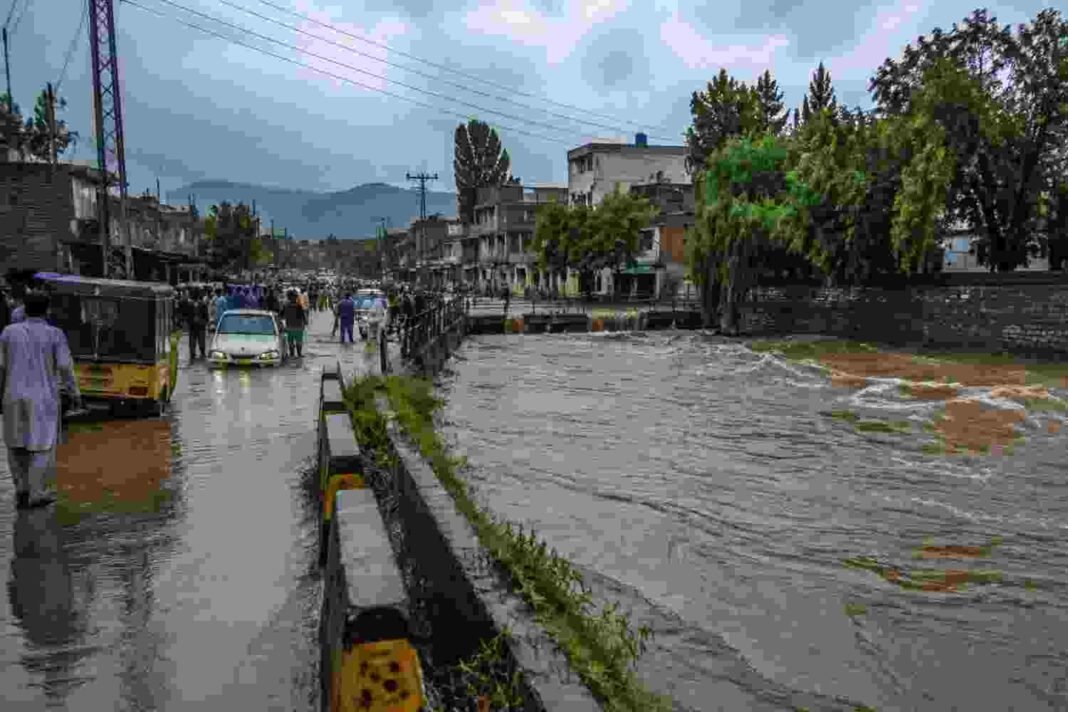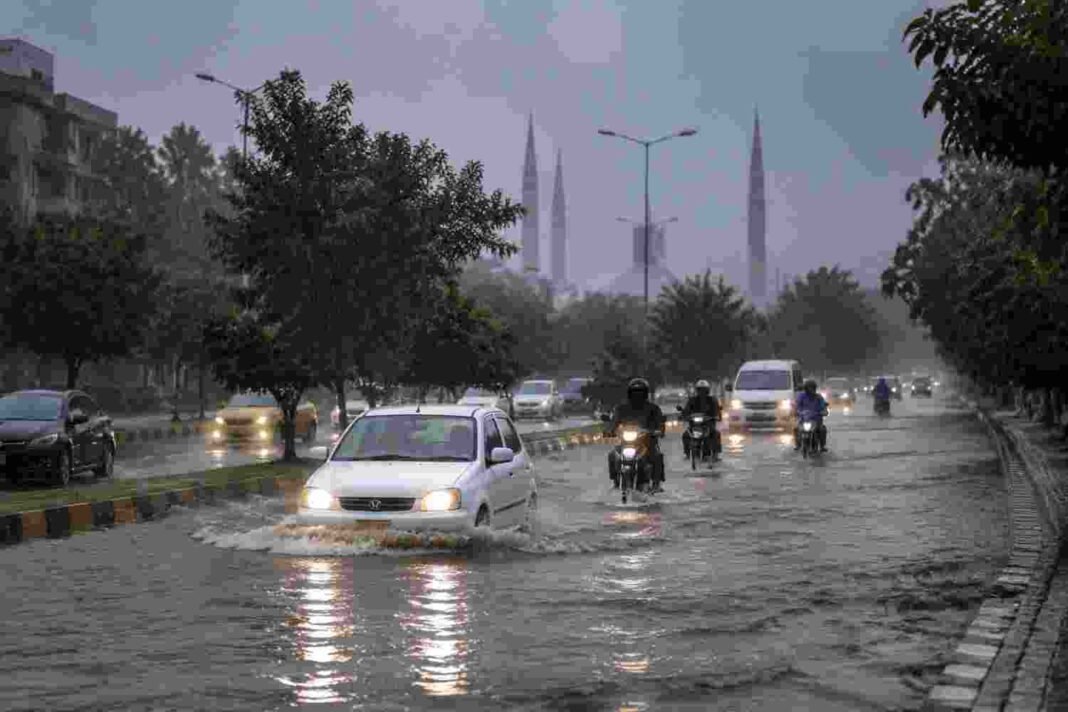
Heavy rainfall continues to affect Islamabad and Rawalpindi as a powerful monsoon spell brings intense showers across the twin cities and nearby areas. The continuous downpour has caused water to accumulate in several low-lying areas, creating difficulties for residents and commuters.
The Islamabad-Rawalpindi rain situation has become a major concern as authorities continue monitoring the weather conditions and drainage systems. The Water and Sanitation Agency (WASA) Rawalpindi has placed its teams on high alert and declared a rain emergency to manage potential flooding.
According to WASA officials, the current rainfall spell marks one of the strongest monsoon episodes of the season. The agency reported more than 140 millimeters of rain across different parts of Rawalpindi, increasing pressure on drainage networks and water channels.
Meanwhile, several areas under Chaklala Cantonment Board have faced water accumulation due to heavy showers. Rainwater has entered streets and roads, affecting daily movement in different neighborhoods.
Areas around Murree Road Dhoke Khabba and Jamia Masjid Road Saddar have also experienced flooding problems. WASA teams have begun emergency drainage operations using heavy machinery to clear water from affected areas.
Furthermore, authorities have advised residents of Javed Colony, Nadeem Colony, and Muslim Colony to stay cautious and move to safer places if water levels continue to rise. Officials are closely watching vulnerable areas to prevent any major emergency.
WASA Managing Director said teams are actively working in different parts of the city to control the situation. Heavy machinery and staff members are present at Liaquat Bagh, Committee Chowk Underpass, Murree Road, Saddar, Dhoke Khabba, Millat Colony, and Arya Mohalla for water removal operations.
The Islamabad-Rawalpindi rain emergency has also increased focus on Nullah Lai and other drainage channels. WASA teams are continuously monitoring water levels to reduce the risk of urban flooding.
Officials recorded a water level of 20 feet at Katarian, while the level reached 17 feet near Golra Mandi Bridge. Authorities continue checking these locations because rising water levels can create challenges for nearby communities.
Weather data showed heavy rainfall in multiple areas of the twin cities. Golra received 145 millimeters of rain, while Bokra recorded 134 millimeters. Pirwadhai received 106 millimeters, followed by Golra Mandi with 79 millimeters and New Katarian with 78 millimeters.
Other areas also reported significant rainfall during the ongoing weather system. Kacheri recorded 61 millimeters, PMD received 48 millimeters, Shamsabad recorded 47 millimeters, while Saidpur received 9 millimeters.
The heavy rain spell has affected traffic flow in different parts of Islamabad and Rawalpindi. Many roads witnessed water accumulation, causing delays for commuters during busy hours.
However, WASA and local administration teams continue working to restore normal conditions. Officials have increased field operations and instructed staff members to remain available until the weather improves.
The Islamabad-Rawalpindi rain event highlights the challenges cities face during intense monsoon activity. Urban flooding remains a recurring issue during heavy rainfall because drainage systems often struggle to handle sudden increases in water flow.
Residents have also received instructions to avoid unnecessary travel in flooded areas and stay updated through official weather alerts. Authorities continue tracking rainfall patterns as more showers may affect the region in the coming hours.
The latest weather situation shows the importance of emergency planning and quick response during extreme monsoon conditions. Government departments remain focused on protecting citizens and reducing the impact of heavy rainfall across the twin cities.