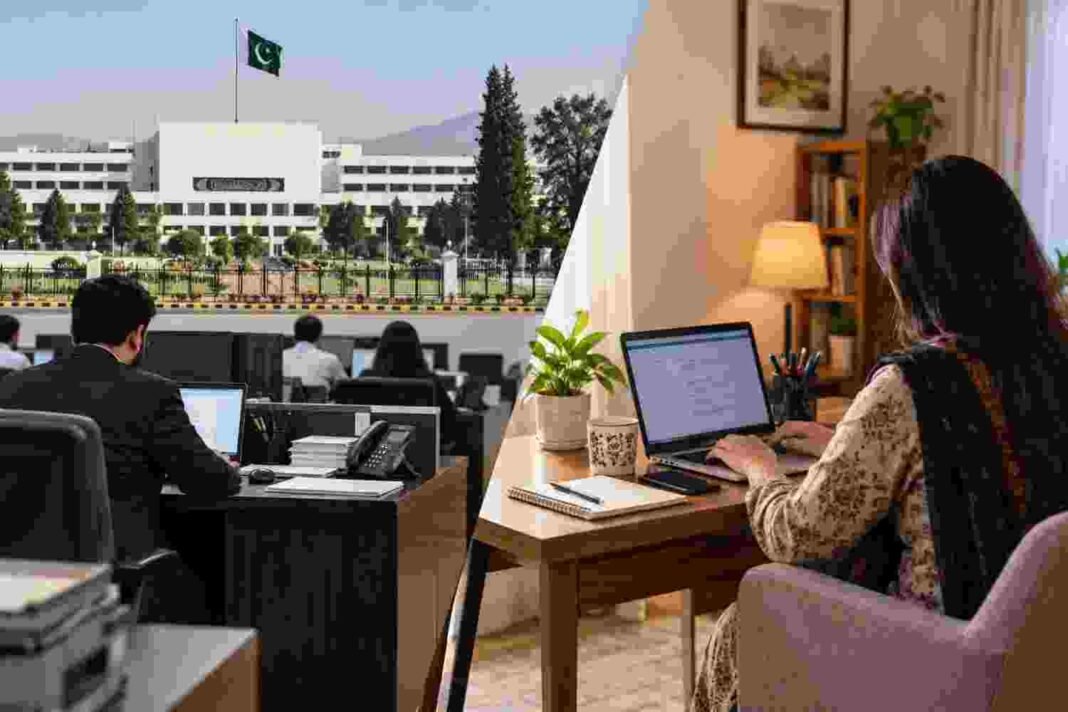
ISLAMABAD: The National Assembly Secretariat has introduced a new Work From Home Policy as part of fresh measures to reduce government expenses and save fuel.
Under the new arrangement, 50 percent of employees will attend the office. Meanwhile, the remaining 50 percent will perform their official duties from home according to a rotation schedule.
The Secretariat will prepare separate duty rosters for employees who work remotely. Therefore, officials will divide staff attendance to ensure essential government work continues without interruption.
Employees who perform their duties from home must remain available during working hours. They must respond by phone, email, and WhatsApp whenever their departments contact them.
Moreover, the Work From Home Policy allows authorities to call remote employees back to the office when necessary. Employees must reach the office within one hour of receiving official instructions.
However, employees working from home will not receive daily allowance or overtime payments. The Secretariat has made this condition part of its wider plan to control administrative expenses.
At the same time, remote employees cannot leave their station without permission from the authorized officer. Therefore, working from home will not remove the normal responsibilities linked with official duty.
The National Assembly Secretariat has introduced several other austerity measures alongside the Work From Home Policy. Officials aim to reduce fuel consumption and cut unnecessary spending across different departments.
For instance, the Secretariat will reduce fuel supplies for official vehicles by 50 percent for the next three months. This measure could significantly lower transport-related expenditure during this period.
In addition, officials will not purchase new government vehicles under the latest restrictions. The Secretariat has imposed a complete ban on new vehicle purchases as part of its cost-saving strategy.
The administration also plans to reduce the non-development budget for the financial year 2026-27. It will make a five percent reduction each month to control routine expenses.
Meanwhile, officials will increasingly use technology for meetings. The Secretariat will prefer video conferencing instead of arranging unnecessary physical meetings.
Standing committees will also receive encouragement to hold meetings through virtual platforms. Consequently, the government expects to reduce travel, fuel, hospitality, and other meeting-related expenses.
The Work From Home Policy also supports this shift toward greater digital working. The Secretariat wants employees and officials to use online communication tools more frequently for routine government business.
Furthermore, the administration has decided to reduce the overall number of meetings. Officials will arrange only essential meetings and rely on digital communication wherever practical.
The Secretariat has also restricted the purchase of durable goods. However, officials can continue purchasing necessary information technology equipment because the restriction does not cover IT-related items.
Another major measure affects foreign travel by officials. The Secretariat has stopped foreign visits for three months as part of its broader austerity drive.
However, officials can still travel for approved scholarships and training courses. International programmes and training activities under official agreements will also continue under the exemptions.
The new Work From Home Policy forms only one part of the Secretariat’s wider effort to control public spending. Authorities have also restricted official dinners, seminars, and conferences.
Under the new measures, the government will not fund unnecessary seminars and conferences. However, events involving foreign delegations can continue when officials consider them necessary.
For unavoidable official functions, departments will use government auditoriums and existing public facilities. This approach will help reduce spending on private venues and other arrangements.
Meanwhile, the National Assembly Secretariat also wants to reduce its dependence on paper. Officials will move toward a paperless working environment and use digital documents for more administrative activities.
This change could reduce printing and stationery expenses while speeding up office communication. Moreover, digital records can support the Secretariat’s broader efforts to modernize its administrative system.
The Work From Home Policy and other austerity measures have taken effect immediately. The National Assembly Secretariat will continue these arrangements until authorities issue further instructions.
Through these steps, the Secretariat aims to save fuel, reduce operational costs, and limit unnecessary spending. At the same time, employees will continue performing their duties through office attendance and remote working rotations.
Sehar Sarmad is a content writer with an MBA from Hailey College of Banking & Finance. She specializes in creating insightful and well-researched content on business, finance, technology, education, and current affairs. Through her writing, she aims to simplify complex topics, share valuable insights, and help readers stay informed about emerging trends and developments.