Charsadda dengue cases have reached 104, including 37 infections transmitted locally, according to statistics released by the district health officer.
The figures, compiled as of November 6, show 67 patients had a history of travel outside the district. Peshawar accounted for the highest number of travel-linked cases at 48. Other cases included five from Kohat, four from Karachi, three from Punjab and two from Mardan. One case each was reported among patients arriving from Swabi, Haripur, Rawalpindi, Lakki Marwat and Nowshera.
The emergence of 37 locally acquired cases has raised concern about local transmission of the mosquito-borne disease, underlining the need for stronger surveillance and preventive measures across the district.
Where the Charsadda dengue cases are
Umarzai and Utmanzai topped the union council list with eight cases each, followed by Agra with seven. Sheikhu, Tangi Municipal Committee, Hisara Yasinzai, Tarnab and Charsadda Municipal Committee No. 4 reported five cases each, while Charsadda Municipal Committee No. 2 recorded four.
| Union council | Cases |
|---|---|
| Umarzai | 8 |
| Utmanzai | 8 |
| Agra | 7 |
| Sheikhu | 5 |
| Tangi Municipal Committee | 5 |
| Hisara Yasinzai | 5 |
| Tarnab | 5 |
| Charsadda Municipal Committee No. 4 | 5 |
| Charsadda Municipal Committee No. 2 | 4 |
Batagram, Sherpao, Sarki Tatara, Ghunda Karkana and Hajizai reported three cases each. Two cases each were recorded in Katozai, Daman Shabqadar, Dheri Zardad, Panchpao, Shabqadar Municipal Committee No. 1, Koz Bahram Dheri, Khanmahi, Dhakki, Mirza Dher and Shabqadar Municipal Committee No. 3. One case each came from Shabqadar Municipal Committee No. 2, Harichand, Daulatpura, Mera Prang, Mandani, Charsadda Municipal Committee No. 3, Matta Mughalkhel, Bahlola, Hisara Nehrai, Rajjar No. 2, Dargai and Abazai.
Seven patients also had malaria
The report showed malaria tests of 97 dengue patients returned negative results, while seven tested positive for malaria, indicating co-infection in these cases. Patients with both infections need closer monitoring, as the two diseases share symptoms such as fever and body aches.
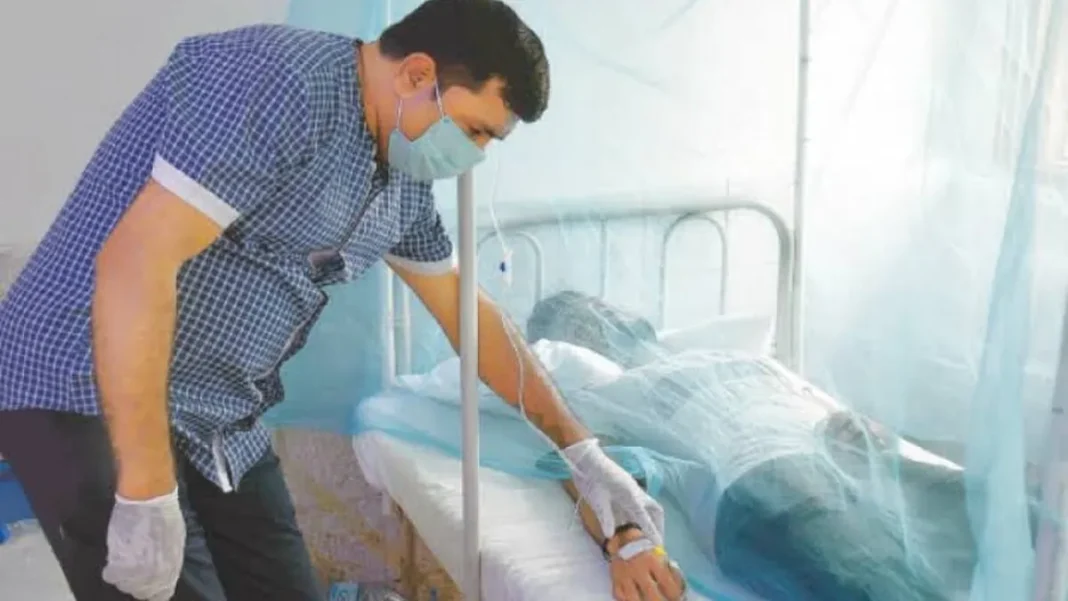
On the patients’ health, 81 had recovered, while 22 were receiving treatment at home and one remained hospitalised at the time of the report. On November 6, health teams screened 74 people for dengue, but no new cases were found.
Health experts stress that removing stagnant water, keeping surroundings clean, covering water storage containers, finding mosquito breeding sites and destroying larvae are essential to controlling the spread of dengue. They also called for targeted fumigation and stronger preventive campaigns in areas reporting higher numbers of infections.
Part of a wider Khyber Pakhtunkhwa outbreak
The Charsadda figures sit within a broader dengue surge across Khyber Pakhtunkhwa this autumn. The province recorded 1,510 dengue cases in October, and Kohat emerged as a hotspot in the same month. The pattern shows the disease spreading beyond the big cities into smaller districts, where local transmission can take hold once the mosquito finds standing water.
The health system faces the outbreak at a difficult time. Hospitals in Khyber Pakhtunkhwa are still struggling after years of strain, and dengue care depends on early testing, fluid management and beds for patients who develop complications. Most patients in Charsadda recovered at home, which suggests the district’s teams caught cases early, but the single hospitalised patient shows why surveillance must continue.
What happens next
District health teams will keep screening people in the worst-hit union councils and tracing contacts of confirmed patients. Residents can help by clearing standing water from rooftops, courtyards and construction sites, and by covering stored water. Anyone with high fever, severe headache, pain behind the eyes or a rash should seek testing early, especially in areas where cases have been reported.
The province is also watching the weather. Cooler nights slow mosquito activity, but health officials say the risk will remain until breeding sites are cleared. A new 600-bed hospital is under construction in Larkana, while a UN report has warned that heatwaves in Punjab threaten agriculture and food security, a reminder that changing weather patterns shape health risks across the country.
Frequently asked questions
How many dengue cases has Charsadda reported?
The district health officer reported 104 confirmed cases as of November 6, including 37 locally transmitted infections and 67 cases linked to travel outside the district.
Which areas have the most cases?
Umarzai and Utmanzai reported eight cases each, followed by Agra with seven. Five cases each were reported in Sheikhu, Tangi Municipal Committee, Hisara Yasinzai, Tarnab and Charsadda Municipal Committee No. 4.
Did any patients have malaria as well?
Yes. Malaria tests of 97 dengue patients returned negative results, while seven tested positive for malaria, indicating co-infection.
How many patients have recovered?
Of the 104 patients, 81 had recovered, 22 were receiving treatment at home and one remained hospitalised at the time of the report.
What can residents do to prevent dengue?
Health experts advise removing stagnant water, keeping surroundings clean, covering water storage containers, finding mosquito breeding sites and destroying larvae, along with targeted fumigation in affected areas.