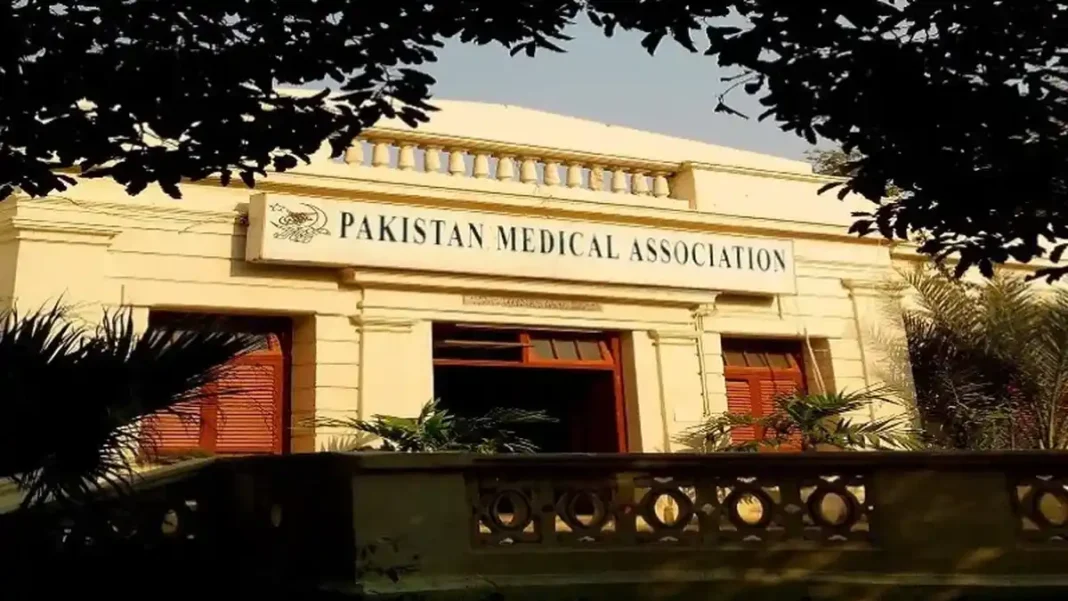
A PMA forensic audit of the country’s disease control programmes is the demand from the Pakistan Medical Association, which warns that Pakistan lags disastrously behind global health milestones despite billions of rupees spent on eradication efforts.
In a statement, the association expressed profound concern over worsening indicators for major infectious and preventable diseases across the country. It demanded a transparent audit of all government departments and non-governmental organisations working in these areas.
The demand covers the programmes that fight polio, tuberculosis, HIV/AIDS and hepatitis. The PMA wants a transparent, sweeping and comprehensive forensic audit of every federal and provincial disease control programme, along with the NGOs working in the field.
PMA forensic audit: billions spent, milestones missed
The association regretted that Pakistan continued to lag disastrously behind global health milestones despite billions of rupees funnelled through international grants, donor funding and national exchequers over the decades.
The PMA welcomed one recent step: the Economic Affairs Division ordered a special audit of Global Fund-backed trusts managing HIV programmes. The association now wants that scrutiny extended to every disease control programme in the country.
Dr Abdul Ghafoor Shoro of the PMA said: “While a huge amount of money is disbursed annually under the banner of disease eradication, public health infrastructure remains dilapidated, healthcare providers are overworked, and disease burdens continue to multiply. Chronic institutional inertia, lack of transparency, lack of grassroots execution, and administrative malpractices have rendered these vertical programmes ineffective.”
On behalf of the association, he demanded the urgent implementation of independent forensic and financial audits, overseen by credible, non-partisan financial watchdogs, of all federal and provincial disease control programmes and NGOs dealing with polio, tuberculosis, HIV and hepatitis.
What vertical programmes are, and why they matter
Vertical programmes are disease-specific drives run separately from the general health system. Each has its own staff, funding and targets: one for polio, one for tuberculosis, one for HIV and AIDS, one for hepatitis. They were built that way so that each disease gets focused attention and money.
The model has delivered results in some places, but the PMA’s case is that the structure has also created parallel systems that are hard to track. Money flows through federal departments, provincial programmes and NGOs at the same time, and the association says no one can see clearly where it all goes.
That matters because the diseases themselves have not gone away. Polio campaigns still miss children in Punjab, and stray dogs have threatened the polio drive in Sindh. The prime minister ordered a polio eradication plan within a week earlier this month, a sign of how far the programme still has to go.
The pressure on the health system shows up in other places too. Dengue cases reached 139 in the twin cities this month, and a new 600-bed hospital is being built in Larkana to add capacity that the public system lacks.
What happens next
A forensic audit would look beyond the books. It would trace how funds moved, who received them, what was delivered on the ground, and whether the results match the money spent. A financial audit alone checks the accounts; a forensic audit looks for misuse.
The PMA wants both, carried out by watchdogs it describes as credible and non-partisan. The association has not named the auditors it has in mind, and its statement sets out the demand rather than a timetable.
The question now is whether the government acts on it. The Economic Affairs Division has already ordered a special audit of the Global Fund-backed HIV trusts, which shows that an audit of one programme is possible. The PMA’s argument is that the same scrutiny should apply to all of them, at the same time, before more money is spent on systems it says are not working.
For patients, the stakes are plain. The programmes exist to stop diseases that are preventable. If the money is not reaching the ground, the audit is the tool that would show where it went, and what must change for the next round of funding to do its job.
Frequently asked questions
Which programmes does the PMA want audited?
The PMA wants a forensic and financial audit of all federal and provincial disease control programmes and NGOs working on polio, tuberculosis, HIV/AIDS and hepatitis eradication.
What audit has already been ordered?
The Economic Affairs Division ordered a special audit of Global Fund-backed trusts that manage HIV programmes. The PMA welcomed that step and wants the same scrutiny extended to every disease control programme.
What is a vertical programme?
A vertical programme is a disease-specific drive run separately from the general health system, with its own staff, funding and targets. Polio, tuberculosis, HIV and hepatitis each have their own vertical programme in Pakistan.
What did the PMA say about the health system?
Dr Abdul Ghafoor Shoro said public health infrastructure remains dilapidated, healthcare providers are overworked, and disease burdens continue to multiply, blaming institutional inertia, lack of transparency, weak grassroots execution and administrative malpractices.