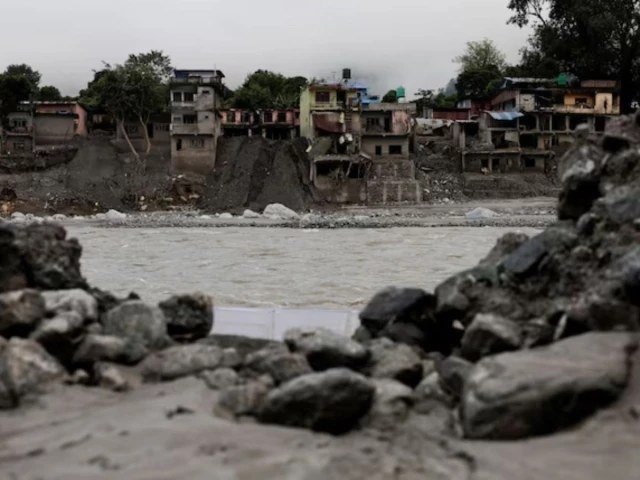
Nepal plans to drain four glacial lakes in $50m push after deadly floods
Nepal plans to drain four glacial lakes in $50m push after deadly floods
Nepal will begin a $50 million project this fiscal year to drain four high-altitude glacial lakes ranked among the country’s most dangerous, Reuters reported on Friday. The Nepal glacial lakes draining plan is a direct response to the August glacier collapse that unleashed landslides and flash floods, killing more than 1,400 people, with over 5,000 still missing.
The four lakes — Thulagi, Lower Barun, Lumding Tsho and Hongu II — sit between 4,050 and 5,483 metres above sea level and were identified by the United Nations Development Programme and the International Centre for Integrated Mountain Development (ICIMOD) as being at high risk of bursting their natural dams.
The project will be funded by the Green Climate Fund, the UNDP and the Nepali government. Design work is scheduled to start in the fiscal year ending in mid-July 2027. Draining will be done through gated structures and could take up to six years, alongside the installation of sensors, flood-forecasting systems and resilience measures for downstream communities.
Scientists warn the lakes could burst at any time
“Our aim is to lower the risk of the lakes breaching their natural dams and reduce the risk of downstream floods,” said Subash Tuladhar of the Centre for Hydrology and Water Resources Research.
Samjwal Ratna Bajracharya, a retired ICIMOD expert, warned that the lakes “are growing fast, are high up in the Himalayas and could cause outbursts any time, due to earthquakes, avalanches, climatic conditions and unplanned human-induced activity.”
Nepal has recorded 26 glacial-lake outburst floods in the past four decades. Extreme climate events now claim more than 300 lives a year in the country, and the August disaster destroyed a dozen hydroelectric plants. Kathmandu says it needs about $5 billion for early recovery.
What the Nepal glacial lakes draining project means
The six-year draining effort is one of the largest climate-adaptation projects Nepal has attempted. If it succeeds, it could become a model for other Himalayan nations facing the same threat. For the villages below the lakes, the sensors and forecasting systems may matter as much as the draining itself: an early warning of an outburst can save more lives than any engineering work.
FAQs
Which glacial lakes will Nepal drain?
Thulagi, Lower Barun, Lumding Tsho and Hongu II, all ranked among Nepal’s most dangerous by the UNDP and ICIMOD.
How much will the Nepal glacial lakes draining project cost?
The project is budgeted at $50 million, funded by the Green Climate Fund, the UNDP and the Nepali government.
How long will draining the lakes take?
Draining through gated structures could take up to six years. Design work starts in the fiscal year ending in mid-July 2027.
Why is Nepal draining its glacial lakes now?
An August glacier collapse triggered landslides and flash floods that killed more than 1,400 people, with over 5,000 still missing and a dozen hydroelectric plants destroyed.