Poverty Reduction a National Priority, Says Ahsan Iqbal
Planning Minister Ahsan Iqbal on Tuesday said poverty alleviation, human resource development and improved social indicators must remain top national priorities if Pakistan is to become a sustainable and competitive economy.
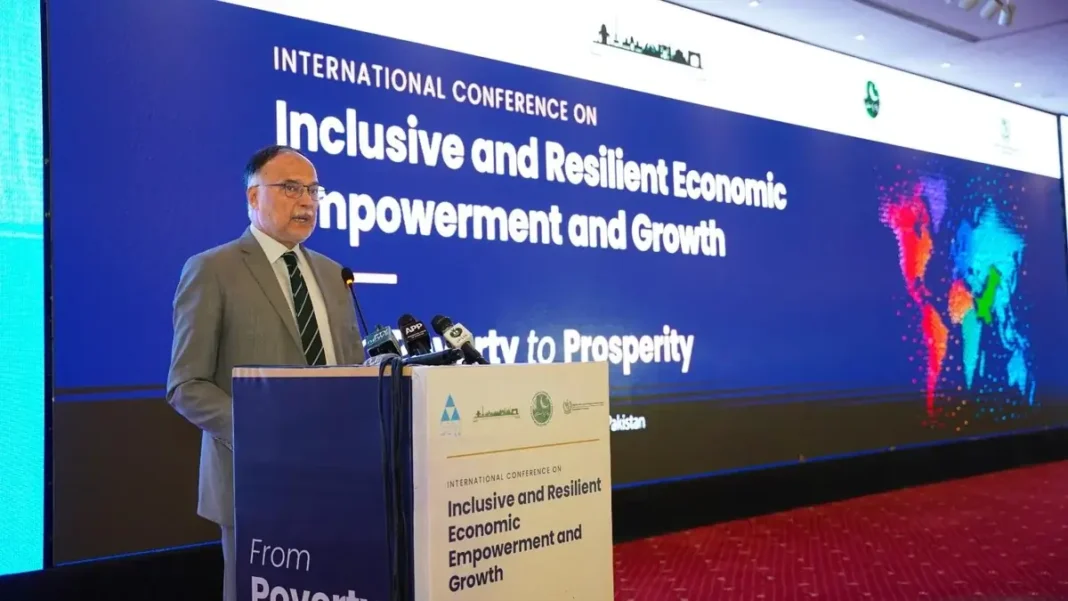
Addressing an international conference on Pakistan’s vision for inclusive and resilient economic transformation in Islamabad, he said the benefits of development must reach every citizen and region, with equitable access to economic opportunities.
Poverty is more than income
Iqbal said poverty was not merely a lack of income. It also meant limited access to education, healthcare, nutrition and decent employment.
He expressed concern over the rising poverty rate and weak social indicators, stressing that tackling these fundamental challenges was essential for sustainable national development.
The numbers he cited were stark: around 25 million children are out of school in Pakistan, and the child stunting rate stands at approximately 40 per cent. Without improvements in education, healthcare and nutrition, he said, Pakistan could not compete effectively in the global economy.
Beyond cash handouts
The minister said the government’s focus was not limited to measuring poverty. Its objective, he said, was to lift people out of poverty and enable them to achieve self-sufficiency — and the government was accelerating its efforts while mobilising all stakeholders.
Sustainable poverty alleviation, he argued, required more than financial assistance or productive assets for deserving families. People also needed skills, business capital, access to markets and reliable livelihood opportunities.
He emphasised women’s economic empowerment, employment for young people and the role of universities in developing local communities. Poverty programmes, he said, would be linked to evidence-based policymaking, measurable outcomes and effective monitoring — targeting stable incomes, savings, better nutrition and a better quality of life.
The Balochistan gap
Calling for prosperous districts to partner in developing underdeveloped areas, Iqbal pointed out that 11 of Pakistan’s 20 poorest districts are in Balochistan. Resources and capabilities must be pooled, he said, to extend development’s benefits to every region and reduce regional inequality.
Speaking at the international conference titled “From Poverty to Prosperity” in Islamabad, Iqbal asked participants to propose practical measures and develop a comprehensive roadmap for sustainable poverty reduction — expanding successful development initiatives and improving living conditions for vulnerable families.
Related:
- UN Global Poverty Index Rises for First Time Since 2010
- the World Bank’s reporting on poverty in Pakistan
- PM Sets Rs2.2 Trillion SME Financing Target for 2028
- Petrol Price Cut by Rs2.93, Diesel Cheaper From Oct 13
Frequently asked questions
What did Ahsan Iqbal say about poverty?
He said poverty alleviation and human development must remain top national priorities, and that poverty is about access to education, health, nutrition and jobs — not just income.
What figures did he cite?
Around 25 million out-of-school children and a child stunting rate of about 40 per cent.
What is the government’s approach?
Beyond financial assistance: skills, business capital, market access, women’s empowerment, youth employment, and evidence-based monitoring of outcomes.
Which region did he single out?
Balochistan, where 11 of Pakistan’s 20 poorest districts are located.