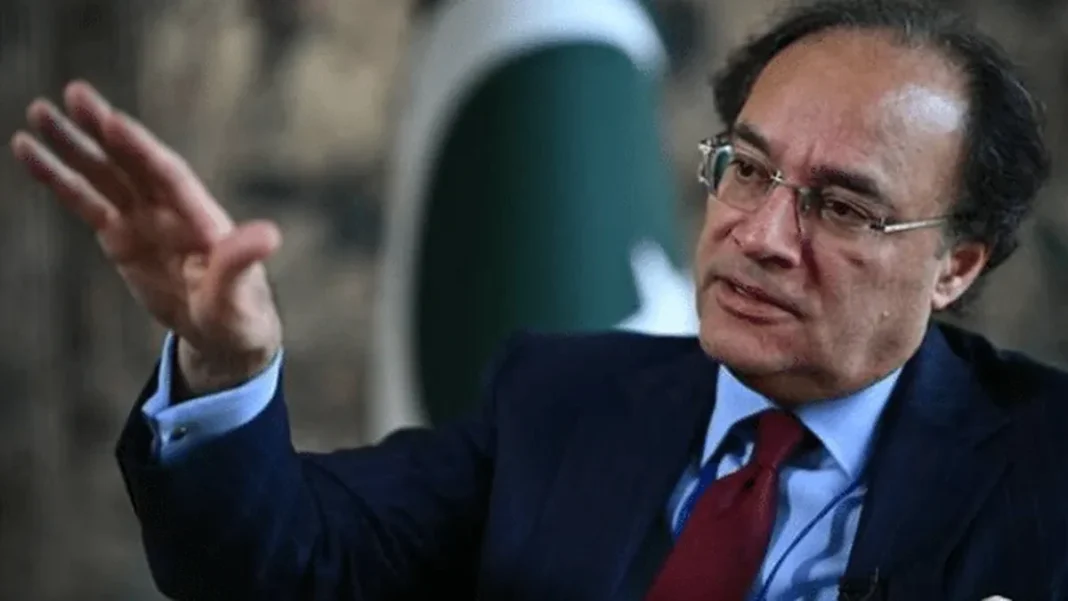
Pakistan is planning a shift from foreign aid to trade and investment across its bilateral partnerships, Finance Minister Muhammad Aurangzeb has said. Outlining the Pakistan trade investment economic plan in an interview with Channel News Asia, he said the country wanted stronger economic ties with China, the United States, Gulf countries and other regional markets.
Aurangzeb said Pakistan remained grateful for the support of longstanding partners, particularly Gulf Cooperation Council countries, but was now focused on building trade and investment relationships that could stand on their own.
Remittances and the “and-and” approach
Remittances from the Gulf and other overseas Pakistanis reached $41.6 billion last year and are expected to rise to $44 billion this year, the finance minister said. The figure underlines how central the diaspora has become to Pakistan’s external finances. Monthly remittance inflows have repeatedly beaten expectations, giving the government breathing room on the current account.
Discussing ties with China and the United States, Aurangzeb said Pakistan viewed both relationships through an “and-and” approach rather than choosing one over the other. The framing matters: Islamabad has long tried to keep its economic partnership with Beijing separate from its security and trade relationship with Washington.
On the China-Pakistan Economic Corridor, he said the first phase had focused on foundational infrastructure, including roads, ports and independent power projects. The second phase aims to generate greater economic returns from that infrastructure through business-to-business collaboration, joint ventures and export-oriented production.
Pakistan’s trade investment economic plan for a fragmenting world
Aurangzeb also said Pakistan sought to deepen its economic relationship with the United States and advance bilateral economic cooperation. On regional trade, he pointed to opportunities with GCC countries, Central Asian republics and the Association of Southeast Asian Nations.
He argued that growing fragmentation in global trade was creating openings for Pakistan to explore new regional markets and diversify its trade relationships. While the United States remains Pakistan’s largest trading partner, followed by the European Union, regional collaboration was becoming more important amid geopolitical tensions and disruptions to global commerce.
Pakistan was pursuing stronger regional partnerships to improve trade resilience, reduce exposure to external shocks and identify new opportunities, he said. The message fits the government’s broader push for export-led growth, which treats exports rather than borrowing as the route to stability.
What it means for Pakistanis
For ordinary citizens, the shift from aid to trade is more than a slogan. Aid flows to governments; trade and investment create jobs. If CPEC’s second phase delivers the promised joint ventures and export-oriented factories, the payoff would be employment in manufacturing and services, the sectors where Pakistan’s young workforce needs work most.
Remittances tell a similar story. The projected $44 billion is money sent home by millions of Pakistanis working abroad, much of it spent on household consumption, education and housing. Policies that make it cheaper and easier to send money home matter more to families than any single investment announcement.
The test, as always, will be delivery. Pakistan has announced economic pivots before. This one will be judged on whether exports rise, the tax base widens and the country can fund its own development without returning to lenders for the next rescue package.
Frequently asked questions
What did Aurangzeb say about Pakistan’s economic plan?
He said Pakistan is shifting from foreign aid to trade and investment across bilateral partnerships, while remaining grateful to longstanding partners such as GCC countries.
How much are Pakistan’s remittances?
Remittances reached $41.6 billion last year and are projected to rise to $44 billion this year, according to the finance minister.
What is CPEC phase two about?
Aurangzeb said the second phase of the China-Pakistan Economic Corridor focuses on business-to-business collaboration, joint ventures and export-oriented production, building on the infrastructure of phase one.
Who are Pakistan’s largest trading partners?
The United States is Pakistan’s largest trading partner, followed by the European Union. The government also wants deeper trade ties with GCC countries, Central Asia and ASEAN.