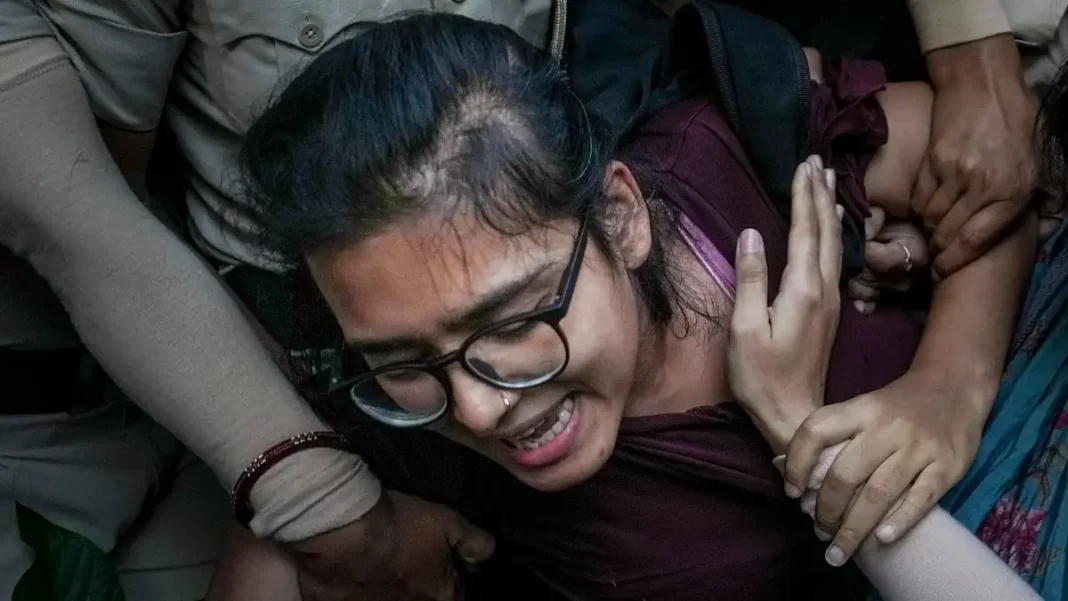
All India Students’ Association national president Neha Bora was released on Saturday morning after a night in Delhi Police custody, closing one half of a Neha Bora Delhi detention episode that has turned a protest over India’s electoral rolls into a political flashpoint.
Bora was freed after completing formalities under Section 65 of the Delhi Police Act. Cockroach Janta Party founder Abhijeet Dipke, detained alongside her on Friday evening, was not so lucky: police placed him under preventive arrest and will produce him before a Special Executive Magistrate court.
Neha Bora Delhi detention: what happened at Mandi House
The two were picked up on Friday evening en route to the “Lehra Do Tiranga” march at Connaught Place’s Central Park. Dipke was intercepted around 4.40pm leaving a friend’s house in Jhandewalan; Bora was detained at 5.15pm at Mandi House, where she had started a flag march with AISA activists.
Police said around 150 people were detained across the evening to maintain order and keep traffic moving. A senior officer said Bora was released after due formalities while Dipke was arrested under Sections 126 and 170 of the Bharatiya Nagarik Suraksha Sanhita (BNSS).
Bora did not go quietly. After her release, she alleged that the prescribed legal procedures for the detention and release of women had not been followed in her case, and that police had initially blocked her access to a lawyer. “Our lawyers spent five to six hours trying to reach me,” she told reporters, adding that ordinary citizens were being treated as hardened criminals. Questions of detention procedure and due process surface regularly in Pakistan’s courts too, from rulings on minor offences and government jobs to remand hearings. The CJP alleged Dipke was ferried between multiple police stations around Dwarka and southwest Delhi, with his location withheld and legal counsel denied.
Who is Abhijeet Dipke and what is the protest about
Dipke leads the Cockroach Janta Party, a fringe outfit that regularly targets the Election Commission of India. The “Lehra Do Tiranga” march demanded the resignation of Chief Election Commissioner Gyanesh Kumar over alleged irregularities in the Special Intensive Revision (SIR) of electoral rolls.
This was not the CJP’s first brush with the police. Dipke, Saurav Das and Ashutosh Ranka were stopped from boarding an October 10 protest and released on a peace bond. Das and Ranka were arrested again this week after unfurling the national flag at Jantar Mantar and sent to five days’ judicial custody in Tihar Jail. Dipke will be produced before the magistrate at Mandir Marg at noon on Saturday, with seven to eight FIRs reportedly being prepared.
The SIR row behind the march
The Special Intensive Revision is a door-to-door verification of voter lists that the Election Commission says cleans the rolls of duplicates and ineligible names. Opposition parties and student groups call it a backdoor purge. The row has echoes across South Asia, where voter-list controversies regularly ignite street politics, and it has now produced one of the most photographed detentions of the season.
For Pakistan’s readers, the episode shows how India’s new criminal codes work in practice. The BNSS replaced the colonial-era Criminal Procedure Code, and Sections 126 and 170 are its preventive-detention tools. Whether their use against student protesters survives judicial scrutiny is for the magistrate’s court to begin answering.
The handover of an Indian national’s body at Kartarpur earlier this week was a reminder that the two countries’ headlines keep intersecting. Student politics stays a live force across the region, whether on Delhi’s campuses or in Sindh’s push to get young people into work. This one, about a detained student leader and a jailed party founder, will be watched by campus activists on both sides of the border.
Original reporting: New Indian Express.
Frequently asked questions
Who is Neha Bora?
Neha Bora is the national president of the All India Students’ Association (AISA). She was detained by Delhi Police on Friday evening during a protest march and released on Saturday morning.
Why was Abhijeet Dipke arrested?
Police placed the Cockroach Janta Party founder under preventive arrest under Sections 126 and 170 of the BNSS ahead of the “Lehra Do Tiranga” march. He is to be produced before a Special Executive Magistrate court.
What is the protest about?
The march demanded the resignation of Chief Election Commissioner Gyanesh Kumar over alleged irregularities in the Special Intensive Revision (SIR) of electoral rolls.
What are BNSS Sections 126 and 170?
They are preventive provisions of the Bharatiya Nagarik Suraksha Sanhita, India’s criminal procedure code, covering security for keeping the peace and preventive arrest.