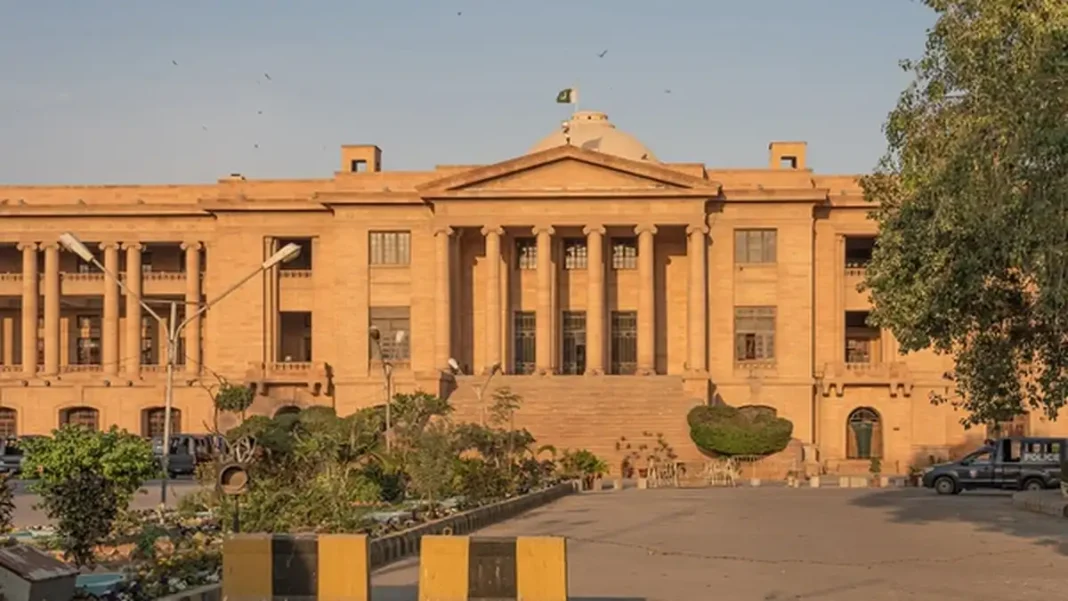
KARACHI: The Sindh High Court on Monday set aside most of the Ghost School censor cuts ordered by the Sindh Board of Film Censors, ruling that the board had failed to justify its decision and observing that “the power to excise is not unbounded”. The court directed the board to reconsider the film’s certification within 10 days.
The film follows a 10-year-old girl who finds her village’s only school closed amid rumours it is haunted.
The filmmakers challenged the censor board’s decision before the SHC under Article 199 of the Constitution, contesting its requirement to remove eight items before the film could receive a Universal (U) certificate.
Ghost School censor cuts struck down for lack of reasons
A division bench comprising Justice Yousuf Ali Sayeed and Justice Adnan Iqbal Chaudhry held that the board’s decision could not stand because it had failed to explain how the disputed material violated the law or why its removal was necessary.
“The power to excise is not unbounded,” the court observed, adding that any cut’s necessity had to be weighed against freedom of expression.
Except for one cut the filmmakers accepted, the court set aside the decision. The board must now certify the film without further cuts, or give a personal hearing and a reasoned order for each objection if it wants a higher age rating.
The court also clarified that the board could reconsider only the objections it had already raised and directed it to adopt the least restrictive age rating that adequately addressed its concerns.
In a letter dated September 11, the board had ordered the removal of “biradri ka wadera”, “wadera”, “kameene”, “haram khor”, “manhoos siyasatdan” and “Buraq” wherever they appeared, plus a child’s abusive remark in a school scene and scenes of books and the school being burnt.
A board out of step with the rest of the country
The central and Punjab boards had already cleared the film for unrestricted exhibition without cuts, while the Sindh board had refused to certify it without giving reasons.
In an August 21 order on an earlier petition, the SHC had directed the board to reconsider, hear the filmmakers in person and record “cogent and intelligible reasons”.
The latest judgment held the board had failed to comply: nothing in its decision or comments explained how the words and scenes violated Section 6(1) of the Sindh Motion Pictures Act, 2011, or any censorship code.
“Mere reference to a statutory provision, unconnected to the offending material, is not a reason,” the judgment stated, questioning why Sindh differed from the central and Punjab boards, which cleared the same film without cuts.
Where the film, in identical form, had been cleared elsewhere, the board had to say why Sindh needed a different course, the court observed.
The bench held that lumping together a term of social description like “wadera”, a mild political epithet, mildly abusive words and the depiction of a school’s burning in a film condemning such acts could not be justified by one unexplained direction.
What this means for film censorship in Pakistan
The judgment adds to a growing body of case law limiting arbitrary censorship. The bench referred to an earlier SHC judgment in Moulvi Iqbal Haider v Federation of Pakistan on protecting freedom of expression, and to the Supreme Court’s ruling in PEMRA v ARY Communications that a work of art should be assessed as a whole and restrictions should go no further than necessary.
The ruling is also significant for Pakistani cinema, which has seen a revival with films earning big at the box office. Courts have repeatedly checked executive overreach on expression: the LHC banned filming across court premises only with defined limits, and the SHC has suspended Nepra orders in a K-Electric tariff review when reasons were missing. Even documentary work has faced the same questions, as with the Gaza documentary that brought two Israeli filmmakers’ hidden footage to light.
FAQs
What did the Sindh High Court decide about Ghost School?
It set aside most of the censor board’s cuts for lack of justification and directed the board to reconsider the film’s certification within 10 days.
Which cuts did the censor board order in Ghost School?
The board wanted words like “wadera”, “kameene” and “haram khor” removed, plus a child’s abusive remark and scenes showing books and the school being burnt.
Has Ghost School been cleared anywhere else?
Yes. The Central Board of Film Censors and the Punjab Board of Film Censors both cleared the film for unrestricted public exhibition without any cuts.
What happens next for the film?
The board must either certify it without further cuts or give the filmmakers a personal hearing and a reasoned order if it wants a higher age rating.