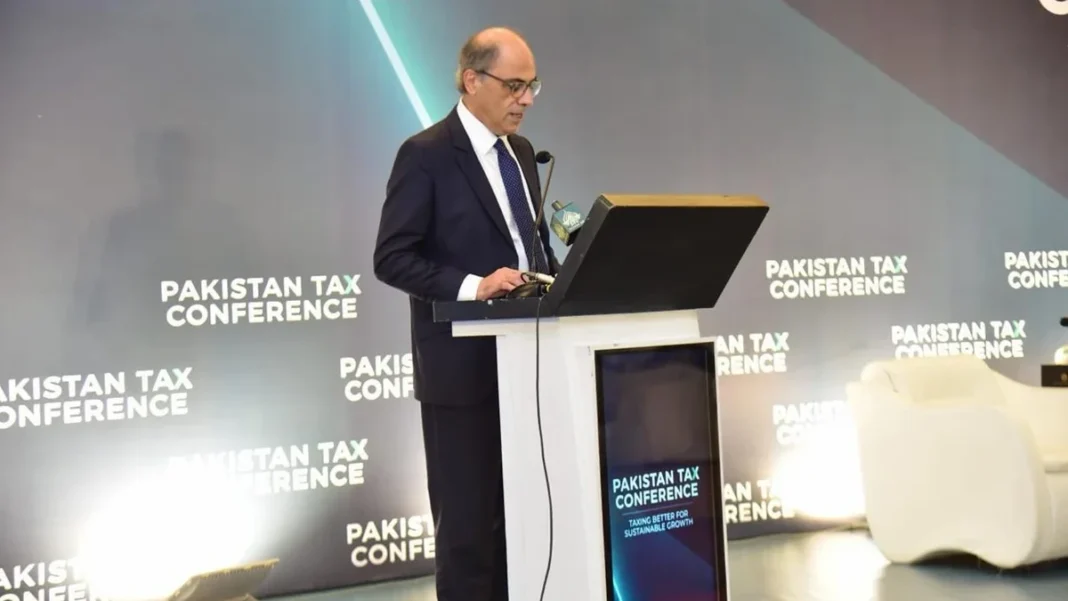
ISLAMABAD: The Pakistan IMF tax reform push advanced on Tuesday as the Finance Ministry and the International Monetary Fund launched a two-day workshop in Islamabad to discuss reforms aimed at simplifying the country’s tax system, broadening the tax base and supporting economic growth.
The workshop, titled “Reforms for a Modern and Growth-Friendly Tax System in Pakistan”, is being held on October 20-21. It brings together senior government officials, representatives of the IMF and World Bank, international tax experts, academics and private-sector leaders to discuss ways to make taxation more efficient, predictable and supportive of investment.
Finance Minister Muhammad Aurangzeb delivered the opening remarks alongside Jihad Azour, director of the IMF’s Middle East and Central Asia Department, and Rodrigo Valdés, director of the IMF’s Fiscal Affairs Department, according to a Finance Division press release.
Pakistan IMF tax reform: what is on the table
The workshop features six sessions covering taxation and economic growth, modernisation of Pakistan’s tax system, a unified sales tax regime across federal and provincial governments, a simpler income tax structure, tax administration and digitalisation, and fiscal federalism and provincial tax revenues.
Discussions on a unified sales tax will examine ways to improve coordination between the federal government and the provinces. Participants will also consider how a simpler and more neutral income tax system could support investment and business expansion.
Another key area is the modernisation of tax administration, including digitalisation, compliance and taxpayer trust. The discussions aim to identify approaches that improve revenue collection while making the tax system more transparent and predictable for taxpayers.
The two-day event will conclude with a high-level panel to consolidate recommendations, identify priority actions and establish a framework for continued engagement among stakeholders.
Why a unified sales tax matters for Pakistan
Pakistan’s sales tax is currently split between the federation and the provinces, with different rates, rules and filing systems. Businesses operating in more than one province deal with multiple tax authorities, and the fragmentation creates disputes over who taxes what — particularly in services.
A unified regime would harmonise the base and administration across federal and provincial governments. For businesses, that could mean one return instead of several, fewer jurisdictional disputes and lower compliance costs. For the government, it could mean fewer leakages and a broader documented base. The idea has been discussed for years; the question has always been political, since provinces guard their fiscal autonomy.
Part of a wider revenue push
The workshop is not happening in isolation. Prime Minister Shehbaz Sharif has been pressing the FBR to close the tax gap, and Aurangzeb’s recent IMF and World Bank meetings in Bangkok set the stage for this week’s deeper technical engagement.
The initiative reflects the government’s stated commitment to developing a broader and fairer tax system that can mobilise revenue, encourage investment, support business growth and improve productivity. The Finance Division said the workshop would focus on building a more efficient, simpler and growth-friendly tax framework, with discussions spanning both federal and provincial taxation.
Whether the workshop produces concrete commitments will become clear at Wednesday’s closing panel, when participants are expected to consolidate recommendations and set priority actions.
Frequently asked questions
What is the Pakistan-IMF tax workshop about?
A two-day workshop in Islamabad (Oct 20-21) on simplifying Pakistan’s tax system, with six sessions on topics including a unified sales tax, simpler income tax, tax digitalisation and fiscal federalism.
Who is attending?
Finance Minister Muhammad Aurangzeb, IMF directors Jihad Azour and Rodrigo Valdés, plus World Bank officials, international tax experts, academics and private-sector leaders.
What is a unified sales tax?
A single harmonised sales tax regime across federal and provincial governments, replacing the current fragmented system where businesses deal with multiple tax authorities.