Slug: munir-pezeshkian-meeting-peace-hopes
Category: World
Focus keyphrase: Asim Munir Pezeshkian meeting
SEO title: Munir-Pezeshkian Meeting Raises Peace Hopes
Meta description: Field Marshal Asim Munir met President Pezeshkian in Tehran, where Iranian leaders said the US must take the first steps to rebuild trust.
Tags: Asim Munir, Masoud Pezeshkian, Iran, Pakistan, Tehran, US-Iran talks, Middle East diplomacy, Islamabad Memorandum
Original element: genuine update beyond the 05:40 border-reopening story (meeting outcomes + seven-point proposal quotes) + explainer context on the April ceasefire and June Islamabad Memorandum, cross-checked across the Dawn report’s own timeline of the Lavrov visit
Munir-Pezeshkian Meeting Raises Peace Hopes as Iran Sets Terms for US Talks
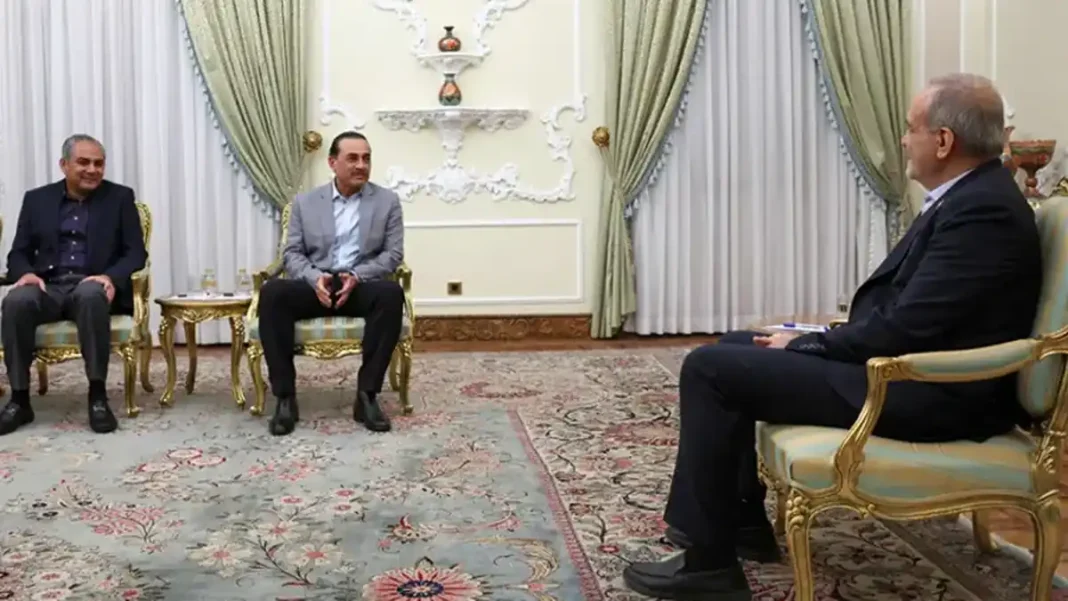
Iranian leaders have told Pakistan that the United States must take the first steps to rebuild trust, and that acceptance of Tehran’s seven-point proposal could open the door to renewed negotiations. The message came during the Asim Munir Pezeshkian meeting in Tehran on Tuesday, as diplomatic efforts intensified to stop the region sliding back into war.
Chief of Defence Forces and Chief of Army Staff Field Marshal Asim Munir met President Masoud Pezeshkian, Parliament Speaker Bagher Ghalibaf, Foreign Minister Abbas Araghchi and Mohsen Rezaei, a representative of Iran’s supreme leader and secretary of the Supreme National Security Council. Interior Minister Mohsin Naqvi accompanied the army chief.
No breakthrough or formal agreement was announced after the meetings. But the visit is being read as Pakistan’s latest attempt to keep the peace process alive after an earlier diplomatic opening failed to produce a lasting settlement.
What Iran Told Pakistan
The Iranian response was firm. Officials reportedly shared with the field marshal their reply to a US proposal, repeating that Tehran would not make concessions under pressure and that Washington must meet its conditions first.
An Iranian source said Field Marshal Munir was told that “Iran has nothing new to say to the Americans” and that it was for them to return to the Islamabad Memorandum. Iranian media described the response as “clear, serious, and explicit”. There was no official word from Pakistan’s Foreign Office or Inter-Services Public Relations.
Speaker Ghalibaf told Field Marshal Munir that the US could not regain Iran’s trust without fulfilling the seven conditions Tehran had presented in New York. He said Washington’s past actions, including what Iran sees as a violation of the Islamabad understanding, had deepened its distrust.
“Threats and military manoeuvres cannot influence the strategic decisions of the Islamic Republic of Iran,” Mr Ghalibaf said, according to an Iranian account of the meeting. He added that it was now up to Washington to take the steps needed to pull itself out of the conflict.
Mr Rezaei, meanwhile, said Iran would not surrender its enriched nuclear material, describing it as a national asset intended for domestic use. He said Iranian officials were united in the view that talks could not move forward without steps by Washington to meet Tehran’s conditions.
The Border Question
The talks also covered bilateral ties, including the recent disruption of commercial trade across the Pakistan-Iran border. Iranian officials raised concerns about the closure. Field Marshal Munir told them the shutdown was temporary and technical, and that the crossings had reopened on Tuesday. That reopening was covered in detail by Feature Pakistan earlier on Wednesday.
Why the Asim Munir Pezeshkian Meeting Matters
The timing carries weight. The visit came a day after Russian Foreign Minister Sergey Lavrov held talks with Iranian leaders on the conflict and on efforts to restore regional stability. Moscow’s parallel engagement, including Putin’s earlier mediation offer, underlines how many channels are now working to stop a fresh round of fighting.
Pakistan brokered a ceasefire in April and hosted direct talks that led to the signing of the Islamabad Memorandum of Understanding in June. The agreement set out steps toward easing the conflict, reopening the Strait of Hormuz and addressing economic and nuclear issues. The process later stalled after disagreements.
Iran’s insistence that Washington return to the Islamabad Memorandum shows the June document remains Tehran’s reference point, even as it says trust has been broken.
What Happens Next
For now, no new round of talks has been announced. The inflexible Iranian response sets a high bar: acceptance of the seven-point proposal as the starting point, and first steps from the US.
The coming days will show whether Washington responds to the terms set out in Tehran, or whether the deadlock deepens. Pezeshkian has previously said a US-Iran peace deal is not out of reach, while Trump has ruled out an attack on Iran before the midterms. Either way, the Munir-Pezeshkian meeting has put Pakistan’s mediation role back at the centre of a crisis that still threatens the wider region, including the Strait of Hormuz shipping lanes that carry much of the world’s oil.
Frequently Asked Questions
Who did Field Marshal Asim Munir meet in Tehran?
He met President Masoud Pezeshkian, Parliament Speaker Bagher Ghalibaf, Foreign Minister Abbas Araghchi and Mohsen Rezaei, the supreme leader’s representative and secretary of the Supreme National Security Council. Interior Minister Mohsin Naqvi travelled with him.
What is Iran’s seven-point proposal?
Iran presented seven conditions during meetings in New York. Tehran now says accepting them could open the door to renewed talks with the United States. The full text has not been made public.
What was the Islamabad Memorandum of Understanding?
Signed in June after Pakistan-hosted direct talks, it set out steps toward easing the conflict, reopening the Strait of Hormuz and resolving economic and nuclear issues. The process stalled, and Iran now wants Washington to return to it.
Did the Pakistan-Iran border reopen?
Yes. The crossings reopened on Tuesday after a temporary closure that Field Marshal Munir described as technical.