Your hands feel like ice, even indoors. Your feet stay cold under two pairs of socks, and warming up takes forever. If this is your winter, you are not alone — cold hands and feet in winter affect women far more than men.
There are real reasons behind it, from the way your body handles heat to the size of your hands. This guide explains why women feel the cold more, shares practical ways to stay warm, and shows when cold hands and feet deserve a doctor’s look.
Cold Hands and Feet in Winter: Why Women Feel It More
First, it helps to know that cold hands and feet are very common, and they are more common in women. Your body protects its core — your heart, brain, and organs — by narrowing the small blood vessels in your hands and feet when you feel cold. Less blood reaches your fingers and toes, so they feel cold first.
Women tend to feel this more for a few reasons. On average, women have smaller hands and less muscle mass than men, and muscle produces heat. In addition, hormones affect how blood vessels react to cold, and the body’s heat-saving response can be stronger in women.
So if your hands turn icy while the men around you feel fine, it is not in your head. Your body is simply guarding its core more fiercely. The good news is that most of the time, cold hands and feet are a normal response to cold, not a sign of illness.
How Your Body Decides What Stays Warm
Your body treats warmth like a budget. When the temperature drops, it sends blood to the places that matter most: your heart, your lungs, and your brain. Your hands and feet get less, because they can cope with the cold better.
This is why your fingers and toes go cold first. They are far from your core, and they have a large surface for their size. As a result, they lose heat quickly and gain it back slowly.
Stress works the same way. When you feel anxious, your body tightens the blood vessels in your hands and feet. That is why your palms can feel cold and clammy before a big meeting or a difficult call.
Cold Hands and Feet in Winter: Everyday Reasons
Some reasons for cold hands and feet are simple. Low body weight can leave you with less insulation. Long hours sitting still can slow your circulation. In addition, smoking narrows blood vessels, which makes hands and feet colder.
Too much caffeine can add to the problem, because it can tighten blood vessels. The same goes for sudden changes in temperature, such as stepping from a warm room into cold air, or reaching into a freezer.
Some medicines can affect blood flow too. If your hands and feet turned cold after you started a new medicine, mention it to your doctor. Never stop a prescribed medicine on your own — always ask first.
When Your Fingers Change Colour
Most cold hands are simply cold. But sometimes fingers and toes change colour in the cold. They may turn white, then blue, and then red as the blood returns. Pain, numbness, or pins and needles can come with it.
These colour changes can last from a few minutes to a few hours. They happen when the small blood vessels in the fingers and toes tighten more than usual in response to cold or stress.
Doctors call this pattern Raynaud’s phenomenon, and it is more common in women. Only a doctor can say whether it is behind your symptoms, so do not try to label it yourself. If your fingers change colour, make a note of it and talk to a healthcare professional.
Cold Hands and Feet in Winter: Warming Tips That Work
The best fix for cold hands is to keep your whole body warm. Dress in layers, because layers trap warm air better than one thick jumper. A hat helps too, since a lot of heat escapes through your head.
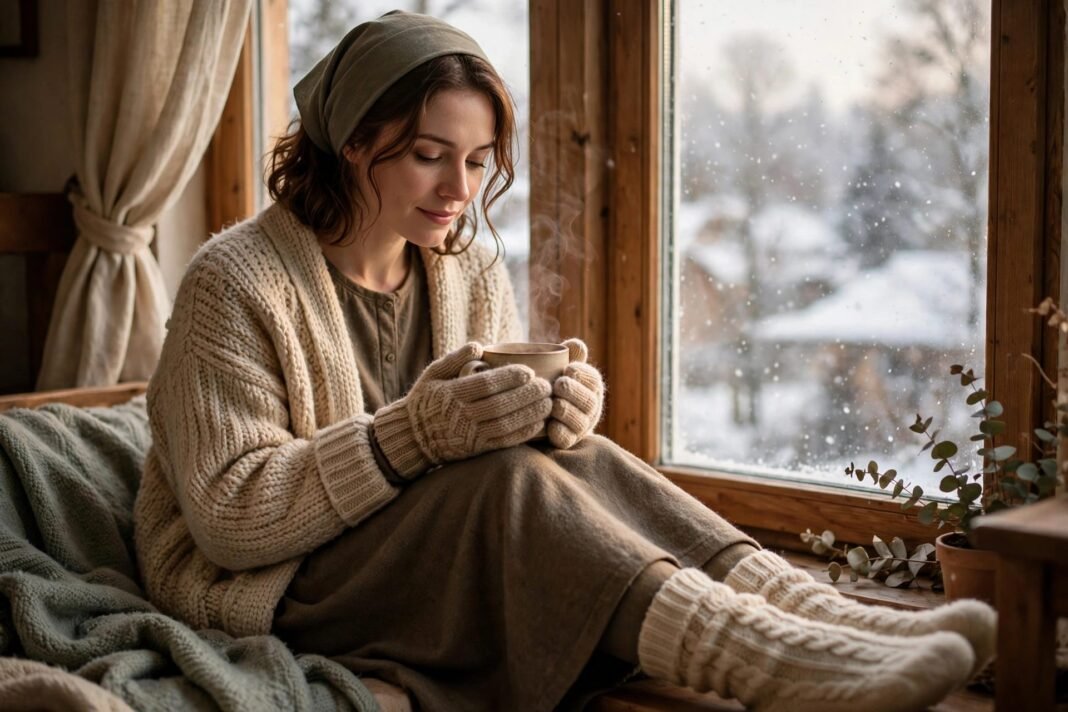
Wear gloves or mittens when you go out, and warm socks indoors. Mittens keep fingers warmer than gloves, because your fingers share each other’s heat. In addition, keep your home warm, and avoid sudden changes in temperature where you can.
Move often. A short walk, a stretch, or even wiggling your fingers and toes gets blood flowing to your hands and feet. Regular exercise helps your circulation over time, and it helps you sleep better too.
Food, Drink and Daily Habits
Warm drinks can help you feel warmer, and a hot meal gives your body fuel to make heat. Try to eat a balanced diet, because your body needs energy to stay warm. A warm breakfast, such as porridge or soup, gives your body fuel for the cold day ahead.
Cut back on caffeine if your hands are often cold. Tea, coffee, cola, and chocolate all contain caffeine, and too much can tighten your blood vessels. In addition, avoid tobacco, because nicotine narrows blood vessels and makes circulation worse.
Look after your skin too. Cold, dry skin can crack, and cracks let in germs. Use a moisturiser or hand cream, especially after washing your hands. Healthy skin is part of staying warm and well.
When to See a Doctor
Cold hands and feet are usually harmless, but some signs mean you should see a doctor. Talk to a healthcare professional if your symptoms are very bad, getting worse, or affecting your daily life.
Also seek help if the coldness is only on one side of your body, or if it comes with joint pain, skin rashes, or muscle weakness. If you are over 30 and the symptoms are new, that is also a reason to get checked.
Get help quickly if you notice sores or wounds on your fingers or toes that do not heal. A doctor can check what is behind the problem and advise you on the next steps. It is always better to ask than to worry alone.
Tiredness, Low Iron and Feeling Cold
Sometimes cold hands come with other signs. If you also feel tired all the time, low iron could be part of the picture. Iron helps your blood carry oxygen around your body, and women are more likely to run low on it.
A simple blood test can check your iron levels, and a doctor can advise you on what to do next. If tiredness and feeling cold go together for you, it is worth raising at your next appointment. Read our guide to anaemia in women and why constant weakness should never be ignored for more on this.
Low vitamin B12 can also leave you feeling cold and tired in winter. Do not start supplements on your own — a doctor can tell you what you need, and a blood test can confirm it.
Cold Hands and Feet in Winter: Your Daily Warm-Up Plan
Put the tips together, and you have a simple daily plan. Start the day with warm layers, gloves, and warm socks. Eat a warm breakfast, and keep a hot drink nearby.
Move little and often through the day. Stand up, stretch, and walk around the room. In addition, avoid long spells in the cold, and warm your hands slowly when you come back inside. Keep a pair of spare gloves in your bag, so you are never caught out by a cold snap.
In the evening, a warm bath or a hot water bottle can help your feet thaw out. Keep your bedroom warm, and wear bed socks if your feet stay cold at night. Small steps, done every day, make a real difference.
You Deserve to Feel Warm This Winter
Cold hands and feet are a small problem with a big effect on comfort. They can make winter feel longer and harder than it needs to be. But with warm clothes, movement, and a little care, most women can feel much warmer.
Remember the signs that need a doctor: colour changes, pain, numbness, sores that do not heal, or symptoms on one side only. For the rest, warmth is often a matter of layers, gloves, and good habits.
What warms your hands and feet best in winter? Share your tip in the comments, because your idea might help another woman stay warm this season.
This article is for general information only. It is not medical advice. If you are worried about your symptoms, please talk to a healthcare professional.