You expected your period days ago. Instead, you feel that familiar dull ache low in your belly. No bleeding follows. This confusing situation has a name many women search for: cramps but no period.
If this is happening to you, you are not alone. Cramps without bleeding are very common, and they have many possible causes. Some are completely harmless, while others deserve a conversation with your doctor. This guide explains what might be going on, when to relax, and when to take action.
Cramps But No Period: What Does It Mean?
Menstrual cramps happen because the uterus contracts to shed its lining. When you feel cramps but no period arrives, those same muscles may be reacting to something else. Hormones, ovulation, stress, or even your digestive system can trigger the sensation.
Your menstrual cycle is controlled by a delicate balance of hormones. Anything that shifts this balance can change when or whether your period arrives. In addition, cramping is simply your body’s way of signaling that something is changing. The key is learning which changes are normal and which need attention.
Common Causes of Cramps Without a Period
Several everyday and medical reasons can explain cramping when your period does not show up. Let us look at the most common ones.
Ovulation Cramps
Around the middle of your cycle, an ovary releases an egg. This process, called ovulation, can cause a brief cramping feeling on one side of the lower belly. Doctors call it mittelschmerz, a German word meaning “middle pain.”
Ovulation cramps usually last from a few minutes to a few hours. They may feel sharp or dull, and they almost always affect only one side. If your period is late and you feel one-sided cramping, ovulation may simply be running behind schedule. Stress, travel, or illness can delay it by days or even weeks.
Stress and Hormonal Changes
Stress affects your whole body, including your cycle. When you are under pressure, your body produces more cortisol. High cortisol can delay ovulation, which in turn delays your period. Meanwhile, the uterus may still cramp as hormones rise and fall.
Big life changes can have the same effect: exams, a new job, moving house, or emotional strain. In addition, poor sleep and over-exercising can disturb your hormonal rhythm. Therefore, a stressful month often brings cramps but no bleeding.
Early Pregnancy
One of the most common reasons for cramps without a period is early pregnancy. When a fertilized egg attaches to the uterus wall, some women feel mild cramping. This is called implantation cramping, and it often happens around the time a period would be due.
Implantation cramps tend to be lighter and shorter than period cramps. You might also notice light spotting, tender breasts, or unusual tiredness. If there is any chance you could be pregnant, a home pregnancy test is the quickest way to find out. For the most reliable result, test after your missed period date.
Endometriosis
Endometriosis is a condition where tissue similar to the uterine lining grows outside the uterus. This tissue responds to hormones just like the lining does, so it can cause cramping at any point in the cycle, not only during your period.
Women with endometriosis often describe deep, aching pelvic pain. The pain may be worse around menstruation, but it can appear at other times too. Other signs include very painful periods, pain during intimacy, and heavy bleeding. If your cramps are severe or keep returning, talk to your doctor about this possibility.
Polycystic Ovary Syndrome (PCOS)
PCOS is a hormonal condition that affects how the ovaries work. Women with PCOS may ovulate rarely or not at all. This leads to irregular or missed periods, and cramping can occur without any bleeding.
Other common signs of PCOS include weight gain, acne, extra facial or body hair, and thinning hair on the scalp. PCOS is manageable with lifestyle changes and medical treatment, so it is worth discussing with your doctor if your cycles are often irregular.
Uterine Fibroids
Fibroids are non-cancerous growths in or on the uterus. They are very common, especially as women get older. Small fibroids often cause no symptoms at all. However, larger ones can press on nearby organs and cause pelvic pressure or cramping.
Fibroids may also make periods heavier, longer, or more painful. If you feel a constant heaviness or cramping in your lower belly, your doctor can check for fibroids with a simple ultrasound. Many treatment options exist, from watchful waiting to minor procedures.
Perimenopause
Perimenopause is the transition period before menopause, usually beginning in your forties. During this time, hormone levels swing up and down unpredictably. Ovulation becomes irregular, so periods may skip months entirely.
Even when no bleeding occurs, you can still feel cramping as hormone levels shift. Hot flashes, night sweats, mood changes, and sleep problems often appear at the same time. These changes are a normal part of aging, but your doctor can help manage uncomfortable symptoms.
Digestive Issues: IBS and Other Gut Causes
Not all lower belly cramps come from the reproductive system. The intestines sit very close to the uterus, so digestive pain often feels like menstrual cramps. Irritable bowel syndrome, constipation, gas, and food intolerances can all cause cramp-like pain in the same area.
If your cramps come with bloating, changes in bowel habits, or relief after a bowel movement, the gut is the likely culprit. Keeping a simple diary of symptoms, food, and cycle days can help you and your doctor spot the pattern.
When Cramps But No Period Is Normal
In many cases, cramps without a period are nothing to worry about. Your cycle can vary by several days from month to month, especially in your teens and twenties. Occasional late periods are a normal part of life.
Mild cramps that fade within a day or two are usually harmless. This is especially true if you can link them to something obvious, such as a stressful week, a change in exercise routine, or recent travel. Your body often returns to its normal rhythm on its own.
It also helps to remember that cycles change over time. Weight changes, new medications, and breastfeeding can all shift your pattern. As long as the cramps are mild and occasional, patience is usually enough.
Warning Signs You Should Not Ignore
While most cases are harmless, some symptoms deserve prompt medical attention. Pay attention if your cramps come with any of the following:
- Severe pain that stops you from doing daily activities or does not improve with rest
- Sudden, sharp pain on one side of the pelvis, especially with dizziness or fainting
- Unusual vaginal bleeding or spotting between periods
- Fever along with pelvic pain, which can signal infection
- Pain during urination or a burning feeling, which may point to a urinary infection
- Nausea or vomiting that will not settle
- Missed periods for three months or more when you are not pregnant or breastfeeding
Trust your instincts. If something feels seriously wrong, it is always better to get checked. Doctors would rather reassure you than see you suffer in silence.
Should You Take a Pregnancy Test?
If you are sexually active and your period is late, taking a pregnancy test is a sensible first step. Home tests are widely available, affordable, and easy to use. They work by detecting a hormone that appears in urine after implantation.
For the best accuracy, test on or after the day your period was due. Testing too early can give a false negative. If the first test is negative but your period still does not arrive after a week, test again or speak to your doctor. A blood test at the clinic can detect pregnancy even earlier.
When to See a Doctor
Book an appointment with your doctor if your cramps keep returning without a period, or if your cycles have become very irregular. Bring notes about your symptoms: when the cramps happen, how strong they are, and what else you notice. This information helps your doctor find the cause faster.
Your doctor may ask about your medical history and perform a physical examination. Depending on what they find, they might suggest a pregnancy test, blood tests to check hormone levels, or an ultrasound to look at the uterus and ovaries. These are all routine, straightforward steps.
Seek urgent care if you have sudden severe pelvic pain, heavy bleeding, fever with pain, or signs of pregnancy with sharp one-sided pain. These can signal conditions that need immediate treatment, such as an ectopic pregnancy or a ruptured ovarian cyst.
Home Relief for Cramps
While you wait for answers, several simple measures can ease the discomfort:
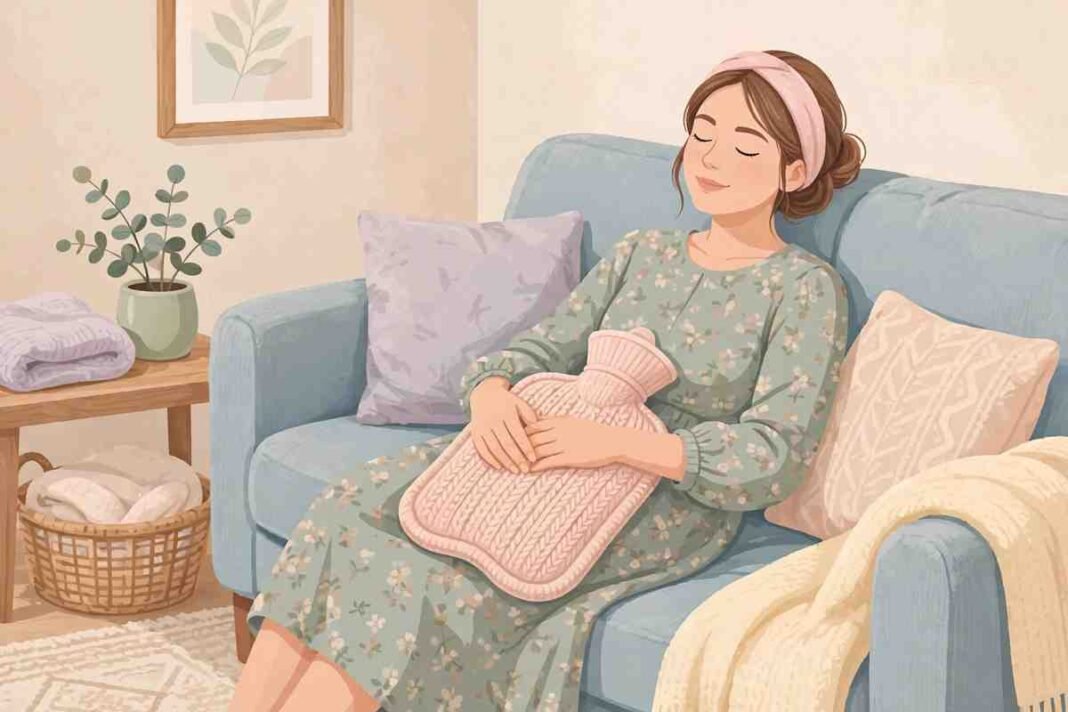
- Apply heat. A warm water bottle or heating pad on your lower belly relaxes the uterine muscles and brings quick relief.
- Take a warm bath. Soaking in warm water soothes cramps and calms the whole body.
- Try gentle movement. Light walking, stretching, or yoga can reduce cramping by improving blood flow.
- Stay hydrated. Drinking enough water may ease bloating and cramping.
- Consider over-the-counter pain relief. Anti-inflammatory medicines can help, but follow the package directions and ask your pharmacist if you are unsure.
- Rest when you need to. Lying down with a warm compress is sometimes the best medicine.
- Manage stress. Deep breathing, meditation, or a quiet walk can calm both your mind and your muscles.
Avoid smoking and limit caffeine and alcohol, as these can make cramps worse for some women. Small, steady habits often bring the biggest relief.
Frequently Asked Questions
Can you have period cramps but no period and not be pregnant?
Yes, absolutely. Stress, delayed ovulation, hormonal shifts, digestive issues, and conditions like PCOS can all cause cramps without bleeding. Pregnancy is only one of many possibilities, so do not assume it is the cause until you test.
How late can a period be before I should worry?
A period that is a few days to a week late is usually not a concern, especially if your cycles vary. If your period is more than a week late, take a pregnancy test if relevant. If periods keep skipping or stop for three months, see your doctor.
Does cramping without a period always mean ovulation is late?
Not always, but late ovulation is a very common cause. Stress, illness, and lifestyle changes can all push ovulation back. When ovulation is delayed, your period is delayed too, yet you may still feel cramping from hormonal shifts.
Can birth control cause cramps but no period?
Yes. Hormonal birth control, especially long-acting methods like implants and hormonal IUDs, can thin the uterine lining so much that periods stop. Some women still feel mild cramping as their body adjusts. If you recently started or changed contraception, this is a likely explanation.
Is it normal to have cramps a week before my period?
Yes. Many women feel premenstrual cramps several days before bleeding starts. These cramps come from rising hormone levels preparing the uterus. If bleeding follows within a week, the cramps were simply an early sign of your period.
When should I take a pregnancy test if I have cramps but no period?
Test on or after the day your period was due for the most reliable result. Use your first morning urine, when hormone levels are most concentrated. If the result is negative and your period still has not arrived after another week, test again.
Conclusion: Listen to Your Body
Experiencing cramps but no period can be unsettling, but in most cases it has a simple explanation. Stress, late ovulation, hormonal changes, and digestive issues are the usual culprits. Often, your cycle simply needs a little time to reset itself.
Here are the key takeaways:
- Mild, occasional cramps without bleeding are usually normal. Watch and wait for a few days.
- Take a pregnancy test if your period is late and pregnancy is possible.
- Track your symptoms. A simple diary of cramps, bleeding, and lifestyle helps you spot patterns.
- Know the warning signs. Severe pain, fever, unusual bleeding, or fainting need prompt medical care.
- See your doctor if cramps keep returning or your cycles stay irregular.
Your body speaks to you through symptoms. Cramps are one of its loudest messages. Listen with care, act when needed, and never feel embarrassed about asking a professional for answers.
This article is for general information only and is not medical advice. If you have concerns about your health, please consult a qualified healthcare professional.