Dar Warns Depriving Pakistan of Water Share Would Have 'Serious Implications'
Dar Warns Depriving Pakistan of Water Share Would Have ‘Serious Implications’
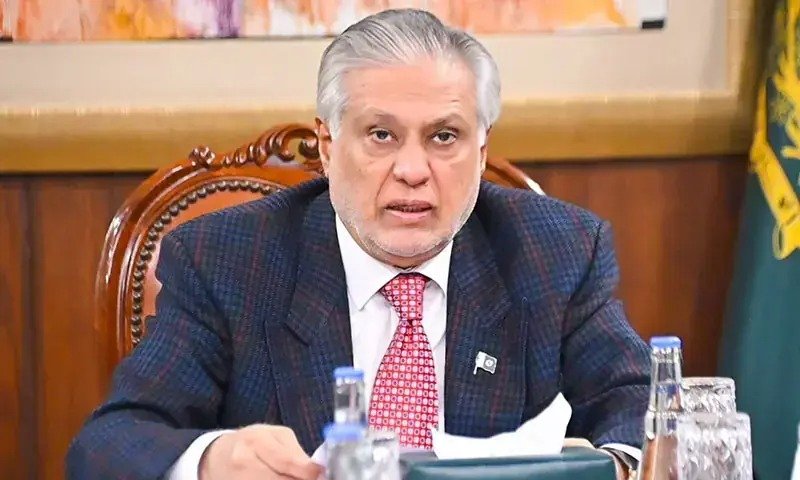
Deputy Prime Minister and Foreign Minister Ishaq Dar has warned that any attempt to deprive Pakistan of the waters rightfully allocated to it under the Indus Waters Treaty would have “serious implications” for regional peace and security, in the government’s strongest language yet on the water dispute with India.
Dar issued the warning in a keynote address delivered through a video message to the International Water Symposium, convened by the Embassy of Pakistan in Austria in collaboration with the Diplomatic Academy of Vienna, the Foreign Office said.
“Any attempt to deprive Pakistan of the waters rightfully allocated to it would have serious implications for regional peace and security,” Dar said. He added that there should be “no misunderstanding” about Pakistan’s resolve to safeguard its rights and interests under the treaty and international law.
Cooperation or confrontation
The foreign minister framed the dispute as a defining test of international water governance. “The fundamental question, therefore, is whether shared waters will be governed through cooperation and agreed legal frameworks, or become instruments of political pressure and confrontation,” he said.
“Any attempt to undermine Pakistan’s rights over these waters carries consequences that extend far beyond a bilateral disagreement,” Dar added. He described Islamabad’s position as a reaffirmation of a basic principle of international law, quoting the Latin maxim “pacta sunt servanda” — agreements must be kept.
“Our preference remains clear: cooperation over coercion, dialogue over confrontation, and the rule of law over unilateralism,” Dar said. “The future of transboundary water governance must rest on cooperation, mutual respect, and the faithful implementation of international obligations. Pakistan stands ready to pursue this path.”
Treaty background
The Indus Waters Treaty, signed in 1960, divides the six rivers of the Indus basin between the two countries. The three eastern rivers — the Ravi, Beas and Sutlej — were allocated to India, while the three western rivers — the Indus, Jhelum and Chenab — flow largely to Pakistan, which depends on them for agriculture and power generation.
The treaty came under strain in April 2025, when India unilaterally announced it would hold the agreement “in abeyance” after the Pahalgam attack on tourists in Indian-held Kashmir, which killed 26 people. New Delhi blamed Islamabad for the attack without evidence; Pakistan rejected the charge. A brief military confrontation between the two countries followed in May 2025.
On August 31, the Permanent Court of Arbitration issued a unanimous award declaring that the treaty “remains fully in force” and that India remains bound by it, restricting New Delhi’s work on a hydropower project. India rejected the ruling.
Pakistan has previously termed any suspension of its water share an “act of war” and described India’s move as a violation of the 1969 Vienna Convention on the Law of Treaties, which governs international agreements.
A hardening line
Dar’s latest remarks continue a hardening of Pakistan’s public position. In August, he had warned of “profound consequences” if the country’s water rights were violated. The renewed warning, delivered on an international platform in Vienna, signals Islamabad’s intent to press the matter before the global community.
The foreign minister’s address was circulated by the Foreign Office as part of its diplomatic outreach on the issue.
What did Ishaq Dar say about the Indus Waters Treaty?
He warned that any attempt to deprive Pakistan of the waters rightfully allocated to it under the Indus Waters Treaty would have “serious implications” for regional peace and security, and said there should be “no misunderstanding” about Pakistan’s resolve to defend its rights.
Where did Dar make these remarks?
In a keynote address delivered through a video message to the International Water Symposium, convened by the Embassy of Pakistan in Austria in collaboration with the Diplomatic Academy of Vienna.
What is the current status of the treaty?
Pakistan holds that the 1960 treaty remains valid and binding, a position backed by the Permanent Court of Arbitration’s August 31 unanimous award. India announced in April 2025 that it would hold the treaty “in abeyance” — a move Islamabad rejects.