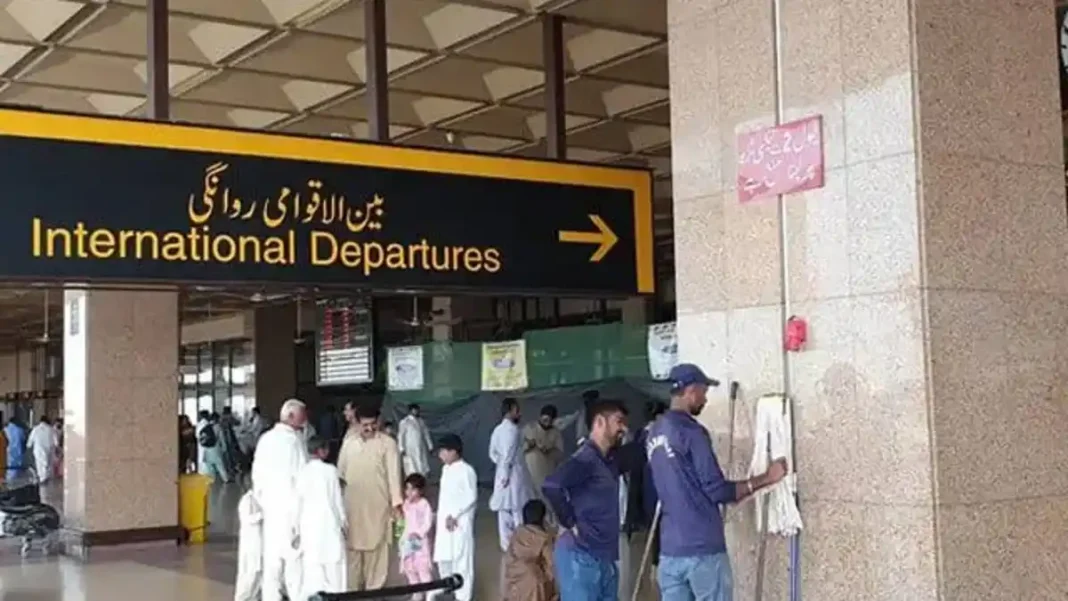
FIA offloading passengers on the basis of verbal instructions alone has been barred under a new standing order issued by the Federal Investigation Agency. The order sets the immigration procedure that officers must now follow at airports, seaports and dry ports across Pakistan.
The document, Standing Order No. 07/2026, runs to 12 pages. It took immediate effect, and it replaces the previous standing order issued in 2005. It will be reviewed periodically, according to the document.
FIA offloading passengers now needs a written decision
The central change is simple. An immigration officer can no longer stop a passenger from travelling solely because of a verbal instruction passed down the chain. Decisions must rest on a written basis instead.
Under the revised procedures, immigration decisions will involve digital records, written decisions and risk-based screening. The order also fixes accountability on the officers involved, so a decision can be traced back to the person who made it.
Every immigration decision must be recorded in full in the Integrated Border Management System, known as the IBMS. That system is the digital record used at immigration counters across the country, and the order makes its use compulsory for these decisions.
The new order also supersedes earlier instructions on the general duties of immigration officers, but only where those instructions conflict with it. Where there is no conflict, the older guidance stays in place.
Why the change matters for travellers
Offloading has been one of the most common complaints at Pakistani airports for years. Travellers have reported being stopped at the counter despite holding tickets and visas, with no written reason given for the refusal. A verbal order left the passenger with nothing to challenge and no record to appeal against.
Court rulings in recent cases have pointed the same way. Judges have held that stopping a passenger who holds complete documents, on suspicion alone, is unlawful, and that officers must record proper reasons when they offload someone. The new standing order now writes that principle into the agency’s own rulebook.
For passengers, the practical effect sits in the paper trail. A decision that must be written and logged in the IBMS can be questioned later. A decision given verbally at a counter cannot. Travellers preparing documents can check the UAE visit visa requirements from Pakistan, the list of e-visa countries for Pakistani passport holders and the visa-free countries for Pakistan before they travel, and verify a passport online where needed.
The order does not end offloading itself. Risk-based screening remains part of the procedure, so officers can still stop a passenger where a recorded ground exists. What changes is the basis: the ground must be written down, logged and owned by a named decision process, not passed on by word of mouth. (Source: ProPakistani, via Geo News)
Frequently asked questions
What does the FIA’s new standing order change?
Standing Order No. 07/2026 bars immigration officers from offloading passengers on verbal instructions alone. Decisions must be written, recorded in the Integrated Border Management System and made under risk-based screening, with accountability for the officers involved.
Where does the new FIA order apply?
It applies to immigration operations at airports, seaports and dry ports across Pakistan. It took immediate effect and replaces the previous standing order from 2005.
Can the FIA still offload a passenger?
Yes. The order keeps risk-based screening in place, so officers can still stop a passenger where a proper ground exists. The ground must now be recorded in writing rather than given verbally.