


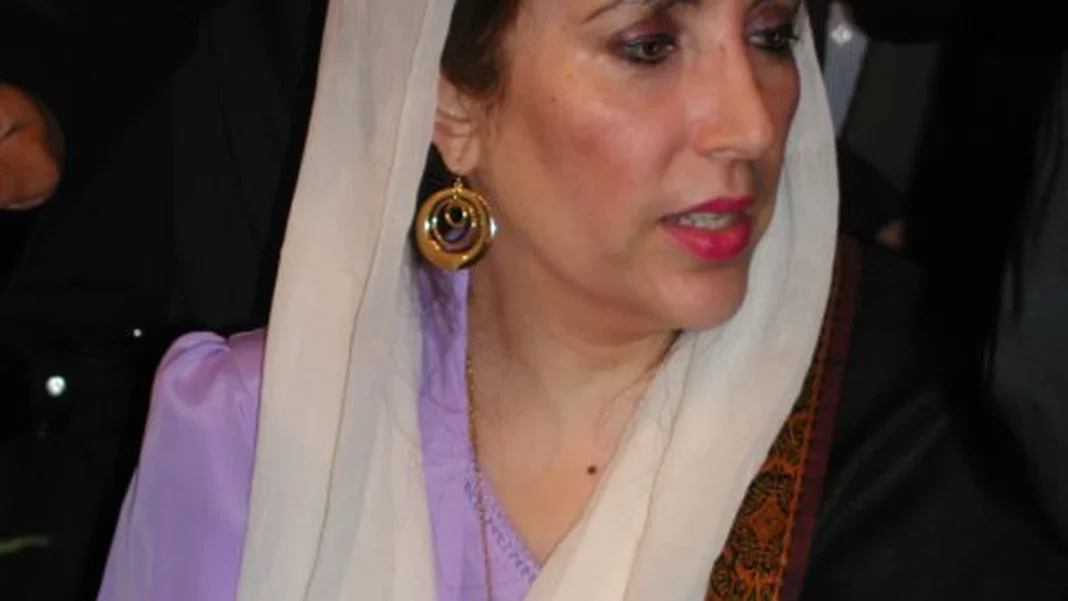
On 2 December 1988, Benazir Bhutto became the first woman to head a democratic government in a Muslim-majority country — and, at 35, one of the youngest prime ministers in the world. This is her story: the two terms, the dismissals, and the assassination that made her a martyr.
Quick answer: Benazir Bhutto was Pakistan’s first female prime minister — in office 2 Dec 1988 – 6 Aug 1990 and 19 Oct 1993 – 5 Nov 1996 (PPP). Both governments were dismissed by the president. She was assassinated on 27 December 2007 at Liaquat Bagh, Rawalpindi, while campaigning to return.
In this guide
The Rise
Daughter of Zulfikar Ali Bhutto — executed in 1979 — Benazir was educated at Harvard and Oxford (where she led the Oxford Union). She returned to Pakistan in 1986 to a million-strong Lahore welcome, led the PPP’s 1988 election victory after Zia’s death, and took office at 35. The symbolism was electric: the executed father’s daughter, the first woman, the return of democracy.
The Two Terms
First term (1988–90): constrained by a hostile presidency (Ghulam Ishaq Khan) and military; dismissed on corruption charges she denied. Second term (1993–96): more assertive — privatisation, women’s police stations, the Agosta submarines and missile programme push — dismissed again by her own party’s president, Farooq Leghari. Both dismissals used Article 58(2)(b), the president’s power to dissolve assemblies — later removed. Neither term completed; both ended in controversy.
The Assassination
Returning from 8 years of exile in 2007, Benazir survived the Karsaz bombing (18 Oct 2007, 139 killed) — then, on 27 December 2007, after a rally at Liaquat Bagh, Rawalpindi — the same ground where Liaquat Ali Khan was killed — she was shot and a suicide bomb detonated. She died that evening. The PPP swept the 2008 elections on a sympathy wave; her husband Asif Ali Zardari became president. Her will named her son Bilawal the PPP chairman.
Legacy
Shaheed-e-Jamhuriyat (Martyr of Democracy). Benazir remains the icon of democratic Pakistan — the woman who broke the ultimate glass ceiling in the Muslim world, paid for it twice with dismissal and finally with her life. Her daughter Aseefa is now first lady; her son leads the PPP. The Bhutto name still decides elections in Sindh. The PMs around her: Pakistan prime minister list.
Key Policies of Her Governments
- Women’s advancement: women’s police stations, women’s bank, reserved seats advocacy
- Defence: the missile programme (Ghauri) and Agosta submarines — continued despite US pressure
- Economy: privatisation and deregulation in the second term; IPP power projects
- Foreign policy: managed the post-Cold War transition; Kashmir diplomacy at the UN
Constrained both times by a hostile presidency and the establishment, her governments are judged as much on what they attempted as what they completed.
Frequently Asked Questions
Who was the first female PM?
Benazir Bhutto — 2 December 1988, the first woman to head a democratic government in a Muslim-majority country, at age 35.
How did Benazir Bhutto die?
Assassinated on 27 December 2007 at Liaquat Bagh, Rawalpindi — shot, then a suicide bombing — while campaigning for the 2008 elections.
: the Muslim world's first woman premier — life, terms and assassination.)