Gul Plaza Fire Case: Witness Tells Court Gates Were Locked, No Alarms Installed
A shopkeeper who owned three shops in Gul Plaza has told a Karachi court that most of the shopping centre’s gates were locked on the night of the January inferno, no fire alarm or firefighting system had been installed, and blocked escape routes trapped people inside. Muhammad Arif recorded his statement under Section 164 of the Criminal Procedure Code before Judicial Magistrate (South) Aasim Aslam on Tuesday, in the latest development in the Gul Plaza fire case.
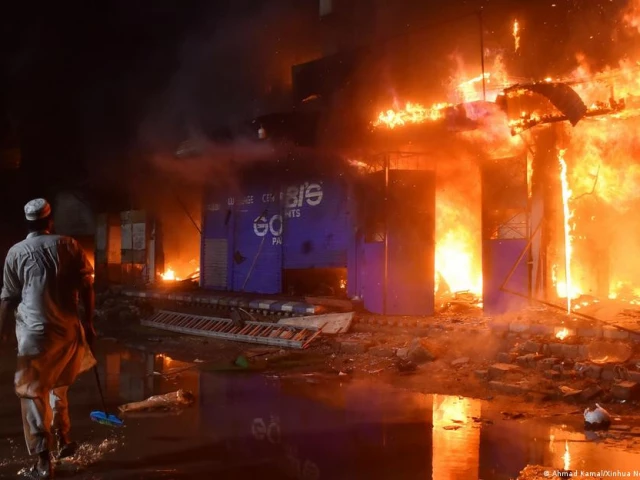
Arif told the court he had been associated with Gul Plaza since 1987 and reached the plaza around midnight after a call about the incident at 11:15pm. Flames were coming out of 13 gates on the ground floor, he said, and 12 of them were locked.
He also described seeing a man clinging to a window on the mezzanine floor, who he believed was already dead. The fire spread through the entire building within half an hour, he said, and its intensity and speed led him to suspect it had been planned.
What the Gul Plaza fire case witness said about safety failures
Arif alleged that the building’s public-address system was never used to warn occupants, and that the electricity supply had been cut during the blaze. He claimed Tanveer Pasta, president of the plaza’s market committee, had the power disconnected, a move he said made it harder for people to escape and contributed to the deaths.
He further alleged that two stairways leading to the roof from the second floor had been blocked, while Pasta had set up an office in the rooftop area with scrap material placed in front of its entrance. The News, which also reported the testimony, said Arif pointed to videos of people searching for a way out while the exits stayed blocked.
Rs10 million monthly collection, yet no fire system
According to the witness, around Rs10 million was collected every month as maintenance charges from the building’s five floors, in addition to revenue from billboards, mobile phone towers and parking contracts. Yet despite repeated requests, he said, the accounts were never audited and no fire alarm or firefighting system was ever installed.
The witness also listed billboard income among the plaza’s revenue streams. Karachi’s administration has separately moved against outdoor advertising in its crackdown on illegal billboards.
Arif also alleged that traders seeking a share of the roughly Rs8 billion in Sindh government financial assistance, distributed through the Chamber of Commerce, needed verification from Tanveer Pasta first.
Background: the January inferno
The fire broke out on the night of January 17 and burned for nearly two days. It killed 72 people, injured eight and destroyed 1,153 shops, making it one of the deadliest fires in Karachi’s recent history. The tragedy recalled the Baldia factory fire, whose long legal aftermath also reached the courts this year.
Investigators later charge-sheeted six accused: 11-year-old Huzaifa, his father Naimatullah, who owned an artificial flower shop, and market committee members Tanveer Pasta, Amar Ismail, Muhammad Ramazan and Muhammad Ameen. All six have been declared absconders, and the prosecution has listed 42 witnesses.
In earlier statements recorded in February, four witnesses, including 13-year-old Aryan, told the same court that the fire began in the artificial flower shop. Aryan said he had seen Huzaifa playing with matchsticks shortly before the blaze. Those accounts differ from Arif’s suggestion that the fire was planned, a question the trial will now have to settle.
The testimony also lands against a wider safety record. PDMA data shows 162 Karachi buildings remain non-compliant with fire safety rules, a reminder that the failures alleged at Gul Plaza are not an isolated case.
Karachi’s courts have handled a series of high-profile matters in recent weeks, from remand proceedings to another Karachi case that reached the courts this month. Tuesday’s hearing, reported by the Express Tribune, continues the prosecution’s case as the Gul Plaza trial moves forward.
What did the shopkeeper allege in the Gul Plaza fire case?
Arif told the court that 12 of the plaza’s 13 ground-floor gates were locked, no fire alarm or firefighting system existed, the public-address system was never used, and escape routes, including two stairways to the roof, were blocked. He also alleged Rs10 million a month was collected without audited accounts.
How many people died in the Gul Plaza fire?
The January 17 fire killed 72 people and injured eight, while destroying 1,153 shops. It burned for nearly two days before being brought under control.
Who are the accused in the Gul Plaza fire case?
Six people have been named: 11-year-old Huzaifa, his father Naimatullah, and market committee members Tanveer Pasta, Amar Ismail, Muhammad Ramazan and Muhammad Ameen. All six have been declared absconders.