India Unveils Dollar Curbs to Defend Rupee as Currency Nears Record Low
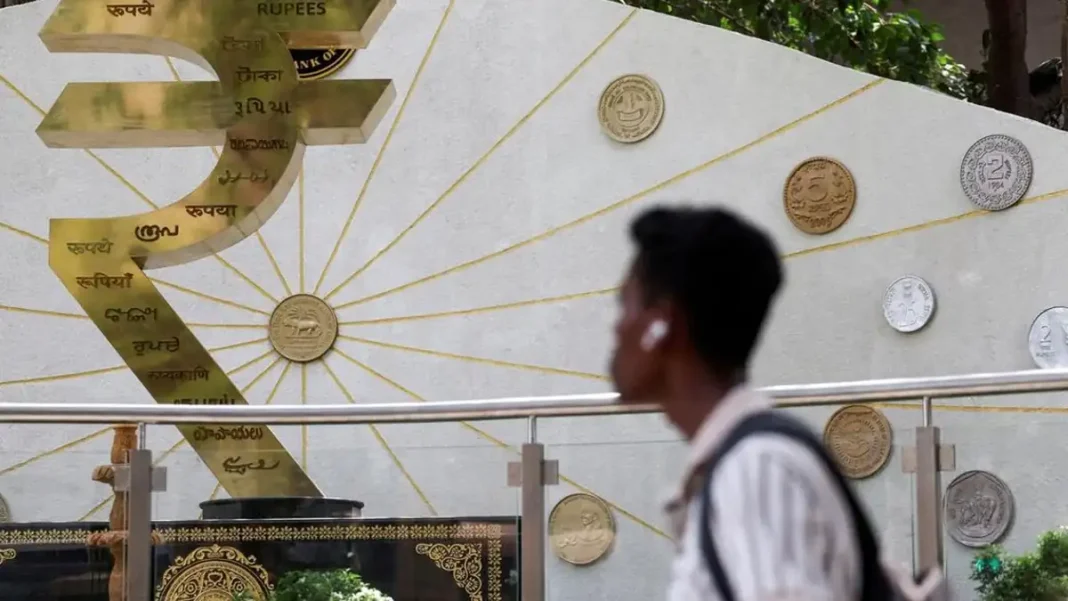
India’s central bank on Saturday unveiled its most aggressive defence of the rupee in over a decade: a special dollar window for state-run oil companies and sweeping curbs on currency derivatives. The India dollar curbs aim to take pressure off a currency that has fallen more than 7 per cent this year and now trades within touching distance of its all-time low.
The measures redirect the dollar purchases of three state oil marketing companies away from the open market and tighten the rules on hedging, as surging oil prices and global bond yields keep the rupee under strain.
India dollar curbs: what the RBI announced
The package has five main planks. From October 12, the RBI will meet the entire daily dollar requirements of Indian Oil Corporation, Bharat Petroleum and Hindustan Petroleum through a special facility, selling dollars from its reserves through designated banks. The window stays open until further notice. The three refiners are among the largest single sources of dollar demand in India’s market, since the country imports more than 85 per cent of its crude oil, so taking their purchases off the spot market removes a large, predictable block of daily dollar buying.
On derivatives, authorised dealers can no longer let clients rebook rupee forex contracts once the originals are cancelled, though rollovers at maturity are still allowed. The limit for derivative transactions undertaken without proof of an underlying exposure drops from $100 million to $5 million, and the same cap applies to rupee positions in exchange-traded currency derivatives.
The RBI also introduced a “foreign exchange risk reserve”: dealers must hold cash with the central bank equal to 20 per cent of the rupee notional on eligible derivative contracts above $2 million used to hedge current-account exposures. Users must additionally declare that the same exposure has not been hedged through another dealer.
Why the RBI acted now
The rupee closed on Friday at 96.73 to the dollar, barely changed on the day but perilously close to its record low of 96.96 touched in May. The currency’s slide this year reflects a familiar mix of pressures: Brent crude near $103 a barrel has swollen India’s import bill, while high US bond yields have kept foreign capital cautious.
India’s foreign exchange reserves have fallen for four straight weeks to $734.61 billion, down nearly $13 billion in the latest reported week, as the central bank sells dollars to smooth the rupee’s fall. The strain shows in hedging demand too: importers’ appetite for dollars has far exceeded exporter supply for months, and the cost of protection against further rupee weakness has climbed steadily.
The intervention follows an already busy week for the central bank, which raised its benchmark repo rate to 5.5 per cent in its first hike in nearly four years, after earlier pulling in more than $140 billion through one-off steps to encourage overseas deposits and offshore borrowing.
What happens next
The first test comes on Monday, when the dollar window for oil companies goes live and onshore markets reopen. Early signs were encouraging for the RBI: after the announcement, the rupee strengthened about 0.6 per cent against the dollar in the non-deliverable forward market, with the one-month contract falling roughly 40 paise in thin Saturday trading.
“Addressing oil companies’ dollar requirements removes one of the largest sources of demand from the FX market, which should help reduce volatility, but it will show up in a depletion of reserves,” said Dhiraj Nim, foreign exchange strategist at ANZ Bank in Mumbai.
Analysts cautioned that the curbs treat the symptoms rather than the causes. The underlying drivers, from oil prices and capital flows to the dollar’s global strength, remain in place, and every dollar supplied through the special window still comes out of reserves. For the region, it is a reminder of how quickly global shocks travel: Pakistan’s own currency sits far lower in global rankings, and its central bank faces the same oil-price pressures with reserves of about $26.8 billion, a fraction of India’s war chest.
Frequently asked questions
When does the RBI’s dollar window for oil companies start?
It opens on October 12 and stays available until further notice. From that date, the RBI will supply the full daily dollar needs of Indian Oil, Bharat Petroleum and Hindustan Petroleum through designated banks.
How far has the Indian rupee fallen in 2026?
More than 7 per cent against the US dollar. It closed on October 9 at 96.73 per dollar, close to its all-time weakest level of 96.96 reached in May.
What are the new hedging limits under the curbs?
Derivative deals without proof of an underlying exposure are capped at $5 million, down from $100 million. Dealers must also hold a 20 per cent cash reserve with the RBI on eligible rupee derivative contracts above $2 million, and clients can no longer rebook cancelled contracts.
Will the curbs stop the rupee’s slide?
They should dampen volatility by taking the oil companies’ bulk dollar demand off the spot market. But oil prices and capital flows remain the underlying drivers, so the real test is how reserves and the rupee behave in the coming week.