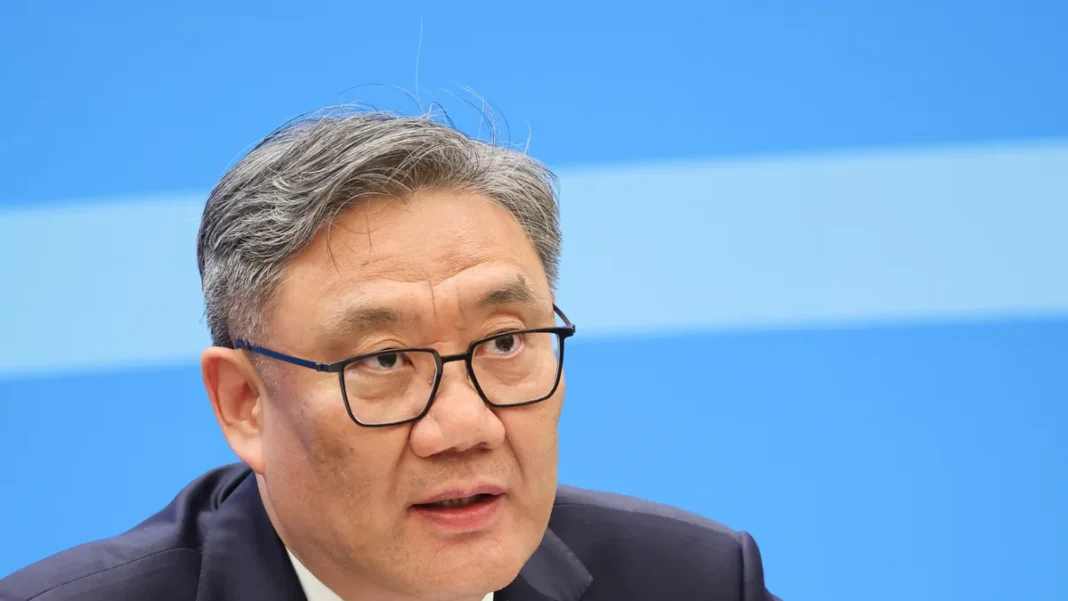
The China EU trade deal reached in Beijing marks the first tangible outcome of a new round of trade consultations between the two economies. After two days of talks, Chinese Commerce Minister Wang Wentao and EU Trade Commissioner Maroš Šefčovič issued a joint statement setting out steps to cool one of the world’s most strained commercial relationships.
The centrepiece is a shared understanding to moderate China’s exports of hybrid and plug-in hybrid cars to the European Union. Šefčovič said the arrangement would cut those exports by more than half over four years, preventing what he described as several million Chinese cars from entering the EU market.
China EU trade deal: what was agreed
The two sides agreed to keep working within World Trade Organisation rules on possible tariff cuts for selected goods. China will explore reductions in its most-favoured-nation tariffs on around €4 billion worth of EU exports, including car parts, olive oil and footwear. Brussels estimates the move could save European exporters at least €225 million a year in duties.
China also signalled it would smooth export licensing for rare earths and permanent magnets bound for the EU through a fast-track “green channel”. The materials are critical for European manufacturing, from electric motors to wind turbines. The EU, in turn, said it would work with member states to ease licensing problems for dual-use items exported to China.
Šefčovič was careful to manage expectations. He called the outcome “a crucial first step, but only a first step”, and stressed that the details still need approval from EU leaders, who meet in Brussels next week.
Why the talks matter
The negotiations come against a lopsided trade picture. The EU’s goods deficit with China ran past €360 billion last year, costing the bloc more than €1 billion a day, according to EU data. European carmakers have watched Chinese imports surge while cutting jobs at home, with plug-in hybrid imports into the EU up 86 per cent in the year to September.
The dispute has deep roots. The EU imposed tariffs on Chinese-made electric vehicles in 2024, and the row has since spread to Chinese measures against EU brandy, pork and dairy products, as well as Beijing’s restrictions on rare earth exports. France and Germany have felt the pressure most, with France accounting for most of the EU’s brandy exports to China.
Both sides agreed to continue talks on price undertakings as an alternative to tariffs in the EV anti-subsidy case. There was little movement on battery electric vehicles, where existing countervailing duties remain in place.
Reaction and next steps
German auto industry group VDA gave the agreement a cautious welcome but said it was too early to judge whether it would address unfair competition. Mercedes-Benz said constructive dialogue was the right way forward and should bring greater predictability for business.
Bernd Lange, who chairs the European Parliament’s trade committee, said the hybrid arrangement needed to extend to other sectors and urged the EU to deploy its trade defence tools more effectively.
For Pakistan, the direction of China-EU trade ties carries weight. China remains Pakistan’s largest trading partner, and shifts in Beijing’s export flows can move prices across Asian supply chains. Islamabad has been pushing an export-led growth strategy of its own, while textile exporters watch global demand closely. Any easing of trade tensions between the world’s second and third largest economies tends to steady commodity and freight markets, which matters for Pakistan’s import bill and fuel prices.
The real test comes next week in Brussels. If EU leaders endorse the package, negotiators will start filling in the missing mechanics, from how export moderation will be measured to the timetable for tariff cuts.
Frequently asked questions
What did China and the EU agree in Beijing?
They issued a joint statement with a shared understanding to moderate Chinese hybrid and plug-in hybrid car exports to the EU, cutting them by more than half over four years. China will also explore tariff cuts on about €4 billion of EU goods and smooth rare-earth export licensing.
How much could the tariff cuts be worth?
Brussels estimates at least €225 million a year in duty savings for EU exporters of products including car parts, olive oil and footwear.
When will the deal take effect?
The outline needs political endorsement from EU leaders meeting in Brussels next week before implementation details are finalised.
Why does the EU want to limit Chinese car exports?
Plug-in hybrid imports into the EU rose 86 per cent in the year to September, alarming European manufacturers who are cutting jobs. The EU’s trade deficit with China exceeded €360 billion last year.
*Sources: AP, EU Reporter.*