

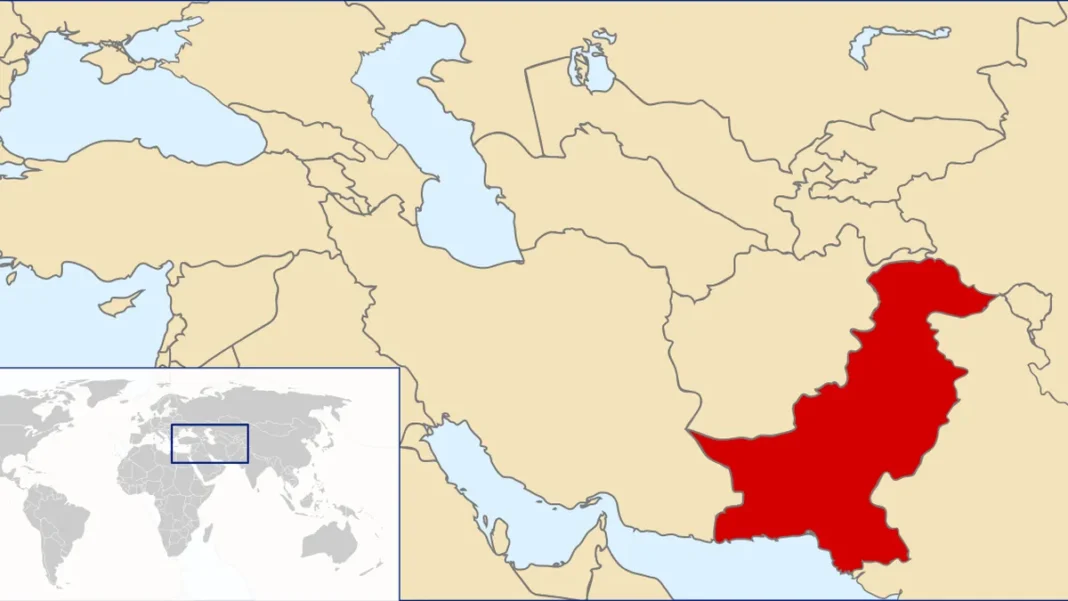
Is Pakistan South Asian? The short answer is yes — unambiguously. But the question keeps getting asked, because Pakistan sits at South Asia’s northwestern edge, where the subcontinent meets Central Asia and the Middle East. This guide gives the definitive answer, explains who says so, and unpacks why the confusion exists. For the full geographical picture, see our pillar guide to which part of Asia Pakistan is in.
Quick answer: Yes, Pakistan is South Asian. The UN geoscheme, the CIA World Factbook and SAARC all classify Pakistan in South Asia (Southern Asia). Its ties to Central Asia and the Middle East are real — ethnic, historical and geopolitical — but they don’t change the classification.
In this guide:
The Official Answer
Three authorities settle it. The United Nations geoscheme places Pakistan in Southern Asia, alongside India, Bangladesh, Afghanistan, Nepal, Bhutan, Sri Lanka and the Maldives. The CIA World Factbook lists Pakistan’s location as “Southern Asia, bordering the Arabian Sea, between India on the east and Iran and Afghanistan on the west and China in the north”. And SAARC — the South Asian Association for Regional Cooperation, founded 1985 — counts Pakistan as a founder member. No major geographical authority classifies Pakistan anywhere else.
Why People Ask
The confusion has honest roots. Geographically, Pakistan is at the subcontinent’s northwestern corner, and the Karakoram and Hindu Kush ranges — the natural wall between South and Central Asia — run through its north. Ethnically, Pashtuns straddle the Afghan border and Baloch span Pakistan, Iran and Afghanistan, so communities flow across the regional boundary. Historically, the Silk Road and Persian and Central Asian empires tied these lands westward for centuries. Geopolitically, Pakistan sits in the ECO with Iran, Turkey and Central Asian states and in the SCO — forums where it acts as a bridge. All of this makes Pakistan feel like a crossroads country. It is — but a crossroads within South Asia, not between regions.
The Verdict
Think of it this way: Turkey has ties to Europe, Asia and the Middle East, but it sits in a place — and geographers put it in West Asia. Pakistan is the same kind of case. Its Central Asian and Middle Eastern connections are genuine and important — they shape its foreign policy, its trade corridors (CPEC, ECO) and its culture. But its location, at 30°N 70°E on the southern subcontinent between India, Afghanistan, Iran and China, is South Asian by every definition that matters. So: yes, Pakistan is South Asian — a South Asian country with a westward outlook. For the borders and neighbours behind that answer, see Pakistan’s borders and our sea ports guide.
FAQs
Is Pakistan a South Asian country?
Yes. The UN, the CIA World Factbook and SAARC all classify Pakistan in South Asia (Southern Asia). It is the region’s second-largest country after India.
Why do some people say Pakistan is in Central Asia?
Because of real ties — Pashtun and Baloch communities across the Afghan/Iranian borders, Silk Road history, and ECO/SCO membership. But geographically Pakistan is south of the Karakoram–Hindu Kush divide, in South Asia.
Is Pakistan in the Middle East?
No. The Middle East (West Asia) lies west of Iran; Pakistan is east of Iran. Close ties, different region.
Which countries are in South Asia with Pakistan?
Afghanistan, Bangladesh, Bhutan, India, the Maldives, Nepal, Pakistan and Sri Lanka — the eight SAARC members.
Related Guides
- Pakistan Is in Which Part of Asia — the pillar guide: borders, neighbours, coordinates, the crossroads explained
- Pakistan’s Sea Ports — Karachi and Gwadar on the Arabian Sea coast
- Karachi State — the coastal megacity at South Asia’s western edge
- Muslim Population in Pakistan — the people of the region’s second-largest country