Israel's Supreme Court overturns ban on two Arab lists running in Knesset election
Israel’s Supreme Court overturns ban on two Arab lists running in Knesset election
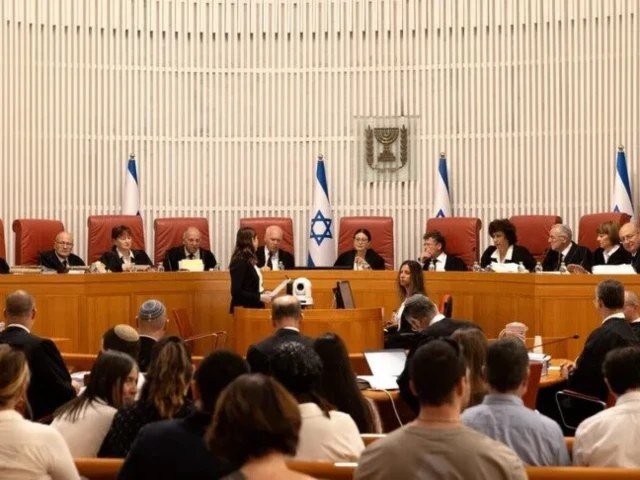
Israel’s Supreme Court on Friday overturned a ban on two Arab lists contesting the country’s October 27 Knesset election, ruling unanimously that both may take part in the vote. The Israel Supreme Court Arab lists decision came a day after the court heard appeals against the disqualification.
The court struck down the Central Elections Committee’s September decision to bar the Joint List, led by Yusuf Jabareen, and the United Arab List, led by Mansour Abbas. Channel 12 reported that “the judges unanimously decided to allow both the United Arab List and the Joint List to participate in the election.” A majority of the judges also cleared Ofer Cassif, a Jewish member of the Joint List, to run.
The disqualification had been sought by the ruling Likud party and by National Security Minister Itamar Ben-Gvir’s Jewish Power party, both of which had argued that the Arab lists should be barred from the ballot.
Israel Supreme Court Arab lists ruling: appeals heard Thursday
The Israel Supreme Court Arab lists ruling followed appeals heard on Thursday. The session took a dramatic turn on Thursday evening when Sami Abu Shehadeh, another Arab candidate, withdrew his candidacy after the court signalled it would disqualify him.
The ruling matters well beyond the courtroom. Arab citizens make up roughly 20 per cent of Israel’s population, and Arab parties are projected to win between 12 and 14 of the 120 Knesset seats in the October 27 election. Their participation or exclusion could shape coalition arithmetic after the vote.
What happens next before the October 27 vote
With the ban lifted, both lists can now campaign freely in the remaining weeks before polling day. Attention will turn to whether the ruling defuses one of the most contentious pre-election disputes, and to how the Arab parties’ expected seat count feeds into post-election coalition talks.
The decision also closes a legal battle that had drawn international attention to questions about political representation in Israel. For the Likud and Jewish Power, which pushed for the ban, the verdict is a defeat that removes a campaign talking point ahead of the vote.
FAQs
What did Israel’s Supreme Court decide about the Arab lists?
The court unanimously overturned the Central Elections Committee’s ban, allowing both the Joint List and the United Arab List to contest the October 27 Knesset election. A majority also cleared Ofer Cassif to run.
Who leads the two Arab lists?
The Joint List is led by Yusuf Jabareen and the United Arab List by Mansour Abbas.
Why were the Arab lists banned?
The Central Elections Committee barred both lists in September at the urging of Likud and Itamar Ben-Gvir’s Jewish Power party. The court has now rejected that disqualification.
When is the Knesset election?
The election is scheduled for October 27, 2026. Arab citizens are about 20 per cent of Israel’s population, and Arab parties are projected to win 12 to 14 of the 120 seats.