Sanchez Calls Snap Election for November 29 After Housing Decrees Rejected
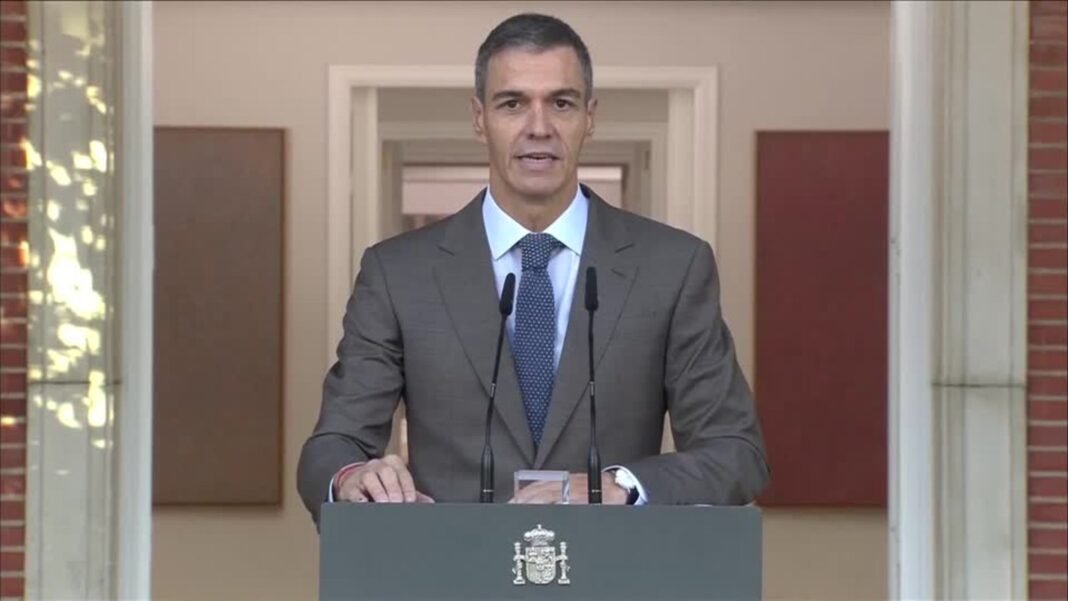
A Spain snap election has been called for November 29 after Prime Minister Pedro Sanchez dissolved parliament on Monday, following the rejection of his government’s two key housing decrees last week.
The Spain snap election call came in a televised address, in which Sanchez said he needed a fresh mandate to govern. “We need to renew people’s support,” he said. “We need to mobilise and win a much larger progressive majority in parliament, one that will allow us to overcome vested interests, deliver new social advances and continue transforming Spain.”
The premier also acknowledged his government’s shortcomings. “I also know that part of that social majority is dissatisfied today,” he said, vowing to keep Spain “a bastion of openness, social justice and environmental responsibility.”
Why the housing decrees failed
The two decrees, which would have strengthened eviction protections and curbed speculative home purchases, were voted down in Congress on Friday. The Catalan separatist party Junts joined the conservative People’s Party and the far-right Vox in rejecting the measures.
The vote followed weeks of fury over the eviction of Maria del Carmen Abascal, an 87-year-old known across Spain as Maricarmen, from her rent-controlled apartment in Madrid’s Retiro neighbourhood on September 23. She had lived in the same home for more than 70 years before her rent was raised from 500 euros to 2,650 euros a month.
Her case became the symbol of Spain’s housing emergency. Hundreds of people have camped for more than a week in Madrid’s Puerta del Sol, and the Madrid Tenants Union said about 950,000 people joined demonstrations across the country over the weekend.
Spain snap election: a high-stakes gamble
The snap vote is a major risk for Sanchez, whose Socialist Workers’ Party trails in nearly every opinion poll. A survey published on Monday by El Pais and Cadena SER, conducted by 40db in September, put the conservative People’s Party on 31.6 per cent, the Socialists on 27.4 per cent and Vox on 18.4 per cent.
The People’s Party responded to the announcement with a post reading “AT LAST” on X. Its leader, Alberto Nunez Feijoo, has been demanding early elections for much of the current legislature. Vox leader Santiago Abascal warned the result would be unpredictable, noting polls had been wrong about Sanchez before.
A defeat would end one of Europe’s last remaining left-leaning governments and could bring Vox into central government for the first time since Spain’s return to democracy after Franco. Spain’s IBEX index was flat after the announcement, and government bonds were broadly steady.
Sanchez’s eight years in power
Sanchez has led Spain since 2018, when he ousted centre-right premier Mariano Rajoy. He won a second term in 2023 despite heavy losses in regional elections, stitching together support from a loose alliance of parties. His government has failed to pass a budget since 2023, even as Spain’s economy remained one of the strongest performers in the developed world.
When is Spain’s snap election?
November 29, 2026, more than six months ahead of schedule.
Why did Sanchez call an early election?
Parliament rejected two housing decrees on October 2, and Sanchez said he needed a larger majority to pass reforms amid mass protests over the housing crisis.
Who is Maricarmen?
Maria del Carmen Abascal, an 87-year-old evicted from her Madrid home of 70 years after her rent rose from 500 to 2,650 euros. Her case became the symbol of Spain’s housing emergency.
Who is leading in the polls?
The conservative People’s Party on 31.6 per cent, ahead of Sanchez’s Socialists on 27.4 per cent, with Vox on 18.4 per cent, according to a 40db poll published October 5.