
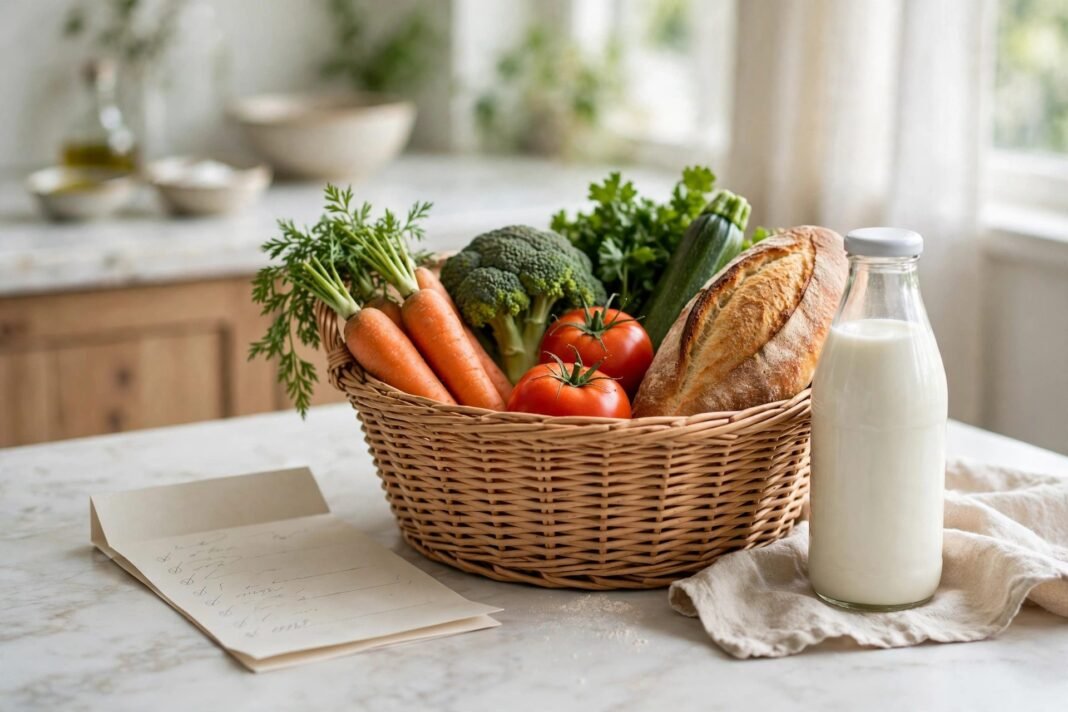
Your grocery bill is one of the few bills you can shrink this week. You cannot change your rent overnight, and you cannot change your electricity bill overnight either. But you can save money on groceries by changing how you shop, and that change shows up fast.
The good news is that you can save money on groceries without eating less or eating badly. It means shopping with a plan, wasting less, and buying smart. These 12 tips work whether you shop at a supermarket in the United States or a sabzi mandi in Pakistan.
Plan Your Meals to Save Money on Groceries
Meal planning is the single best way to save money on groceries. When you decide your meals before you shop, you buy only what you need. As a result, you waste less food and make fewer extra trips to the shop.
Start small. Firstly, pick seven dinners for the week ahead. Then check which ingredients you already have at home. Finally, write a shopping list for the missing items only.
In the US, plan around the weekly deals at your supermarket. In Pakistan, plan around the fresh sabzi at the mandi and the daal, rice and atta you already have at home. Either way, a plan turns shopping from a guessing game into a simple errand. Meal planning also fits neatly into a household budget — learn how a budget can help you reach your financial goals.
Check What You Already Have Before You Shop
Most kitchens hold more food than their owners think. So before you write your list, open your fridge, your freezer and your cupboards. You may find enough rice, pasta or lentils for two or three meals already.
In Pakistan, check the atta dabba, the dal jars and the masala shelf too. In the US, check the pantry and the deep freezer. However much you find, build your meals around it first.
This one habit stops you from buying a second bag of rice when the first is still half full. It also helps you use food before it goes bad. In short, shopping starts at home, not at the shop.
Shop With a List — and Stick to It
A shopping list is your best defence against impulse buys. Without one, every aisle offers something extra. With one, you know exactly what you came for. It is a simple way to save money on groceries every single week.
Write your list from your meal plan, then add only household basics like milk, eggs and bread. If an item is not on the list, ask yourself one question: do I need it this week? If the answer is no, leave it on the shelf.
Shops are designed to tempt you, with treats at eye level and offers at the till. But a list keeps you in charge. If impulse spending is your weak spot, try a no-spend month challenge to reset the habit.
Buy Seasonal Produce to Save Money on Groceries
Seasonal fruit and vegetables are usually cheaper than out-of-season ones. They are also fresher, because they have not travelled far. For example, berries cost less in summer, while squash and root vegetables are cheaper in autumn.
In Pakistan, the seasons set the menu. Mangoes fill the mandi in summer, while kinnow, cauliflower and saag are winter favourites. Buying what is in season at the sabzi mandi often costs far less than buying the same item out of season.
Seasonal shopping also adds variety to your meals. So let the season shape your list, and your food bill will thank you.
Buy Staples in Bulk
Some foods never go out of fashion in your kitchen. Rice, atta, dal, lentils, oats, pasta and cooking oil are used week after week. Buying these staples in bulk usually costs less per kilo or per pound than buying small packs.
In the US, warehouse clubs sell big bags of rice, oats and pasta at low unit prices. In Pakistan, karyana stores and wholesale markets sell atta, rice and dal by the kilo at better rates than small packets. Either way, bulk buying works only for food you actually use.
Before you stock up, check your storage space. Staples need airtight containers and a cool, dry place. If you cannot store it well, a big bag can go stale before you finish it. So buy big only when you have room to keep it fresh.
Try Store Brands Instead of Name Brands
Name brands spend a lot on advertising, and shoppers pay for it. Store brands skip most of that cost, so they often sell for less. In fact, many store-brand foods are made in the same factories as the big names.
US supermarkets carry their own labels for milk, eggs, pasta, tinned food and cleaning items. In Pakistan, local brands at the karyana store often match the big names on quality for staples like rice, oil and spices. Try one swap at a time, starting with basics like salt, sugar and flour.
If you like the store brand, keep buying it. If you do not, go back to the name brand for that one item. You lose nothing by trying, and you may find a cheaper favourite.
Compare Prices Per Kilo or Per Pound
The price on the shelf can mislead you. A big pack may look like a bargain, but a smaller pack can cost less per kilo. The only fair way to compare is the unit price.
In US supermarkets, the shelf label often shows the price per ounce or per pound. In Pakistan, compare the per-kilo price at the mandi, the karyana store and the supermarket before you buy. The cheapest shop is not always the same one each week.
This habit takes a few extra seconds per item. However, it adds up across a full trolley. Over a month of shopping, unit-price checks can make a real difference to your food bill.
Batch Cooking Helps You Save Money on Groceries
Cooking in batches is one of the easiest ways to save money on groceries. When you cook a big pot of food, you eat well for days. You also avoid the takeaway trap on busy evenings.
Pick one or two dishes each week to cook in bulk. In the US, that might be a tray of roasted vegetables with rice, or a big pot of soup. In Pakistan, a large degchi of daal, chana or chicken salan can feed the family for days, with some portions frozen for later.
Batch cooking also saves time. You chop once, wash up once, and eat well all week. As a result, busy weeknights stop turning into expensive food orders.
Freeze Food Before It Goes Bad
Your freezer is a money-saving tool. Bread, cooked rice, meat, vegetables and leftover salan all freeze well. So when food is about to go off, freeze it instead of throwing it away.
Food waste is a bigger problem than most people think. According to the UN Environment Programme’s Food Waste Index Report 2024, households accounted for 60% of the world’s wasted food in 2022 — 631 million tonnes. Most of that waste starts in ordinary kitchens like yours and mine.
Label frozen food with the name and the date, and use the oldest items first. In addition, freeze food in meal-sized portions, so you defrost only what you need. A full freezer is a sign of a well-run kitchen, not a messy one.
Shop Less Often to Save Money on Groceries
Every trip to the shop is a chance to spend more than you planned. Fewer trips mean fewer impulse buys. So try one main shop a week, with at most one small top-up for milk, bread or fresh sabzi.
One weekly shop also forces better planning. You think ahead, you use what you have, and you waste less. Meanwhile, your fuel and time costs drop too, because you travel to the shops less often.
And never shop when you are hungry. Hunger makes every snack look tempting, and a hungry shopper buys more treats than a full one. Eat first, then shop. Your list — and your wallet — will stay on track. If you want a full system for your spending, compare the best budgeting methods, from 50/30/20 to zero-based budgeting.
To save money on groceries, start with two or three tips this week — plan your meals, shop with a list, and use your leftovers. Once those habits feel easy, add the rest one by one.
Small habits, repeated every week, change a food bill more than any single big effort. Which tip will you try first? Tell us in the comments.
This article is for general information only. It is not financial advice.