Kashmiris Mark Jammu Martyrs Day With Renewed Pledge
Kashmiris living on both sides of the Line of Control and across the world observed Jammu Martyrs Day on Friday, paying tribute to the more than 250,000 Muslims who, according to historical accounts, lost their lives in Jammu and its adjoining areas in 1947 while seeking to migrate to Pakistan.
The day is observed annually to commemorate the sacrifices of Muslim men, women, children and elderly people who were killed during the mass migration towards Pakistan in the aftermath of the partition of the subcontinent. The tragedy, which unfolded near the Jammu-Sialkot border, remains a significant chapter in the history of the Kashmir freedom movement.
In Azad Jammu and Kashmir, special ceremonies, seminars and symposiums were held in Muzaffarabad, Mirpur and different parts of the Poonch division to pay homage to the Jammu martyrs. A public holiday was observed across Azad Jammu and Kashmir to facilitate people in participating in commemorative activities.
Addressing the gatherings, speakers vowed to carry forward the mission of the martyrs until the Kashmir dispute was resolved in accordance with the aspirations of the Kashmiri people and their internationally recognised right to self-determination through a free and fair plebiscite under relevant United Nations resolutions.
What happened in Jammu in 1947
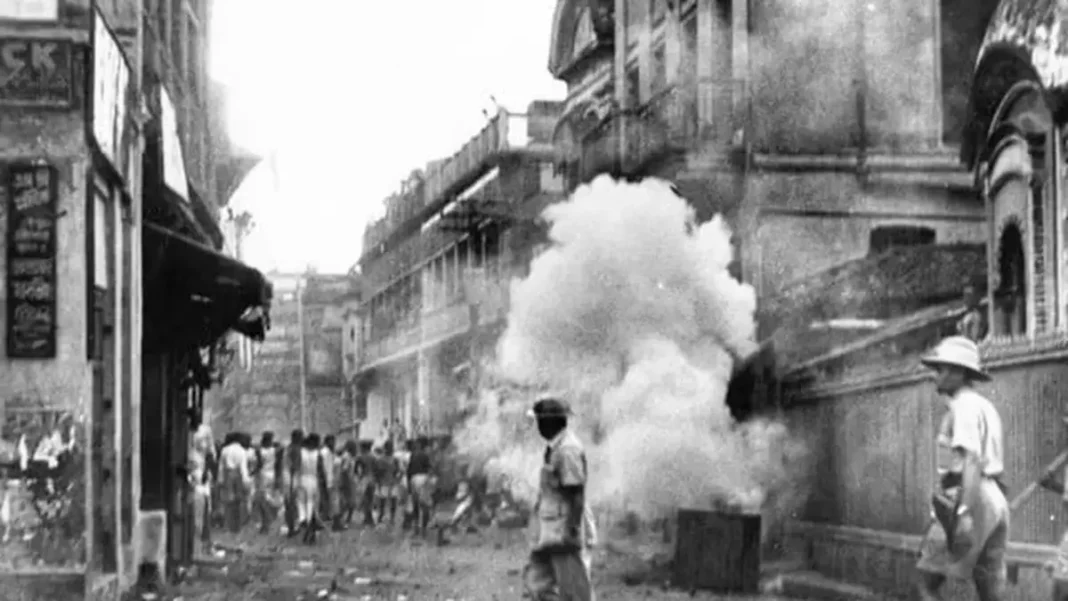
The Jammu massacre of November 6, 1947, remains one of the most tragic chapters of the partition period. During October and November 1947, forces of the Hindu Dogra ruler Hari Singh, alongside the Rashtriya Swayamsevak Sangh and armed Hindu-Sikh militias, systematically killed Muslims in a deliberate effort to alter the region’s demographics and reduce its 61 percent Muslim majority into a minority, according to historical accounts cited in the commemorations.
According to a report published in the London-based newspaper The Times on August 10, 1948, Dogra forces systematically liquidated over 237,000 Muslims, while nearly 500,000 were forced to migrate toward Pakistan and Azad Kashmir. Reports from the 1949 UN Commission for India and Pakistan subcommittee, and insights from prominent journalist Ved Bhasin, confirm that the killings were an orchestrated administrative and political operation under the Maharaja and the RSS, an account also acknowledged by Mahatma Gandhi in his statements on December 25, 1947.
Historians and analysts regard the massacre as one of the largest and fastest single massacres following World War II. The figures cited for the dead vary between sources, with historical accounts putting the toll at more than 250,000, while The Times report of 1948 gave a figure of over 237,000.
Why Jammu Martyrs Day still matters
The observance is not only about 1947. Speakers at Friday’s ceremonies linked the day to the present, arguing that the demographic changes attempted in Jammu in 1947 have a direct connection to policies in Indian Illegally Occupied Jammu and Kashmir today.
Following the revocation of Articles 370 and 35A on August 5, 2019, speakers said the Modi administration has intensified demographic engineering in the region, with over one million military personnel present. They pointed to the Srinagar 2035 Plan and changes to local property rights, which they said were being used to settle non-local Indian citizens in the region, in violation of Article 85(4)(a) of the Geneva Conventions’ Additional Protocol I.
The day also falls in a week when Kashmir has been in the news for other reasons. The United States has told Pakistan its Kashmir policy remains unchanged after an envoy’s remarks in Srinagar, a message Washington delivered to Islamabad that underlines how closely the dispute is still watched abroad. People-to-people contact continues as well: the Foreign Office said 9,318 visas were issued to Indian religious pilgrims in 2025. At home, the government has been moving on Kashmir-related administration, including new rules for weapon licences in Azad Jammu and Kashmir, while Islamabad has marked the region’s links to the capital with the inauguration of the Kashmir Chowk underpass.
For the families who gather each November 6, the day is personal before it is political. The ceremonies in Muzaffarabad, Mirpur and Poonch are held for people whose relatives were among those who set out for Pakistan in 1947 and never arrived. The speakers’ pledge to carry the mission forward is, in that sense, a promise made to the dead as much as a demand made of the living.
The Kashmir dispute remains on the agenda of the United Nations, and the demand raised at Friday’s ceremonies was the same one raised at every observance: a free and fair plebiscite under relevant UN resolutions. Until that happens, November 6 will keep its place in the calendar on both sides of the Line of Control.
What is Jammu Martyrs Day?
Jammu Martyrs Day is observed every year on November 6 to pay tribute to the Muslims killed in Jammu and adjoining areas in 1947 while seeking to migrate to Pakistan. Kashmiris on both sides of the Line of Control and across the world mark the day with ceremonies and seminars.
How many people were killed in Jammu in 1947?
Historical accounts put the toll at more than 250,000 Muslims. A report in The Times of London on August 10, 1948, said Dogra forces liquidated over 237,000 Muslims, while nearly 500,000 were forced to migrate toward Pakistan and Azad Kashmir.
Where were ceremonies held this year?
Special ceremonies, seminars and symposiums were held in Muzaffarabad, Mirpur and different parts of the Poonch division in Azad Jammu and Kashmir, where a public holiday was observed for the day.
When is Jammu Martyrs Day observed?
Jammu Martyrs Day is observed every year on November 6 to pay tribute to the Muslims killed in Jammu and adjoining areas in 1947 while seeking to migrate to Pakistan.