

JPMC doctors protest over three months of unpaid salaries
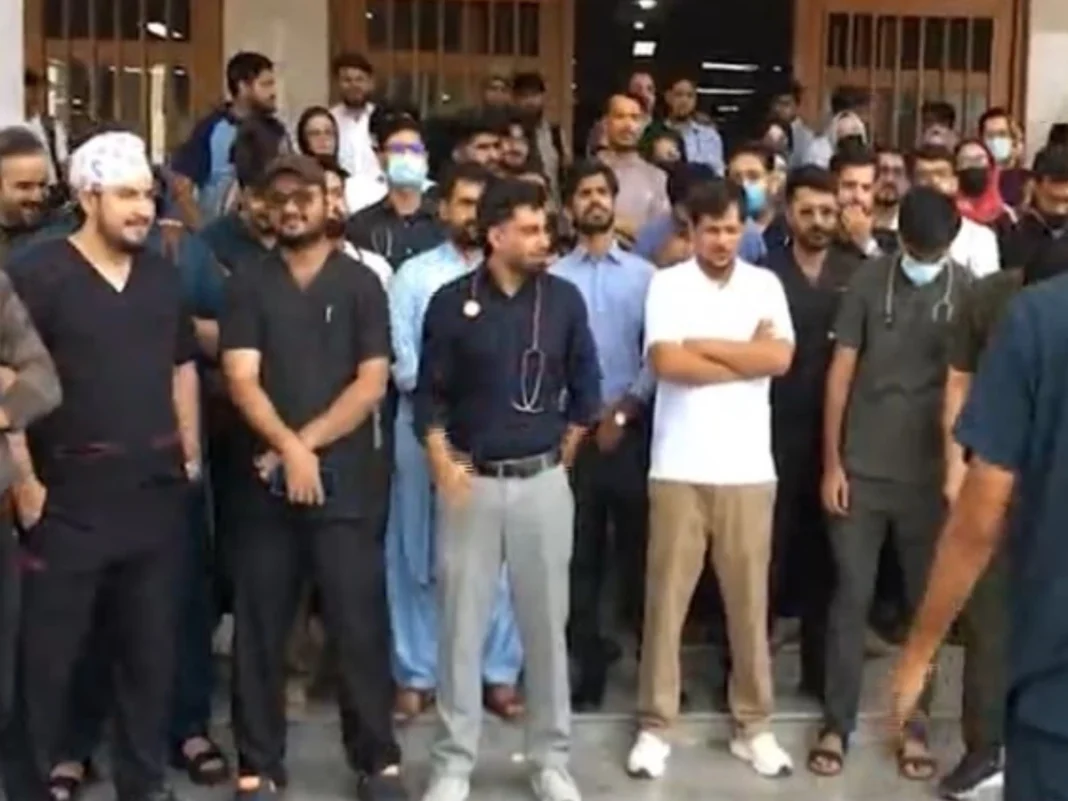
Young doctors at the Jinnah Postgraduate Medical Centre in Karachi staged a protest on Thursday over the non-payment of their salaries for the past three months, blaming the hospital administration and the Sindh government for the delay. The JPMC doctors protest gathered outside the Outpatient Department complex, where the demonstrators chanted slogans against the hospital administration.
The protesting doctors said they had continued performing their duties without pay while the authorities passed responsibility for the delay from one office to another. “The hospital administration and the government have treated us like a football,” they said: the administration directed them to approach the Sindh government, while government officials referred them back to the hospital.
JPMC doctors protest: a payment system changed in May
The delay began after the provincial government changed the procedure for paying house officers in May. Under the old system, hospitals received funds and distributed salaries through bank cheques. The new system transfers salaries directly into doctors’ bank accounts.
Officials said the new mechanism required additional documentation, including copies of doctors’ identity cards and details of previous cheques, to be submitted to the Sindh Accountant General’s office. Hospital administrations say the relevant data was forwarded, and the delay now sits with the AG office.
The Express Tribune tried to contact the AG office for an explanation but was refused a response.
‘Broaden the protest within days’
Dr Shahid Awan, president of the Sindh Young Doctors Association, warned that the protest would grow if the outstanding salaries were not released within the next few days. The doctors could stage demonstrations outside the hospital’s administration block and on the roads, he said.
“We demand the immediate payment of our outstanding salaries,” Awan said, adding that the matter should be resolved without further delay, whether the responsibility lay with the Sindh government or the AG office.
The doctors also demanded a pay raise, saying they had not received one since 2020.
Health department says payment is ‘a priority’
On September 30, the Sindh Health Department had clarified that the delay was not the result of administrative negligence by the hospital management. It attributed the hold-up to the new direct-payment policy and the procedures for opening vendor accounts at the AG office, under what it described as a new federal policy for paying house officers directly.
The department said hospital administrations had submitted the required forms, identity card copies and previous cheque details within the stipulated period, but the AG office then asked for additional documents. It added that the vendor-account process was in its final stages, that payment of the outstanding salaries was expected soon, and that “the matter was being treated as a priority” given the doctors’ financial difficulties.
For the young doctors who have worked three months without pay, the assurances have worn thin. Thursday’s protest was orderly, but Awan’s warning was explicit: clear the dues within days, or expect the demonstrations to spread beyond the hospital gates.
FAQ
Why are JPMC doctors protesting?
Young doctors at the Jinnah Postgraduate Medical Centre say they have not been paid for three months, blaming the hospital administration and the Sindh government for the delay.
What caused the delay?
The Sindh government switched house officers to a direct bank-transfer payment system in May, replacing hospital-issued cheques. The change required fresh documentation at the Accountant General’s office, where the process has stalled.
What happens if salaries are not released?
Dr Shahid Awan of the Sindh Young Doctors Association has warned of wider protests, including demonstrations outside the administration block and on roads, if dues are not cleared within days.
Are the doctors also demanding a raise?
Yes. The protesting doctors say they have not received a salary increase since 2020.