Punjab Climate Observatory to Run on AI
The Punjab climate observatory will be Pakistan’s first AI-run climate centre, monitoring air quality, water, soil and weather in real time to sharpen warnings for floods and smog.
Chief Minister Maryam Nawaz Sharif announced the Punjab climate observatory on Sunday, calling it a milestone in the province’s efforts to address climate change. She wrote on social media platform X that the centre would be the first project of its kind in Pakistan.
The centre will use an artificial intelligence-powered climate intelligence system to track conditions as they change, and to turn that data into earlier warnings for the disasters Punjab faces most often.
What the Punjab climate observatory will do
The facility will conduct real-time monitoring of air quality, water, soil and weather conditions. That data will feed into stronger weather forecasting, early warning systems and flood prediction, helping the province prepare for climate-related disasters.
It will also house environmental data resources and research laboratories, giving young climate scientists a place to learn and carry out research. The chief minister said she hoped the project would bring international scientific cooperation and research partnerships under one roof, while supporting evidence-based policymaking and public awareness.
The observatory is expected to contribute to disaster resilience, water conservation, sustainable resource management, climate-resilient agriculture and forest protection.
How the project took shape
The project was approved in May 2025, following a review of its feasibility plan covering budgetary requirements, equipment procurement and land acquisition. The University of Engineering and Technology, Lahore, also submitted a report on its technical aspects.
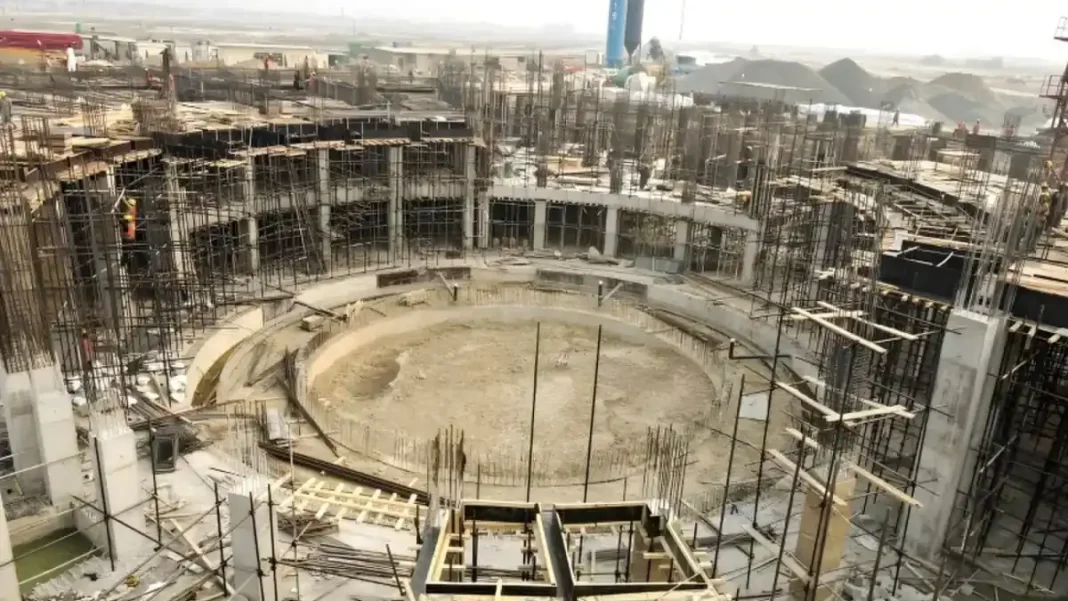
In June, the chief minister directed the authorities to expedite work on the facility. Construction is now under way.
“Our ambition is to empower the next generation of climate scientists and position Punjab as a regional leader and international partner in climate innovation, protecting our environment, communities and future generations,” she said.
Why Punjab needs it
Punjab faces two recurring climate threats that the observatory is designed to track. Each winter, smog settles over Lahore and the province’s cities, driven in part by farm fires. An environmental agency counted 898 farm fires across eight Punjab districts in a single day this season, with Hafizabad alone recording 430.
Water is the second pressure. An FAO report warns that Punjab’s water demand already exceeds supply, with groundwater falling by 5.5 billion cubic metres a year. A monitoring centre that tracks soil moisture and water conditions in real time would give farmers and planners earlier signals.
The observatory also fits Pakistan’s wider climate push. At COP31 in Antalya, Pakistan has proposed a virtual green university and a youth climate fund, and sought finance for household solar power. The Punjab centre would give the province its own data to feed into that work.
What happens next
No opening date has been announced. The chief minister’s statement suggests the focus now is on completing construction and fitting out the laboratories, with the AI systems to follow. Once running, the centre’s forecasts and warnings will be tested by the next flood season and the next smog season, the two events Punjab watches most closely.
Frequently asked questions
What is the Punjab climate observatory?
A centre under construction in Punjab that will monitor air quality, water, soil and weather in real time, using an AI-powered climate intelligence system. The chief minister says it is the first of its kind in Pakistan.
What will the observatory monitor?
Air quality, water, soil and weather conditions, feeding into weather forecasting, early warning systems and flood prediction.
When was the project approved?
In May 2025, after a review of its feasibility plan. The University of Engineering and Technology, Lahore, submitted a report on its technical aspects.
Who will use the observatory?
Young climate scientists will use its data resources and research laboratories, while planners and policymakers will use its forecasts and evidence for disaster preparation.
How does it fit Pakistan’s climate plans?
It adds provincial monitoring capacity to national efforts, including Pakistan’s COP31 proposals for a virtual green university and a youth climate fund.