


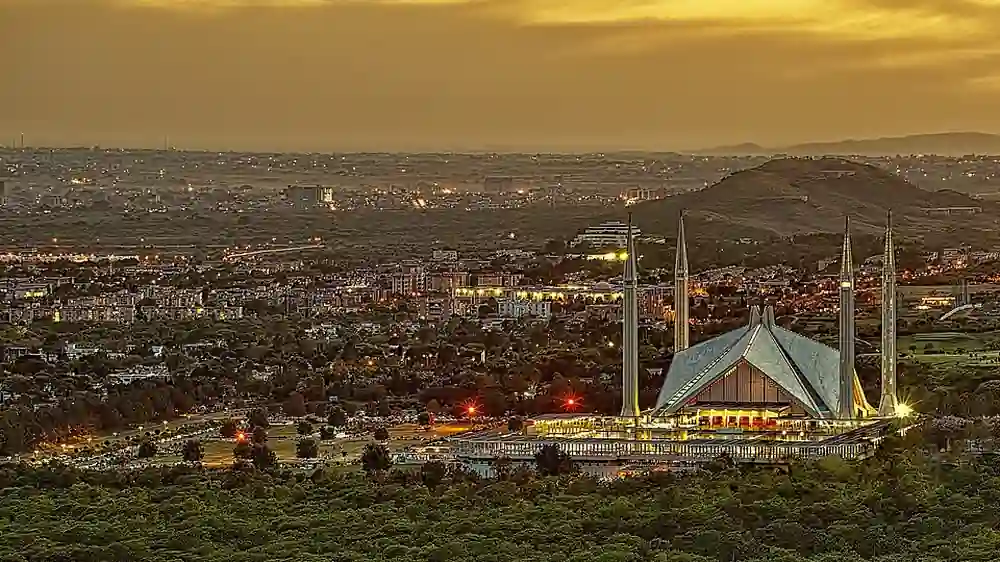
The latest in Islamabad, rounded up: the standoff that dominates everything, the security picture, how city life is adapting, and the developments that could change the story. One page, updated 11 October 2026.
Quick answer: Latest in Islamabad (11 Oct 2026): the PTI long march holds at Mardan for Afridi’s 3pm address; the capital remains under Section 144 with barricaded interchanges and a restricted Red Zone; talks stay collapsed; city life proceeds normally outside the security zones. The week’s direction hinges on the Mardan announcement and the federal response.
In this guide
The standoff: the week in review
Eight days in. The week began with the march’s 4 October launch from Lakki Marwat after talks collapsed, moved through Karak, Kohat and Peshawar, gathered toward Khairabad on 8 October — and then pivoted: Afridi’s 10 October announcement rerouted the caravan to Mardan, where it holds through today. The demands (Khan’s access, medical examination, releases) and the government’s refusal (no entry “under any circumstances”) have not moved all week.
The week’s costs: thousands of security personnel deployed for a fortnight, freight disrupted on the M-1/M-2 corridors, requisitioned vehicles, and a capital living under Section 144. The complete briefing has the day-by-day record.
Security: the lockdown by the numbers
The posture: Section 144 across Islamabad and Rawalpindi (gatherings of 5+ banned); containers at Faizabad, D-Chowk, Srinagar Highway, 26 Number Chungi, T-Chowk, Margalla Avenue and motorway approaches; Rangers, Frontier Constabulary and anti-riot police at the Red Zone’s one-or-two entry points; a 14 September IHC order underpinning the road-occupation ban.
The gap: official closure notices remain sparse on police and CDA websites — the ICT helpline 1915 is the working source. The posture’s durability is now the story: sustaining it for a third week would be costly, which pressures both sides toward resolution. Assessment in today’s situation review.
City life: adapting
Routine with adjustments. Offices, schools, markets and restaurants operate; the metro runs; Sunday family life proceeds. Islamabad has a practised routine for standoffs — the militarised centre, the normal periphery — and residents are using it. The visible adjustments: avoiding the barricaded interchanges, allowing extra travel time, and the background hum of Section 144 caution.
Beyond the standoff, the capital’s ordinary news continues — development projects, court cases, diplomatic activity — but it is all read through the standoff’s lens this week. When the political temperature drops, this page returns to the full roundup; until then, the daily briefing tracks the practical impact.
What is next
Three near-term triggers. Today’s 3pm Mardan address (escalation or pause?). Any movement toward Attock or the Punjab border (the government’s red line). Any credible signal of resumed talks or mediation (the first political development in days). Any of the three would change the story within hours.
Longer term, the standoff’s economics favour resolution: neither a permanent lockdown nor a permanent march is sustainable. The question is the exit ramp — a face-saving formula on Khan’s access, a judicial intervention, or exhaustion. The situation guide updates as the answer emerges.
What is the latest in Islamabad?
The PTI march holds at Mardan for today’s 3pm address; the capital stays barricaded under Section 144; talks remain collapsed; city life proceeds normally outside the security zones.
How long has the standoff lasted?
The march launched 4 October 2026 (day eight today); the capital’s barricade-and-Section-144 posture dates to late September, when deployments began ahead of the originally planned 27 September march.
What could resolve the standoff?
A negotiated formula on access to Imran Khan, a judicial order on his detention conditions, or simple exhaustion. The near-term triggers are today’s Mardan announcement and the federal response.
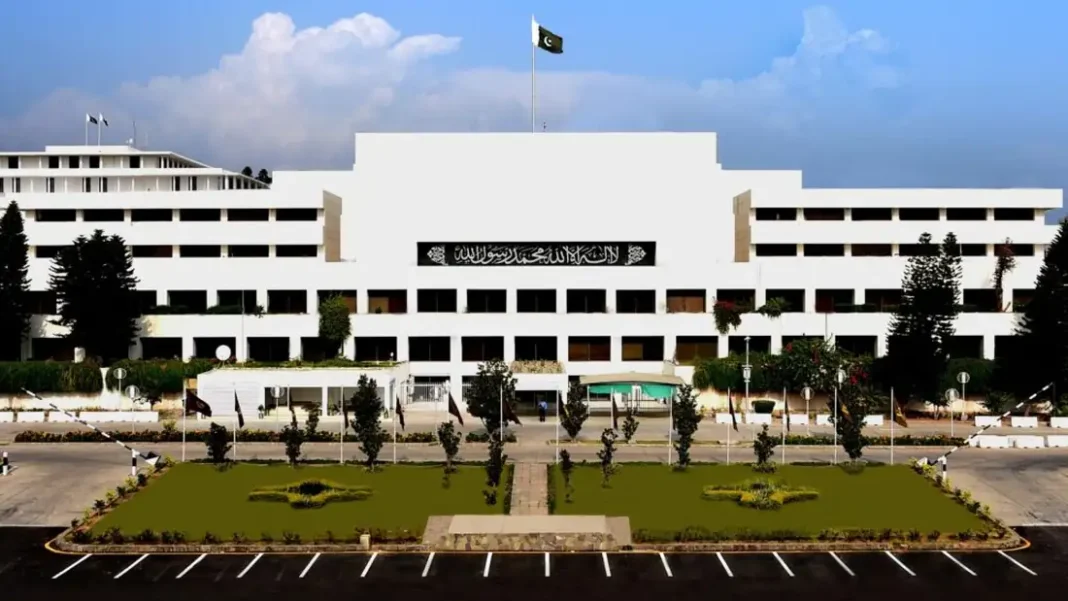
: the roundup — the standoff, security, city life and what is next. Everything new in the capital in one place.)